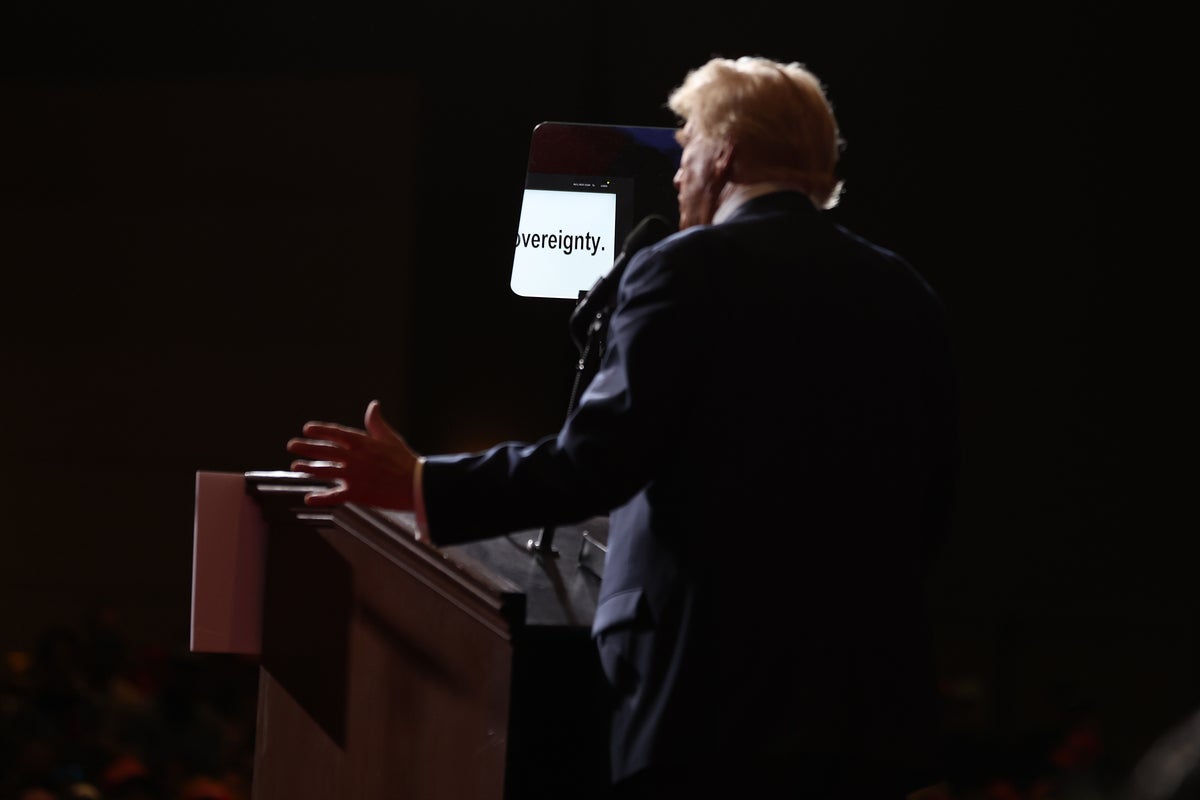
Donald Trump just refused to rule out sending US troops into Iran. With the June ceasefire totally dead, US airstrikes pounding Hormozgan province, and Iranian drones hitting Kuwait and Bahrain, everyone's asking the same terrifying question. What would a US ground invasion of Iran actually look like?
The short answer. It looks like an absolute nightmare that the Pentagon wants no part of. Expanding on this theme, you can find more in: The 2026 Senate Elections Will Decide The Fate Of Social Security And Nobody Is Talking About It.
While Al Jazeera and other major networks break down the hypothetical maps and amphibious assault routes into Bandar Abbas, they're missing the bigger picture. Looking at troop counts or counting tanks misses the point. Iran isn't Iraq in 2003, and it's not Afghanistan in 2001. A ground war in Iran would be a completely different beast, and frankly, the US military knows it's practically impossible to win.
Here's the reality of what a ground campaign would mean, why the generals hate the idea, and what's actually happening behind closed doors in Washington. Observers at USA Today have also weighed in on this situation.
The Geography is a Natural Fortress
Let's look at the physical terrain first. Iran is huge. It's roughly three times the size of France or Spain, and it's surrounded by massive mountain ranges.
If US planners wanted to march toward Tehran, they'd have to face the Zagros Mountains to the west and north, or the brutal, arid deserts of the interior. The country is a natural fortress. Unlike the flat deserts of Iraq where US armor moved with blistering speed, Iran's topography is tailor-made for defensive, asymmetric warfare.
An amphibious landing along the southern coast near Chabahar or Bandar Abbas sounds great on a whiteboard. In reality, it means fighting through narrow mountain passes where air superiority doesn't give you the same massive advantage it usually does. Every valley becomes a potential ambush site. Every mountain tunnel is a pre-staged choke point.
The Numbers Game is Totally Broken
During Operation Epic Fury earlier this year, air and missile strikes crushed plenty of Iranian infrastructure. But a ground invasion requires holding territory. That takes boots on the ground.
When the US invaded Iraq in 2003, it used about 177,000 troops. Military analysts at institutions like the Brookings Institution and RAND Corporation have run these numbers for years. The consensus? To successfully invade and occupy Iran, the US would need anywhere from 500,000 to 1 million troops.
The US military doesn't have those numbers sitting around. Right now, about 74% of Americans oppose sending ground forces to Iran. Even 52% of Republicans don't want it. Trying to institute a draft or pulling troops from every other global commitments—especially with tensions high in Asia—is a non-starter.
Iran's Two Armies
If US forces crossed the border, they wouldn't just fight a standard military. They'd face two distinct forces with entirely different playbook.
- The Islamic Republic of Iran Army (Artesh): This is the conventional military. They hold the standard tanks, artillery, and regular infantry. They protect the borders and act like a normal army.
- The Islamic Revolutionary Guard Corps (IRGC): This is the ideological wing. They don't fight fair, and they don't fight conventionally. They excel at asymmetric warfare, insurgent tactics, and using proxy networks.
The IRGC has spent decades preparing for exactly this scenario. They have thousands of hidden underground missile silos, hidden speedboats equipped with anti-ship missiles along the coast, and a massive arsenal of kamikaze drones. They wouldn't stand in an open field to get obliterated by US B-52s. They'd melt into the mountains and cities, turning the conflict into a grinding, multi-year insurgency from day one.
What Happens to the Global Economy
You think gas prices are bad now with the Strait of Hormuz effectively halted? A ground invasion would trigger an instant global economic meltdown.
The moment US boots hit Iranian soil, Iran would unleash its remaining anti-ship missiles and sea mines. The Strait of Hormuz, where 20% of the world's oil passes, wouldn't just be risky—it would be completely closed. Oil prices would skyrocket past $200 a barrel overnight. Energy shortages would hammer Europe and Asia, and the resulting inflation would completely tank the US domestic economy. Trump won the White House partly on promises to curb inflation, so launching an invasion that guarantees economic chaos destroys his domestic agenda.
The Real Strategy is Containment, Not Invasion
So, if a ground invasion is a logistical and political death wish, why won't Trump rule it out?
It's basic deterrence. In international politics, you don't tell your enemy what you won't do. By keeping the threat of ground troops on the table, Washington hopes to keep Tehran guessing, trying to force them back to the negotiating table for a new truce.
Don't expect to see US Marines marching on Tehran. Instead, watch the current campaign of heavy airstrikes. The realistic US strategy right now isn't regime change via ground conquest. It's a grueling war of attrition from the air, designed to smash Iran's drone factories, sink its fast-attack naval craft, and protect international shipping lanes while keeping American soldiers out of the Iranian mountain grinders.
If you're watching the news panic over troop deployments, look closely at what's actually moving. The US is sending air defense batteries, fighter squadrons, and carrier strike groups to the region—assets meant to strike and defend from a distance, not the massive logistical pipelines needed to launch a land war. Keep your eyes on the maritime corridors and the air campaign, because that's where this war will actually be fought.