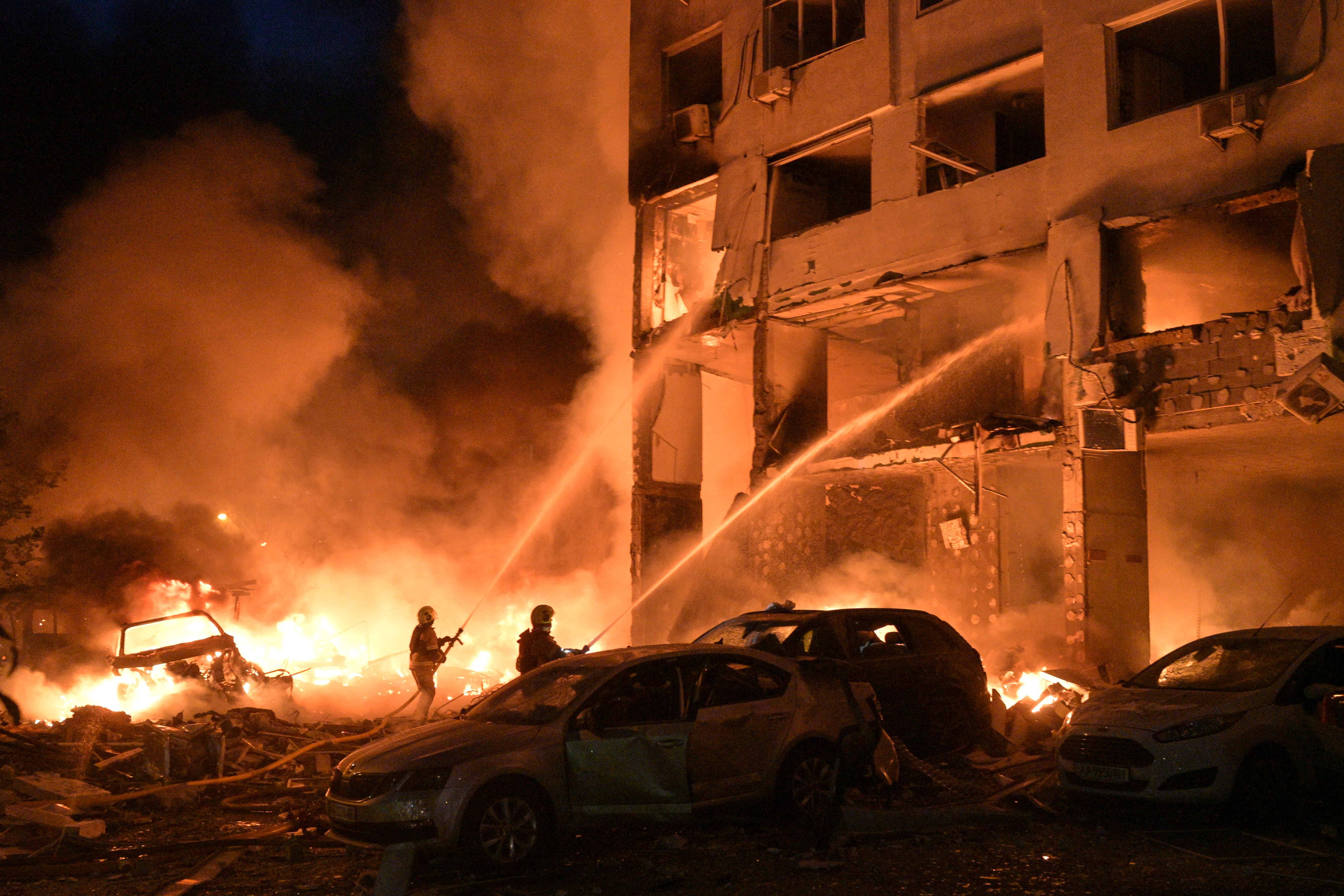
The air raid sirens in Kyiv aren't just background noise anymore; they're an alarm for a collapsing safety net. Early Monday morning, July 6, 2026, Russia launched a massive, coordinated barrage of 351 drones and 68 missiles primarily targeting the Ukrainian capital.
The results were devastating. At least 12 people died in Kyiv alone—with the country-wide death toll climbing past 20—and dozens more lay wounded under the smoking rubble of residential high-rises.
But the real story isn't just the tragic loss of life. It's the math behind what happened in the sky. Ukraine's air force intercepted almost all the cruise missiles and drones. Yet, when it came to Russia's ballistic and aeroballistic missiles, the defense score was a flat zero. Russia fired 29 ballistic missiles, including Iskander-Ms and hypersonic 3M22 Zircons. Every single one hit its target.
This isn't an issue of Ukrainian soldiers dropping the ball. It's a brutal math problem driven by a global shortage of Patriot interceptor missiles.
The Chilling Reality of the Ballistic Missile Deficit
To understand why Kyiv burned despite having some of the most sophisticated air defense systems in the world, you have to look at the mechanics of modern aerial warfare. Drones and Kh-101 cruise missiles fly relatively slow and low. Ukraine has become incredibly efficient at swatting them down using a mix of mobile fire teams, electronic warfare, and conventional anti-aircraft systems.
Ballistic missiles are a completely different animal.
Systems like the Iskander-M or the hypersonic Zircon punch up into the upper atmosphere or space before screaming back down at speeds exceeding Mach 7. They hit the ground at two kilometers per second with 500-kilogram warheads encased in heavy armor. A standard anti-aircraft missile with a fragmentation warhead won't cut it. To stop a ballistic missile, you need a specialized "hit-to-kill" interceptor that physically smashes into the threat to destroy it.
Right now, the only system in Ukraine capable of reliably doing that is the U.S.-made Patriot system.
When Ukraine's Air Force spokesman Yurii Ihnat went on national television following the strike, his message was stark. "To intercept ballistics, we need the means for interception," Ihnat said. The uncomfortable truth is that Ukraine didn't shoot down a single ballistic missile on Monday because they are either completely out of Patriot interceptors or conserving their remaining few for what they fear is an even larger strike coming down the pike.
How the Middle East Crisis Starved Ukraine's Grid
The geopolitical landscape of 2026 has fundamentally shifted the logistics of supply lines. Ukraine isn't the only nation relying heavily on American air defense tech right now. Escalating conflicts in the Middle East have severely strained the global supply chain for Patriot interceptor missiles.
Manufacturers are producing these interceptors in strictly limited numbers. When Washington has to choose between supplying batteries defending shipping lanes and bases in the Middle East or sending those dwindling stockpiles to Eastern Europe, Ukraine loses the priority lottery.
Moscow knows this. They are explicitly exploiting this bottleneck. Over the last few months, Ukrainian long-range drone strikes have successfully hit deep inside Russian territory, knocking out oil refineries and squeezing Vladimir Putin’s war economy. Russia’s Defense Ministry claimed Monday's attack was direct retaliation for those operations, framing their strikes as precise hits on weapons factories and energy grids.
But try telling that to the residents of Kyiv's Darnytskyi and Podilskyi districts.
"We came out from under the rubble straight into the fire," said Khrystyna Piatetska, a 20-year-old resident who survived the Darnytskyi strike. The blast blew out her windows, filled the stairwells with suffocating smoke, and left bodies strewn outside her building as cars exploded around her. This wasn't a drone factory; it was a residential neighborhood where people were sleeping at 2 a.m.
The High Stakes in Ankara
The timing of this strike is entirely intentional. This week, NATO leaders are gathering for a high-profile summit in Ankara, Turkey. President Volodymyr Zelenskyy has already taken to X to lay out the stakes for the alliance. He pointed out that while his forces can handle the drones, the lack of interceptors means Russia is essentially being invited to keep leveling apartment buildings.
Western allies have promised plenty of support on paper, but delivery delays are costing lives on the ground. For Ukraine, the Ankara summit isn't a venue for political posturing or vague security assurances. It’s a literal shopping trip for survival.
If European and U.S. partners leave Turkey without signing off on immediate, emergency transfers of Patriot stockpiles, Russia's air strategy will only get more aggressive. Moscow has realized that they can simply overwhelm Ukrainian air defenses by flooding the zone with cheap drones to exhaust ammunition supplies, then following up with unstoppable ballistic strikes.
What Needs to Change Immediately
The current strategy of trickle-feeding air defense ammunition to Kyiv is failing. For Western planners looking at the battlefield, a few immediate tactical pivots are required to prevent Kyiv's air defense from collapsing entirely.
- Prioritize Interceptor Diversion: Allies must temporarily divert Patriot production tranches intended for non-combat zones directly to the Ukrainian front.
- Expand Electronic Warfare Networks: Since intercepting ballistic missiles is burning through finite resources, Ukraine must scale up its domestic electronic warfare capabilities to neutralize the drone swarms that Russia uses to map out and deplete air defense radars.
- Loosen Strike Restrictions: To stop ballistic missiles, Ukraine needs to destroy the launchers inside Russia before they fire. Western allies must drop remaining restrictions on using long-range weapons against military airfields and launch sites inside the Russian border.
The tragedy on July 6 proved that sitting back and playing pure defense is a losing strategy when the goalie runs out of ammunition. If the skies over Kyiv are going to be closed, the supply chain bottlenecks in Washington and Europe have to be cleared first.