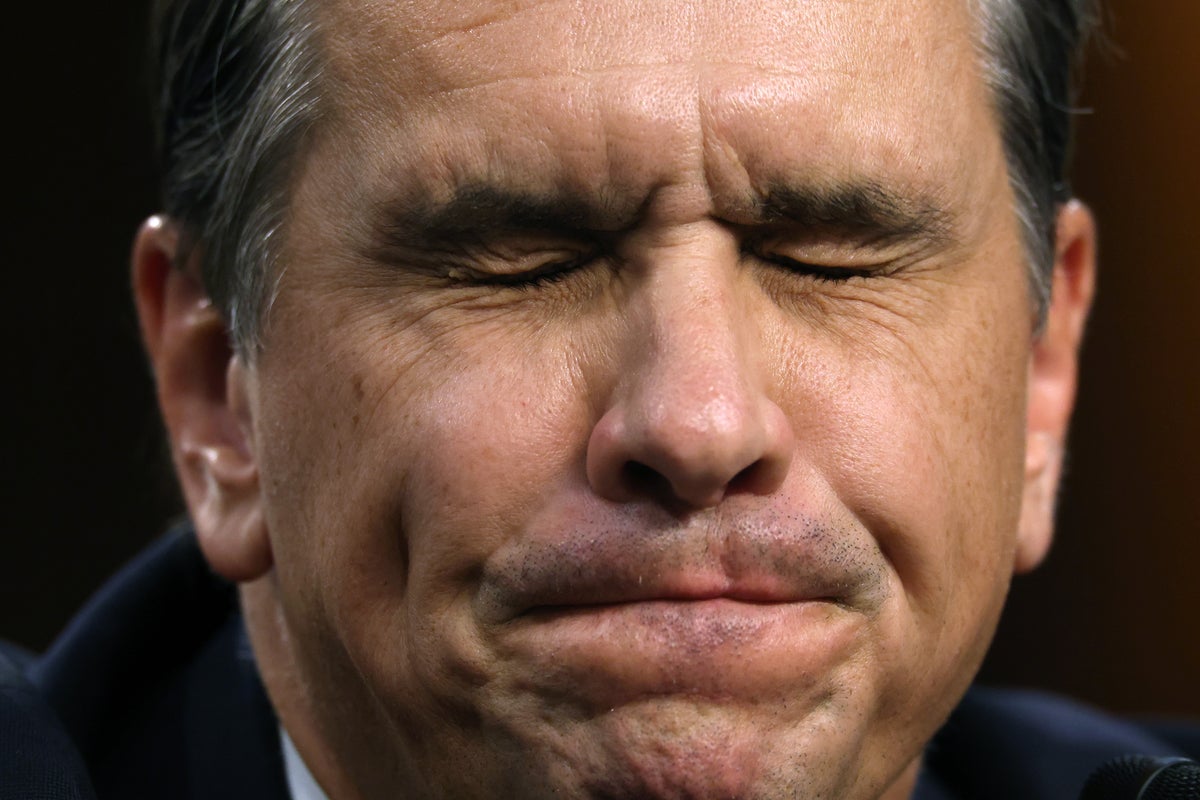
We just watched a sitting, acting Attorney General of the United States look a room full of senators in the eye and make a Freudian slip so massive it basically gave away the entire game.
During the grueling five-hour Todd Blanche confirmation hearing before the Senate Judiciary Committee, the nominee was asked about his deep ties to Donald Trump. Without skipping a beat, Blanche said, "I'm his lawyer". He corrected himself a split second later, changing it to "was his lawyer". But the damage was done. For anyone watching, that single line summed up the primary crisis of his nomination. He has never actually stopped acting as Trump’s personal defense attorney, even while running the nation's chief law enforcement agency.
The hearing was a masterclass in political tightrope walking, and honestly, Blanche fell off the wire. Facing a razor-thin margin in a committee split 11 to 10 after the death of Senator Lindsey Graham, Blanche couldn't afford to lose a single Republican vote. Yet, by the time the dust settled, key GOP swing votes like John Cornyn and Thom Tillis looked entirely unconvinced.
Here is what really happened behind the scenes, what the mainstream media glossed over, and why this hearing might have permanently derailed his path to confirmation.
The IRS tax immunity deal and the zombie slush fund
The most explosive exchanges of the day didn't actually come from Democrats. They came from Senator John Cornyn, the Texas Republican who has been openly skeptical of Blanche's leadership. Cornyn focused his target directly on the Department of Justice's bizarre settlement of Donald Trump’s $10 billion lawsuit against the Internal Revenue Service.
That lawsuit arose after a government contractor leaked Trump’s tax returns in 2019. To settle the case, the Justice Department—under Blanche’s watch—agreed to two stunning terms. First, it set up a $1.8 billion "anti-weaponization" fund designed to pay out taxpayer money to people who claimed the government had targeted them. Critics immediately labeled it a taxpayer-funded piggy bank for January 6 defendants and political allies. Second, the deal permanently barred the IRS from ever auditing or investigating past tax returns filed by Trump, his family, or his businesses.
Faced with fierce backlash, Blanche claimed he killed the fund. "The weaponization fund is dead," he told the committee. He insisted no money had actually left the Treasury.
But Cornyn was not buying it. He produced the actual settlement document and read from it. The text clearly states that the terms of the deal can only be modified through a written agreement signed by both parties.
"Has there been a written agreement of the parties to modify the settlement fund?" Cornyn asked.
"No," Blanche admitted.
That admission is a legal nightmare. It means the fund is not actually dead. It is just sleeping. Because there is no written modification, Trump or his businesses could easily sue the government tomorrow for breach of contract to force the DOJ to revive the fund. Blanche had to concede this point on the record, admitting that the document remains legally enforceable.
A federal judge called his work collusion
What made the IRS tax deal even more toxic was a scathing ruling handed down just 48 hours before the hearing. Federal Judge Kathleen Williams in Miami completely threw out the settlement.
Her opinion was brutal. She wrote that there was never any real legal dispute between the Trump administration and the Justice Department over the IRS lawsuit. Instead, she called it "collusion" designed to manufacture a desired political outcome: tax immunity for the president’s family and a massive payout fund.
Even worse for Blanche, Judge Williams formally referred him and Associate Attorney General Stanley Woodward to the New York State Bar and the District of Columbia Bar for disciplinary investigation.
When Senator Dick Durbin pressed him on this, Blanche tried to play defense. "I very much disagree with the judge’s insinuations about me, and we're going to do what we can to make that right," he said.
But you cannot easily wave away a federal judge accusing the country's acting Attorney General of abusing the court system to run a collusive legal scheme for his former client. It destroys any pretense of department independence.
Redacted survivors and protected enablers in the Epstein files
If the tax settlement exposed financial conflicts, the discussion around the Jeffrey Epstein files exposed a deep moral failure.
Democratic Senator Dick Durbin pointed out that ten survivors of Epstein’s sex-trafficking ring were sitting right there in the hearing room. He demanded that Blanche commit to meeting with them personally within the next 30 days to address their concerns.
Blanche refused to make that commitment. He claimed that because many of the survivors are represented by legal counsel, ethical rules barred him from direct contact. Instead, he offered to let his staff handle the meeting.
That did not sit well with the survivors or the committee. The Department of Justice recently oversaw the public release of millions of pages of Epstein-related documents. But the release was a complete mess. The DOJ mistakenly left the identifying personal information of several survivors unredacted, exposing them to public harassment and re-traumatization. Meanwhile, many of the names of Epstein’s wealthy enablers and associates remained hidden behind heavy black ink.
Blanche took responsibility for the "mistakes," downplaying them by claiming only about 1% of the redactions had errors and that they were corrected quickly.
But for the survivors, a 1% error rate is not a statistic. It is a life-altering breach of privacy. The optics of the nominee refusing to meet with these women while defending a process that shielded powerful enablers were devastating.
The "I'm his lawyer" slip of the tongue that exposed everything
Throughout the five-hour marathon, Blanche repeatedly tried to argue that his past job representing Trump should not define his entire career. He spoke of his years as a federal prosecutor in the Southern District of New York and cast himself as a traditional law-and-order public servant.
But his own words kept betraying him.
The most damning moment came during questioning by Senator Adam Schiff. When asked about his ongoing relationship with Trump, Blanche made his "I'm his lawyer" slip. Schiff immediately capitalized on it, pointing out that Blanche still maintains an active attorney-client relationship with the president.
How can the public trust the Justice Department to remain independent when its leader still considers the President of the United States to be his active personal client?
Blanche also faced intense pressure over his handling of January 6 defendants. He defended Trump's blanket pardons for those who stormed the Capitol, calling the decisions "very generous" and asserting that the president has the absolute right to issue them.
This creates a massive roadblock with Senator Thom Tillis. Tillis has made it clear that he will not support any nominee who downplays or sanitizes the violence of January 6. By defending the blanket pardons, Blanche may have lost the North Carolina Republican’s crucial vote.
Why Blanche's path to confirmation remains highly doubtful
This hearing was supposed to be Blanche’s moment to project strength and secure his path to the permanent Attorney General job. Instead, it highlighted every single conflict of interest that has plagued his brief tenure as acting head of the DOJ.
By the end of the day, neither Cornyn nor Tillis would commit to voting for him. With Democrats united in opposition, even a single Republican defection on the Senate floor will completely sink his nomination.
Blanche tried to frame himself as a victim of political "lawfare," but the cold, hard facts of the IRS settlement and the Epstein files speak louder than any political narrative. He remains trapped in the dual role of the president's personal defender and the nation's chief law enforcement officer. Until he can prove he actually knows the difference between the two, his confirmation remains dead in the water.