National political talking points have a funny way of dying the moment they hit local zoning boards.
For months, Donald Trump has championed artificial intelligence on the national stage, arguing that the United States must build massive digital infrastructure to outpace international competitors. He even signed a sweeping executive order to stop state and local regulations from slowing down the tech industry’s expansion.
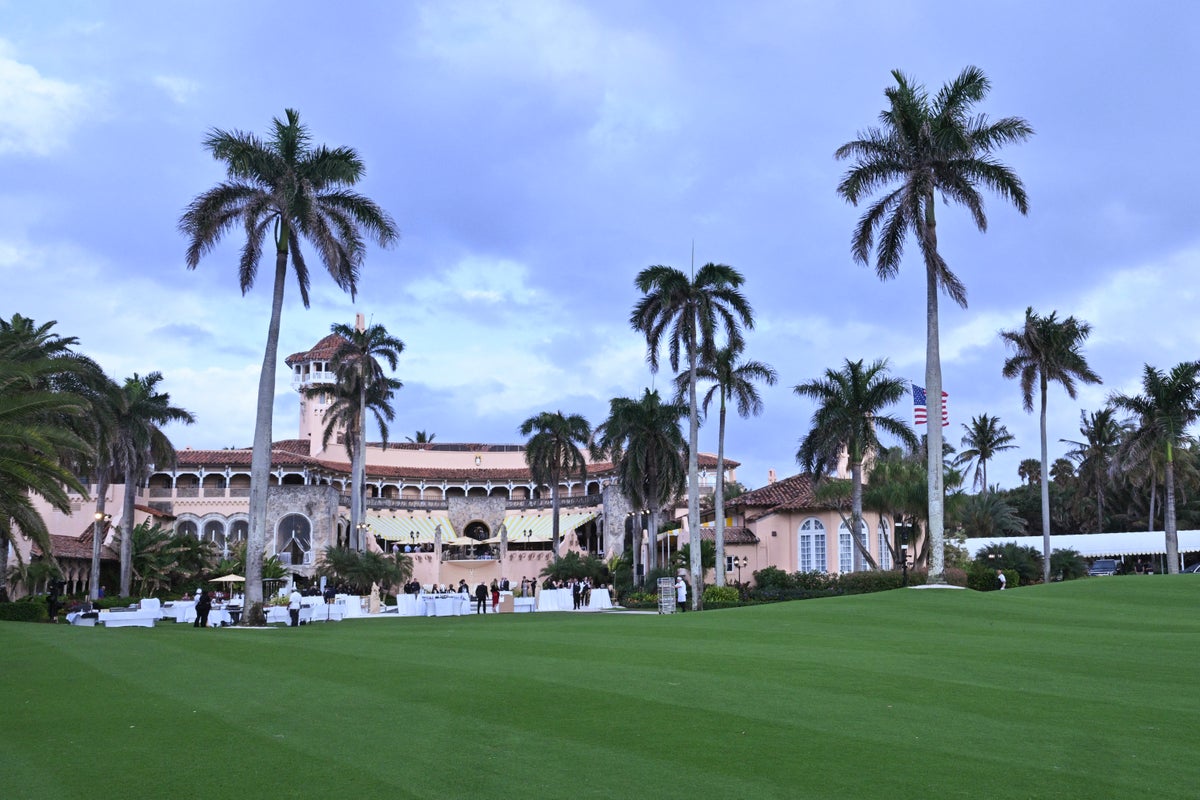
But that national ambition is crashing into a very loud, very angry wall of resistance just twenty miles from Mar-a-Lago.
In Palm Beach County, Florida, a proposal known as Project Tango has turned a quiet community near the edge of the Everglades into a political battlefield. The fight is not about global dominance or digital supremacy. It is about well water, constant low-frequency humming, and the safety of children at a local elementary school.
The clash reveals a massive disconnect between federal tech policies and the physical realities of the neighborhoods forced to host them. Here is why the residents of western Palm Beach County are fuming, and why this fight matters for the future of tech infrastructure across America.
The Scale of Project Tango
To understand why residents are protesting, you have to look at the sheer scale of what is being proposed.
Project Tango is a massive, 202-acre development planned along Southern Boulevard near Loxahatchee and Wellington. The developer, Palm Beach Aggregates (PBA), originally got approval in 2016 to build standard warehouses and a modest 206,000-square-foot server farm. Back then, traditional server farms did not require much.
Then came the modern artificial intelligence gold rush.
PBA went back to the county to ask for a massive change. They want to shrink the warehouse space and expand the server area fivefold into a 1 million-square-foot hyperscale AI data center.
What does a hyperscale AI data center actually do? It houses thousands of specialized, power-hungry graphic processing units (GPUs) running complex machine learning models around the clock. These units get incredibly hot. Keeping them cool requires an unimaginable amount of resources.
Opponents of Project Tango estimate that this single campus could draw more than 600 megawatts of electricity. To put that in perspective, that is roughly 17 times the power used by the largest traditional data center currently operating in Florida. It is a massive industrial load dropped right next to a residential community.
Why the Neighbors Are Terrified
If you talk to the people living in Arden, a master-planned community of half-million-dollar homes bordering the project, they do not care about training neural networks. They care about their daily lives.
Ben Brown, an Arden resident, parent of two kids at the adjacent Saddle View Elementary School, and vice president of the local homeowners association, has become one of the loudest voices against the project. For him, the threat is constant and inescapable.
"They would never get any respite or break from this," Brown warned, thinking about his children. "It will be all day long—at school, outside at recess, and when they come home".
The opposition has focused on three main issues.
The Threat to Drinking Water
Water is the lifeblood of South Florida, and the Everglades region is hydrologically fragile. Most homes in this rural pocket of Northwest Palm Beach County rely entirely on private wells.
The developer claims the facility will only draw about 5,000 gallons of potable water a day for employee use, relying on a closed-loop recirculating cooling system. But residents like Rachel Smith, who created the opposition group No To Project Tango, are deeply skeptical. Critics point out that the developer's water estimates have shifted during the approval process, sometimes jumping to 100,000 gallons a day.
If the cooling system leaks or the developers resort to deep-well injection to dispose of wastewater, local aquifers could face serious contamination risks. If the water table drops, private wells dry up. For these families, there is no backup plan.
The Nonstop Industrial Hum
Data centers require massive arrays of industrial fans and diesel backup generators to keep servers from overheating and crashing during power outages. These fans produce a continuous, low-frequency hum that can travel for miles.
County codes categorize the area as "light industrial," which explicitly bans developments that send noise or vibrations past their property lines. Residents argue that a 600-megawatt facility running 24/7 is, by definition, a heavy industrial operation.
The reality of this noise is not hypothetical. In a bizarre twist of local politics, Michael Carbonara—a Republican candidate running for Florida’s 22nd Congressional District, which covers this area—is currently embroiled in a lawsuit in Michigan. The lawsuit alleges that a containerized data center Carbonara owns there has ruined the learning environment at a local elementary school due to relentless fan noise. The hypocrisy has only fueled the anger of Palm Beach parents.
Rising Utility Bills
When a massive user draws 600 megawatts from the local power grid, someone has to pay for the infrastructure upgrades needed to deliver that electricity. Historically, utility companies have passed those costs onto everyday ratepayers.
While Florida Power & Light (FPL) insists that tech companies will pay their own way, residents are not buying it. They fear their monthly bills will spike to subsidize a highly profitable tech giant whose identity remains hidden behind nondisclosure agreements.
A State Level Rebellion Against Tech Overreach
While Donald Trump wants to streamline AI development, Florida's state leaders are starting to build defensive walls.
Governor Ron DeSantis has taken a sharply different path than Trump on this issue. DeSantis has openly criticized state subsidies for these massive digital operations, warning that they drain local public resources without offering tangible benefits in return.
"They should not be able to offload costs onto people that are already strapped with high costs in other areas," DeSantis stated, pointing out that local communities across party lines are rejecting these plans.
This pushback has teeth. On July 1, 2026, a new Florida law took effect:
- Ratepayer Protection: It requires the Public Service Commission to ensure that developers, not residential utility customers, pay for all grid upgrades.
- Water Oversight: The South Florida Water Management District must hold public hearings before issuing water permits to any data center requiring 50 megawatts of power or more.
- Moratoriums: At least ten local governments across Florida have passed temporary bans on new data centers, and three counties have rejected them entirely.
Even the Palm Beach County Commission voted unanimously to advance a proposal that could lead to a local moratorium on future large-scale data centers. Local leaders are realizing they do not have the regulatory language to handle the sheer size of these modern projects.
How to Protect Your Own Neighborhood From Data Center Sprawl
If you live in a semi-rural or suburban area near a major power transmission line, a hyperscale data center proposal could easily land in your backyard next. You do not have to wait for the bulldozers to show up to take action.
1. Watch the Zoning Definitions
Developers often try to slide these projects through under outdated "light industrial" or "business park" zoning codes written decades before hyperscale AI existed.
- What to do: Attend your local county planning meetings. Push your commissioners to update zoning definitions to classify any data center over 15 or 50 megawatts as "heavy industrial." This forces them to face stricter noise, setback, and environmental rules.
2. Track the Power and Water Permits
A data center cannot run without water for cooling and power for servers.
- What to do: Monitor filings with your local water management district and utility commission. Under laws like Florida's SB 484, high-demand users must jump through major regulatory hoops. Make sure your local representatives are actively enforcing these transparency rules.
3. Demand Transparency Over Secret NDAs
Tech giants frequently hide behind code names like "Project Tango" and use local shell companies to sign nondisclosure agreements with county staff. This keeps the public in the dark until the deal is nearly finalized.
- What to do: Write to your county commissioners and demand a ban on local government staff signing NDAs with private developers. If they want to build in your town, they must do it in the open.
The fight in Palm Beach County shows that local communities are no longer willing to quietly accept the physical collateral damage of the virtual world. The AI revolution might be coming, but residents are making it clear: if you want to build the future, you have to respect the people living in the present.