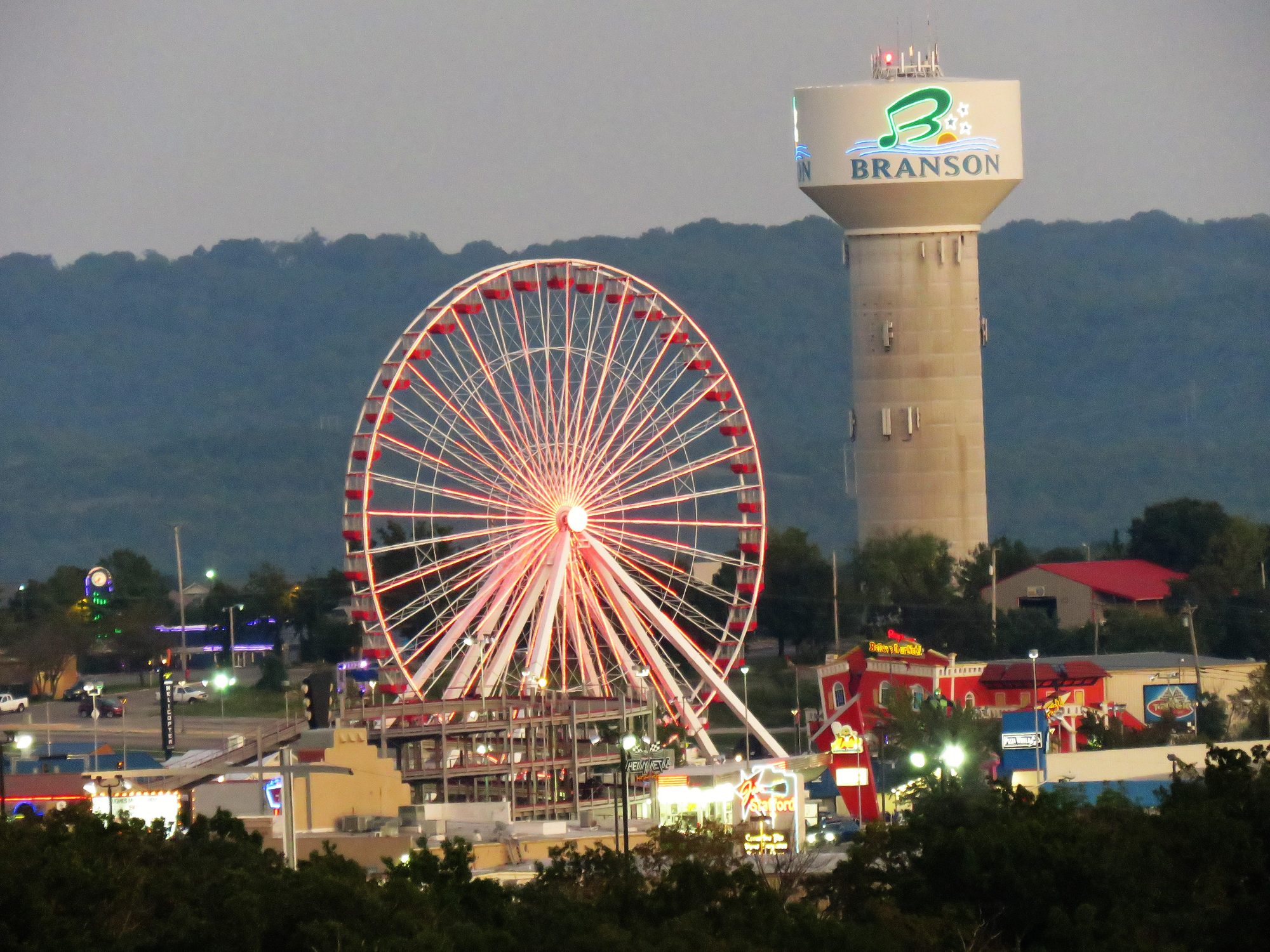
The fog rolls off Lake Taneycomo in thick, ghostly ribbons, smelling of damp cedar and the faint, metallic tang of cold water. It is six in the morning, and the neon skeletons of Highway 76 have not yet flickered to life. On a wooden bench near the water’s edge, an elderly man named Arthur adjusts his spectacles, watching a blue heron pick its way through the shallows with surgical precision. Arthur has come to this corner of the Ozarks every summer since 1974, a pilgrimage that began in a wood-paneled station wagon and now continues in a quiet, silver sedan. He is not here for the glitz, though he has seen every iteration of it, from the early days of the Baldknobbers to the high-tech spectacles of today. He is here because this limestone hollow offers a specific kind of American solace, a place where the line between kitsch and soul becomes blurry enough to disappear. For those like Arthur, the sheer volume of Stuff To Do In Branson Missouri is not about checking boxes on a tourist map; it is about the communal act of remembering a version of the country that feels, however artificially, still intact.
The geography of the region is a series of contradictions. To the west lies Table Rock Lake, a massive, man-made reservoir with nearly 800 miles of shoreline, its surface often so still it looks like polished obsidian. To the east, the hills roll upward into the ancient, weathered peaks of the Ozark Mountains, some of the oldest highlands on the continent. In the center of it all sits a town of roughly 13,000 permanent residents that swells to accommodate millions of visitors annually. It is a place built on the promise of the spectacular, yet its roots are buried deep in the hard, unforgiving dirt of the Shepherd of the Hills. This is where Harold Bell Wright wrote his 1907 novel, a book that sold millions and effectively invented the local tourism industry by painting the Ozarks as a site of moral and physical restoration. Wright’s characters found God in the glades and peace in the valleys, and a century later, people are still searching for those same things between the theaters and the go-kart tracks.
The Engineering of Nostalgia
Silver Dollar City sits atop Marvel Cave, a geological wonder that once served as the area’s primary draw. Today, the theme park is a sprawling, 1880s-themed sensory experience where the scent of succotash cooked in giant iron skillets competes with the smell of scorched wood from the blacksmith’s forge. There is a specific rhythm to the park, a calculated pace that favors craftsmanship over sheer velocity. You can watch a glassblower transform a glob of molten silica into a delicate swan, his face reddened by the heat of the furnace, while just a few hundred yards away, the Time Traveler roller coaster drops riders into a vertical plunge.
The brilliance of this place lies in its refusal to choose between the past and the present. It treats the heritage of the Ozarks with a reverence that borders on the religious, even as it employs world-class engineering to keep the crowds coming. The wood carvers and lye soap makers are not just performers; many are masters of their trades who have spent decades perfecting techniques that would otherwise be lost to the digital age. They represent a tangible connection to a pre-industrial Missouri, a time when "making do" was a way of life rather than a quaint aesthetic. Visitors stand in long lines not just for the adrenaline of the rides, but for the chance to touch something that was made by a human hand, to see the physical evidence of labor and skill in a world that increasingly feels ephemeral and automated.
The Cultural Weight of Stuff To Do In Branson Missouri
The theaters that line the main strip are often dismissed by coastal critics as bastions of sentimentality, but that critique misses the point of why people gather in these velvet-seated rooms. When the lights go down at the Presleys’ Country Jubilee or the Sight & Sound Theatres, a specific contract is signed between the performer and the audience. It is an agreement to value tradition, faith, and family above the cynical ironies of modern life. At the Sight & Sound, the scale of production is staggering, with live animals, massive sets that wrap around the audience, and pyrotechnics that rival Broadway. Yet, the stories told are ancient. They are narratives of redemption and sacrifice that resonate deeply with a demographic that often feels sidelined by the rapid shifts of 21st-century culture.
This cultural anchor is what gives the region its staying power. While other regional tourist hubs have withered or reinvented themselves as gambling meccas, this town has doubled down on its identity as a sanctuary for the traditional. It is a place where "God Bless America" is sung at the end of nearly every show, and where veterans are asked to stand and be recognized in almost every venue. The emotional resonance of these moments is real. You can see it in the way a man in a faded ballcap wipes his eyes when a fiddle player hits a particularly mournful note, or in the way a grandmother leans over to whisper a story to her grandson during a patriotic medley. The entertainment is a vehicle for a shared emotional vocabulary that is becoming increasingly rare in a fragmented society.
The Biology of the Hills
Away from the neon, the Ozarks offer a different kind of intensity. The White River system, once a wild and unpredictable waterway, was tamed by a series of dams in the mid-20th century, creating the distinct environments of Table Rock and Taneycomo. Because the water for Taneycomo is drawn from the bottom of Table Rock Lake, it remains a constant, bone-chilling 48 degrees Fahrenheit year-round. This creates a unique tailwater fishery that is world-renowned for its trout. It is a strange, engineered ecosystem where rainbow and brown trout thrive in a place they were never meant to be.
Fishing here is a quiet, meditative counterpoint to the thunder of the strip. In the early morning mist, the sound of a fly line whipping through the air is the only noise. Anglers wade into the shallows, their movements slow and deliberate, searching for the flash of a silver belly in the emerald water. There is a profound sense of isolation available just a few miles from the world’s largest toy museum. This proximity of the wild and the commercial is a hallmark of the region. You can spend your morning fighting a ten-pound brown trout and your afternoon watching a world-class illusionist, never once feeling the jarring transition between the two. The hills absorb both experiences, their ancient limestone bluffs indifferent to the fleeting activities of the humans below.
Exploring the Varieties of Stuff To Do In Branson Missouri
The Titanic Museum Attraction looms over the road like a ghost ship frozen in ice, a half-scale replica of the ill-fated liner complete with an artificial iceberg that feels cold to the touch. Inside, the experience is somber and meticulously researched. Each visitor is given a boarding pass with the name of a real passenger, and you do not learn your fate until the very end of the tour. It is a masterclass in narrative immersion. The grand staircase, built from the original blueprints, is breathtaking, but the real power of the museum lies in the small things: a pair of leather shoes, a tattered letter, a pocket watch stopped at the moment of immersion.
The museum serves as a reminder that the town’s appeal is not limited to hillbilly caricatures or country music. It has become a repository for a broad spectrum of human history and curiosity. Whether it is the Butterfly Palace, where thousands of winged creatures flutter in a climate-controlled rainforest, or the Ralph Foster Museum at the College of the Ozarks, known as the "Smithsonian of the Ozarks," the depth of the offerings is surprising. The College of the Ozarks itself is a fascinating study in American education. Known as Hard Work U, the institution requires students to work on campus rather than pay tuition. They run the mill, the dairy farm, and the restaurant, creating a self-sustaining community that mirrors the self-reliance of the early pioneers.
The Rhythm of the Strip
As evening falls, the Highway 76 strip transforms into a river of light. The traffic moves at a crawl, a slow-motion parade of minivans and motorcycles. This is the heartbeat of the experience. There is a kinetic energy to the neon, the bright pinks and electric blues reflecting off the hoods of cars. For some, this is the part to be avoided, the "tourist trap" side of the coin. But for the families who return year after year, the strip is a festive corridor of possibility. It is the place where you stop for custard, play a round of miniature golf under a giant windmill, and argue about which show to see next.
The economics of the strip are a marvel of small-business tenacity. Many of the theaters are still family-owned and operated, with multiple generations appearing on stage together. This sense of lineage is crucial. The performers aren't just names on a marquee; they are neighbors. You might see the lead singer of a show buying groceries at the local market the next morning. This lack of distance between the "stars" and the audience creates a sense of intimacy that is missing from the hyper-curated celebrity culture of Los Angeles or Nashville. It feels like a small town that just happens to have 60,000 theater seats.
The shadows lengthen across the hollows as the last shows of the night let out. The crowd spills onto the sidewalks, a sea of faces illuminated by the fading glow of the marquees. There is a lingering warmth in the air, the scent of popcorn and exhaust and the pine-heavy breeze coming off the hills. In the parking lots, engines turn over and headlights cut through the gathering dark, pointing toward hotels, campgrounds, and the long highways that lead back home. The spectacle is over for the day, but the feeling of it remains, a soft vibration in the chest that persists long after the music has stopped.
On his bench by the lake, Arthur rises slowly, his knees popping in the quiet air. He watches the heron take flight, its long wings beating rhythmically as it disappears into the dark tree line. The water of Taneycomo is black now, reflecting the first few stars that have managed to pierce the light pollution of the strip. He thinks about the summer of 1974, about the kids who are now adults with their own station wagons, and about the way the hills seem to hold onto everything while letting everything change. He turns toward his car, leaving the silence of the water for the familiar hum of the town, moving toward the lights that never quite go out.
The hills do not offer answers, only a place to ask the questions. Why do we come back to the same places, the same songs, the same stories? Perhaps it is because, in a world that feels increasingly fragmented and fast, we need a place that moves at the speed of a fiddle bow. We need a place where the past isn't a foreign country, but a neighbor who still leaves the porch light on. The neon eventually fades into the dawn, and the lake remains, cold and constant, waiting for the first light to hit the mist.
The last car leaves the theater lot, and the Ozarks settle into a brief, breathing stillness.