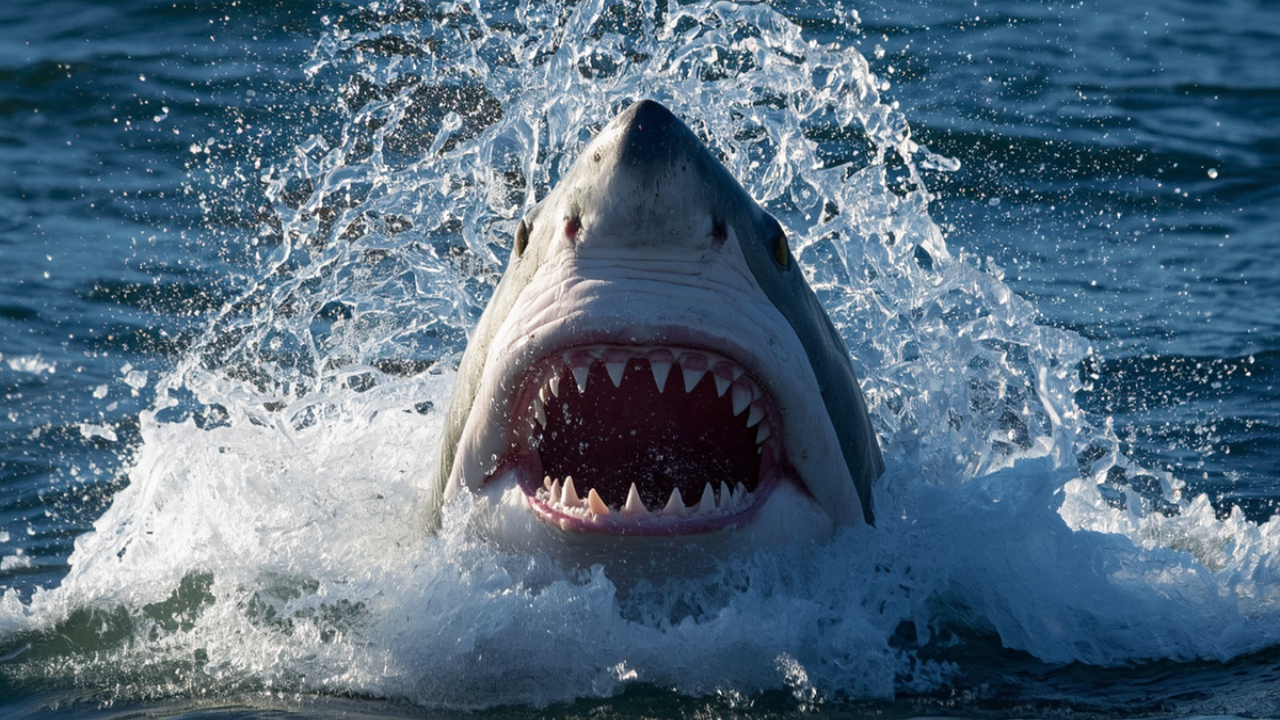
You have probably seen the terrifying headlines splashed across the internet. Tabloids love to scream about "shark-infested" waters, making it sound like stepping into the ocean is an immediate death sentence. Honestly, it's mostly media hype. The real data tells a completely different story.
If you are planning a beach vacation, you don't need to cancel your trip. But you should know the facts. The International Shark Attack File (ISAF), managed by the Florida Museum of Natural History, tracks these numbers meticulously. Globally, there were 65 confirmed unprovoked shark bites, which aligns perfectly with historical averages. America is the global hotspot for these encounters, but the word "attack" usually means something much less dramatic than a Hollywood movie.
Most encounters in the United States happen because of a simple mix-up: a lot of people and a lot of hungry fish occupying the exact same stretch of water.
Here is what is actually happening along America's most active coastlines and what you need to know to stay safe.
Why Florida Remains the Shark Bite Capital of the World
When it comes to shark encounters, Florida is the undisputed heavyweight champion. The state consistently accounts for a massive chunk of all reported cases in the United States. But before you swear off the Sunshine State forever, you need to understand why the numbers are so high.
It is not because Florida has mutant, human-hunting sharks. It is a numbers game. Florida has thousands of miles of sandy beaches, warm water, and millions of tourists swimming year-round. When you pack that many human legs into the surf, accidents happen.
Volusia County and the Ponce Inlet Trap
If Florida is the capital, Volusia County is the absolute epicenter. Specifically, New Smyrna Beach. This single stretch of sand has seen more shark bites than anywhere else on earth.
The culprit here is Ponce Inlet. The inlet creates massive tidal currents that push baitfish in and out of the lagoon system. Sharks, mostly juvenile blacktips and spinners, hang out here for an easy meal. Surfers flock to New Smyrna for the consistent waves created by the same underwater topography.
You get murky, churned-up surf, hundreds of surfers paddling, and dozens of young sharks chasing fish. The visibility is terrible. A shark sees a flash of a foot or a hand, thinks it's a mullet, and takes a quick bite. They realize their mistake instantly and let go. That is why the vast majority of Florida bites are minor, requiring a few stitches rather than major surgery.
The Dangerous Waters of Hawaii and California
While Florida handles the volume, the Pacific coast deals with a completely different league of predators. This is where the media-fueled nightmares occasionally match reality, though the odds of an encounter remain incredibly low.
Hawaii and the Tiger Shark Territory
Hawaii sits second nationally for unprovoked encounters. The underwater drop-offs here are steep. Deep ocean water sits right next to popular swimming reefs. This allows large apex predators like tiger sharks to swim incredibly close to shore.
Maui and Oahu see the most activity. Tiger sharks are not picky eaters; they are curious and opportunistic. Unlike the small blacktips in Florida, a bite from a 12-foot tiger shark is inherently severe. Swimmers and surfers here face a different kind of risk, especially after heavy rains when runoff makes the nearshore water murky, drawing sharks closer to river mouths to scavenge.
California and the White Shark Nursery
California encounters are rare, but they grab headlines because of one species: the great white shark. Over the past couple of decades, scientists have noticed an uptick in juvenile white sharks using the shallow beaches of Southern and Central California as nursery grounds.
The risk shifts as you move north. In Central California places like Monterey Bay and the infamous "Red Triangle," adult white sharks patrol the coast to hunt for seals and sea lions. Tragedies do happen. Marathon swimmer Erika Fox lost her life during a group training swim in Monterey Bay.
White sharks hunt from below, looking up at the surface for the silhouette of a seal. A surfer on a board or a swimmer in a wetsuit looks remarkably like a sea lion from 20 feet down.
The Carolinas and the Atlantic Migration Route
Moving back to the East Coast, the Carolinas represent a major highway for migratory shark species. As the seasons change, sharks move up and down the coast, following comfortable water temperatures and schools of baitfish.
South Carolina's Grand Strand
The Grand Strand, stretching through Myrtle Beach, attracts millions of vacationers every summer. It also attracts a high volume of blacktip, bull, and spinner sharks.
The water here is warm, and the sandbars create shallow troughs where baitfish get trapped. Most bites in South Carolina happen in the surf zone during peak tourist season. Again, these are almost always cases of mistaken identity in low-visibility water.
North Carolina's Outer Banks
North Carolina is an oceanographic mixing pot. It is where the warm Gulf Stream current collides with the cold Labrador Current. This creates an incredibly rich marine environment.
The Outer Banks feature a dynamic system of shifting sandbars and deep channels. Bull sharks, tiger sharks, and various coastal species frequent these waters. Because the environment is so dynamic, swimmers can easily find themselves wading right next to a deep drop-off where larger sharks prefer to hunt.
How to Actually Stay Safe in the Ocean
You don't need to avoid the ocean. You just need to stop acting like prey. Sharks are not actively hunting humans, but they are wild predators following basic instincts. You can dramatically lower your already microscopic risk by following a few non-negotiable rules.
- Avoid dawn and dusk: This is prime feeding time. Sharks have an evolutionary advantage in low-light conditions, and their vision is compromised, meaning they are way more likely to mistake you for a fish.
- Ditch the jewelry: Shiny watches, rings, or chains flash in the water exactly like the silver scales of a panicked baitfish.
- Stay away from fishermen: If people are actively dumping bait and fish guts into the water on a pier or a beach, do not swim there. You are literally swimming in a giant soup bowl of shark attractant.
- Don't swim near river mouths or inlets: Turbid, murky water after a storm reduces visibility to zero. Sharks hunt by sensing vibrations here, and they will bite first and ask questions later.
- Look for bird activity: If you see seabirds diving aggressively into the water, there is a school of baitfish below. Where there are baitfish, there are predators. Stay out of the chaos.
The ocean belongs to them. We are just visitors. Pay attention to your surroundings, respect the water, and leave the paranoia on the sand.