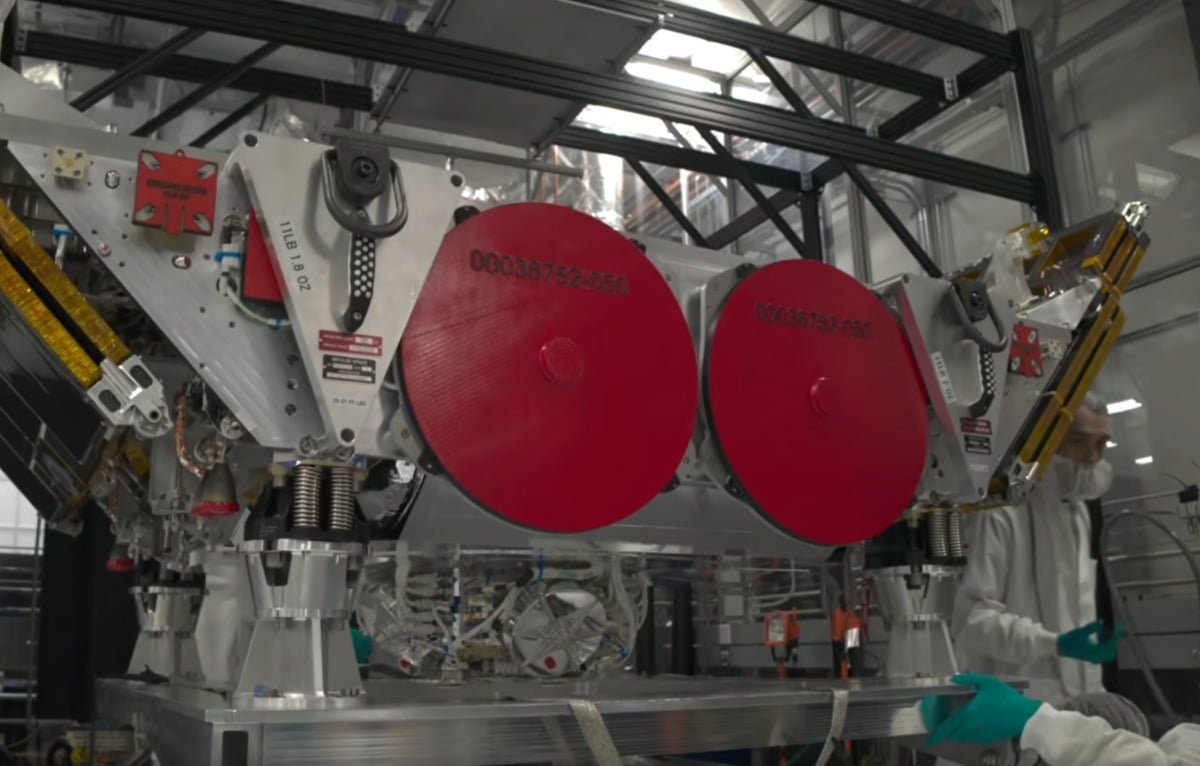
Nvidia isn't the only player trying to own the AI silicon hardware market. While Silicon Valley gets all the headlines, a major shift is happening across the Pacific. South Korean chip designer Rebellions is preparing to list its shares in early 2027, and its strategy tells us a lot about where AI hardware is actually headed.
CEO Sunghyun Park confirmed the company selected JPMorgan and Samsung Securities as lead underwriters. They're aiming for an initial public offering in the first or second quarter of next year, prioritizing Seoul's main KOSPI exchange over the tech-heavy KOSDAQ. A secondary listing in the US on the NYSE or Nasdaq remains on the table down the line. If you enjoyed this piece, you might want to look at: this related article.
That choice of market isn't accidental. It reflects a clear pivot in how global markets value specialized hardware startups.
Why Rebellions Chose KOSPI Over Wall Street First
Most high-growth AI companies run straight to Nasdaq the moment they hit unicorn status. Rebellions hit a $2.34 billion valuation after pulling in $400 million in pre-IPO funding, so a US listing was certainly within reach. For another angle on this event, refer to the recent coverage from CNET.
Yet Park and his team chose to prioritize South Korea first.
The reason comes down to institutional backing and sovereign supply chains. Rebellions is deeply integrated into South Korea's national AI infrastructure roadmap. The government-backed Korea National Growth Fund dumped roughly $166 million into the startup as its flagship investment under the K-Nvidia initiative. Local institutional investors understand this strategic moat far better than retail traders on Wall Street might right now.
Besides, Rebellions holds an investor list that looks like a memory chip cartel.
- Samsung Electronics and SK Hynix provide strategic capital and critical memory access.
- SK Telecom provided market scale when Rebellions merged with its AI chip arm, Sapeon Korea.
- Aramco's Wa'ed Ventures gives them a bridge into Middle Eastern data center expansion.
When your memory chip suppliers literally own equity in your business, secure access to High Bandwidth Memory becomes a massive structural advantage. That matters because HBM supply bottlenecks are killing rival chipmakers right now.
The Big Shift From AI Training to Inference
Building chips for training giant models like GPT-4 requires massive capital and raw compute horsepower. Nvidia owns that market completely.
Rebellions took a different bet early on. They focused almost entirely on inference.
Inference is what happens after a model is trained. It's the moment a user types a prompt and receives a response in real time. Training happens once or twice a year for big foundation models. Inference happens billions of times every single day.
Data centers running production workloads care about three things:
- Power consumption per query
- Thermal efficiency
- Total cost of ownership
GPUs built for heavy training are notoriously power-hungry and expensive to run solely for inference. Specialized Neural Processing Units like Rebellions' flagship Rebel100 chiplet architecture use power-efficient designs tailored specifically to run models once they're built.
As commercial AI deployments mature, companies are realizing that running daily operations on top-tier GPUs destroys their operating margins. That's where alternative ASIC architecture steals market share.
Going After US Labs Instead of Hyperscalers
You might expect a fabless startup to pitch hyperscalers like Microsoft Azure or Amazon Web Services. Rebellions is doing something different.
They're targeting front-tier AI labs like Meta and xAI directly.
The company recently appointed former Oracle executive Marshall Choy as Chief Business Officer to lead its North American push. Instead of selling raw chips to cloud providers who want to build their own silicon anyway, Rebellions is shipping full-stack rack solutions directly to research labs and enterprise clusters.
Their latest systems, RebelRack and RebelPOD, wrap their NPU silicon into drop-in data center hardware. They support open-source infrastructure standards out of the box, including PyTorch, Triton, vLLM, and Kubernetes.
That open software ecosystem matters. Proprietary hardware fails when software developers refuse to write code for it. By integrating directly into PyTorch and Hugging Face pipelines, Rebellions removes the friction that usually kills enterprise chip adoption.
Revenue Is Finally Arriving
Venture capital used to fund AI chip startups based purely on benchmark slides. Those days are gone. Public market investors demand real customer revenue.
Park noted that commercial revenue has started materializing at scale. Between commercial deployments across South Korean telecom networks, government data center contracts, and active proof-of-concept trials with US customers, the balance sheet looks ready for public scrutiny.
The upcoming IPO will test whether public equity markets are ready to support non-Nvidia hardware players.
If Rebellions successfully lists on KOSPI next year with strong trading volume, expect a flood of rival inference startups to follow their playbook. Building custom silicon, securing foundry and HBM supply through strategic investors, and targeting the high-margin inference market might be the only viable survival guide for chipmakers standing in Nvidia's shadow.
Practical Next Steps for Tech Investors
If you're tracking the AI hardware ecosystem ahead of the 2027 IPO cycle, keep these actions on your radar:
- Watch HBM Allocation Reports: Keep track of Samsung and SK Hynix HBM3E production yields. Rebellions' unit economics depend on consistent memory allocation.
- Monitor KOSPI AI Institutional Flows: Track capital inflows into South Korean tech ETFs as domestic funds position themselves for state-backed tech listings.
- Follow US Enterprise Trials: Look for official deployment announcements between Rebellions and tier-one US research labs throughout late 2026.