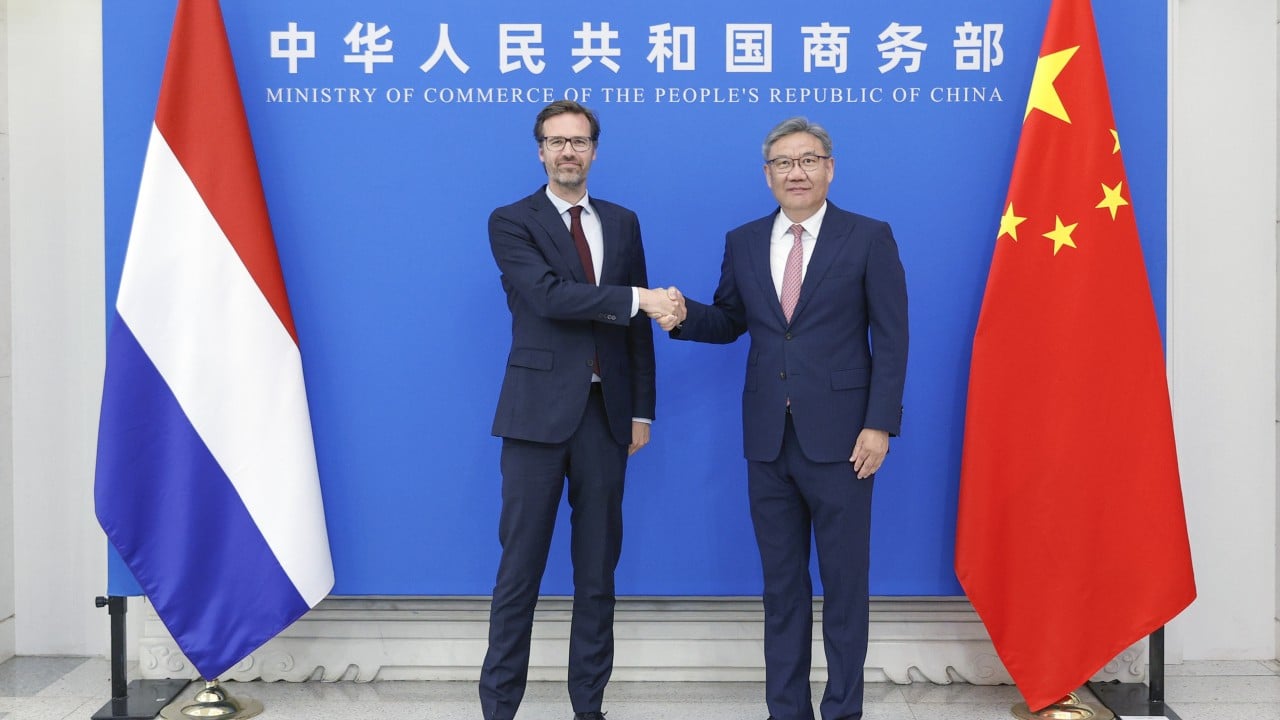
The global semiconductor conflict just hit a bizarre speed bump in Beijing. Dutch Trade Minister Sjoerd Sjoerdsma just wrapped up a high-stakes three-day visit to China, marking the first time a Dutch trade minister has led an in-person trade mission there since 2018. It's an awkward reunion. Five years ago, Beijing personally blacklisted Sjoerdsma when he was a lawmaker outspoken about human rights. Today, he's sitting across from Chinese Commerce Minister Wang Wentao trying to fix a relationship he described as looking "more like a bumper car park than a good bilateral relationship."
The main driver behind this sudden urge to talk? Microchips. Specifically, Beijing is demanding stability in the semiconductor supply chain and fair market access for its companies. Meanwhile, the Netherlands is trying to navigate a massive trade imbalance while dodging unilateral pressure from Washington. If you think this is just another dry diplomatic meeting, you're missing the real story. This is about survival in a fractured technology market.
The Messy Reality of the Nexperia Standoff
To understand why Beijing is pressing so hard for a predictable business climate, look at Nexperia. This Nijmegen-based chipmaker is owned by China's Wingtech Technology. In late 2025, the Dutch government used a Cold War-era law to seize control of the company, citing national security concerns.
Beijing was furious. The state intervention caused immediate chaos, prompting China to halt exports of its China-made chips, which left European automakers scrambling for components. It became a prime example of administrative intervention wrecking a commercial market.
By May 2026, Nexperia China, backed by Wingtech, effectively declared independence from its European arm. They started sourcing silicon wafers from alternative domestic suppliers, splitting the company down the middle.
During the meetings in Beijing, Sjoerdsma claimed the dispute is now essentially settled at a government level, noting that both administrations are cooperating well to contain the fallout. But saying a corporate divorce is handled doesn't fix the underlying trust issue. Beijing is using this visit to signal that it won't tolerate similar state interventions against its other assets in Europe, like the port scanner manufacturer Nuctech, which has also faced intense regulatory scrutiny.
ASML Caught Between Washington and Beijing
The real elephant in the room isn't mature-node chips, though. It's ASML, the Netherlands' most valuable company and the sole provider of the advanced lithography systems needed to print cutting-edge semiconductors.
Washington has been turning the screws on the Dutch government for years. Right now, U.S. lawmakers are pushing the MATCH Act. This bipartisan bill seeks to force allies like the Netherlands to align perfectly with tougher U.S. export controls. Specifically, it targets ASML's ability to sell and service even less-advanced deep ultraviolet (DUV) lithography systems in China.
The Dutch are pushing back. Sjoerdsma traveled to Washington just last month to argue that export controls should be coordinated internationally, not dictated unilaterally by the U.S. to the detriment of Dutch businesses. The Dutch don't want to lose their massive revenue stream in China, where ASML does a staggering amount of business.
Wang Wentao didn't mince words during the talks. He made it clear that China expects the Netherlands to resist external pressure and maintain a transparent, non-discriminatory policy environment. For Beijing, ASML's tools are non-negotiable for its domestic tech self-reliance strategy.
The Trillion Dollar Trade Problem
Behind the semiconductor drama lies a brutal macroeconomic reality. The European Union's trade deficit with China is currently running nearly €1 billion a day. Sjoerdsma called this massive imbalance "something we cannot tolerate," warning that it directly threatens European jobs and industries.
But China holds the cards on supply chain inputs. Take Yangzhou Yangjie Electronic Technology, a Chinese firm that supplies vital chips to Europe’s automotive industry. The EU slapped sanctions on the company in April 2026 after its components were allegedly found in Russian military hardware. The resulting chip shortage was so severe that Brussels had to propose a nine-month suspension of those very sanctions just to keep European car assembly lines moving.
This shows how deeply dependent Europe remains on Chinese manufacturing, even as it tries to de-risk. Beijing knows this. Wang expressed a willingness to discuss subsidies and industrial overcapacity, but added a sharp caveat: any changes would happen "according to our own rules."
What Happens Next
Don't expect a sudden, perfect resolution to the tech war. Instead, watch these moving parts over the next few months to see where the market is actually heading:
- Monitor the Amsterdam Courts: The legal battle over Nexperia's corporate governance is still ongoing. The actual terms of the split between Nexperia Europe and its Chinese parent will set the blueprint for how future Chinese tech investments in Europe are dismantled.
- Watch the October EU Deadline: Brussels and Beijing have given themselves until October 2026 to resolve a series of trade disputes, primarily surrounding electric vehicle tariffs and green tech subsidies. The tone set during this Dutch mission indicates China wants to negotiate rather than enter a full-blown tariff war.
- Track the MATCH Act in Washington: If the U.S. passes this bill and successfully blocks ASML from servicing its existing DUV machines inside China, Beijing will likely retaliate by choking off critical mineral exports like gallium and germanium, completely upending global chip stability.