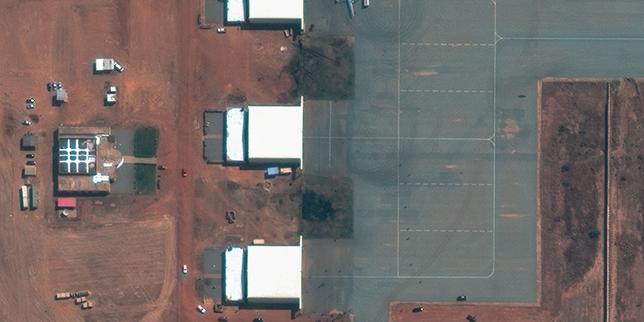
Early morning gunfire at a capital city's primary international airport isn't just a local security failure. It's a flashing red light for an entire continent. When heavily armed attackers struck the Diori Hamani International Airport in Niamey on June 18, 2026, leaving at least 11 soldiers and two civilians dead, they didn't just breach a perimeter. They shattered the carefully crafted illusion of stability that Niger's ruling military junta has been selling to the world since taking power.
This isn't an isolated incident in some remote corner of the Tillabéri region. This happened in the heart of the capital, at a heavily fortified installation that serves as both a civilian travel hub and Base Aérienne 101, the crown jewel of Niger's military infrastructure. If you think the geopolitical shift away from Western allies toward Russian partnerships solved the region's security problem, this attack proves otherwise.
The assault began around 5:00 AM local time, catching security forces at a vital checkpoint near the airport entrance. For hours, residents woke up to the sound of explosions and sustained automatic gunfire. While the junta eventually deployed heavy reinforcements to sweep the surrounding Route Tchanga neighborhood and regain control, the damage was done. The psychological blow of having the capital's gateway exposed for the second time in less than six months cannot be understated.
Why the Hub of the Alliance of Sahel States Is Under Fire
To understand why this specific airport keeps getting targeted, you have to look beyond commercial aviation. Diori Hamani International Airport is the nerve center for the Alliance of Sahel States, the regional pact formed by the military regimes of Niger, Mali, and Burkina Faso. It houses critical air assets, reconnaissance drones, and serves as the operational headquarters for their joint military efforts.
When insurgents strike this facility, they are aiming directly at the command-and-control capabilities of the state. Security analysts like Beverly Ochieng from Control Risks have highlighted that the symbolic value of the airport makes it an irresistible target for militant groups looking to humiliate the government. It's a calculated strategy to show that no one, not even the military elite in the capital, is safe.
The January 29, 2026 attack on this exact same airport, claimed by the Islamic State in the Sahel, was supposed to be a wake-up call. That earlier raid saw significant material damage, including hits on military and civilian aircraft on the tarmac and explosions at an ammunition depot. The junta claimed to have reinforced the perimeter and increased surveillance after that disaster. Clearly, the adjustments didn't work. The attackers found a way back in, exposing gaping holes in the capital's defensive ring.
The Failure of the New Geopolitical Playbook
When Niger's military leadership kicked out French forces and forced the withdrawal of US troops from vital bases like Air Base 201 in Agadez, they promised a new dawn of sovereign security. They turned to Russian paramilitary forces and alternative partners to fill the void. This attack demonstrates the harsh reality of that swap.
Russian instructors and equipment have arrived in Niamey, but they haven't stopped the southward march of insurgent groups. The current strategy relies heavily on static defense lines and reactive drone strikes. What it lacks is the deep, preventative intelligence network required to stop complex insurgent operations before they reach the city gates.
Local security forces are left carrying the heaviest burden, a fact made tragically clear by the 11 soldiers who lost their lives in this latest clash. Relying on local civilian vigilantes armed with sticks and machetes to help soldiers hunt down remaining attackers in the nearby suburbs isn't a sustainable national defense strategy. It's a sign of a military stretched to its absolute limit.
The Real Intent Behind the Insurgent Strategy
Groups like the Islamic State in the Sahel aren't trying to capture and hold Niamey. They know they can't govern a capital city of over a million people while surrounded by conventional armies. Their objective is much simpler and more dangerous: breakdown.
- They want to isolate the capital from the rest of the country.
- They aim to disrupt international supply chains and diplomatic missions by making the airport unusable.
- They intend to destroy the regime's credibility by showing it cannot protect its own headquarters.
By forcing airlines to suspend flights and causing foreign embassies to restrict the movement of their personnel, the insurgents are effectively choking the country's economy. A landlocked nation cannot afford to have its main air corridor turned into a war zone.
What This Means for Everyday Security in West Africa
If you're looking at this situation from the outside, it's easy to dismiss it as another tragic headline from the Sahel. That's a mistake. The instability in Niger directly threatens the wider West African region, particularly the coastal states like Benin, Togo, and Ghana, which are already seeing increased militant activity along their northern borders.
The collapse of security cooperation between the Sahel juntas and the Economic Community of West African States has created massive blind spots. Intelligence sharing has slowed to a crawl. Joint border patrols are practically non-existent. Insurgents are exploiting these diplomatic rifts to move men, weapons, and money across borders with minimal resistance.
The Immediate Security Measures That Must Follow
Fixing this mess requires a radical shift in how the capital city is defended. Token updates to airport checkpoints won't cut it anymore. The entire approach to urban security in Niamey needs an overhaul.
First, the military must establish a multi-layered security cordon that extends far beyond the immediate vicinity of the airport. This means implementing permanent reconnaissance patrols and advanced surveillance systems in the surrounding rural zones to detect insurgent movements long before they reach suburban neighborhoods like Route Tchanga.
Second, the government has to rebuild its human intelligence networks within the capital's outskirts. Insurgent groups cannot transport heavy weaponry and launch a coordinated assault on a major airport without local logistics, safe houses, or reconnaissance. Breaking these internal networks is the only way to prevent future surprises.
Finally, the regional alliances need to move past political theater and focus on actual operational coordination. The Alliance of Sahel States cannot secure its territory through fiery rhetoric and diplomatic expulsions. It requires real, actionable intelligence sharing and cross-border operations that target the root of the insurgent threat rather than just reacting when gunfire erupts at the airport gates.