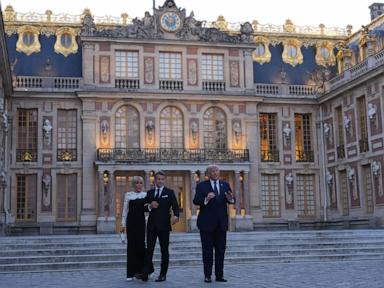
Emmanuel Macron knows how to play the long game with Donald Trump. While other European leaders panic or write scathing op-eds, the French president leans into old-school grandeur.
Luring the American president to a historic night at the Palace of Versailles isn't just about showing off gold leaf and centuries of architecture. It's a calculated diplomatic maneuver.
The unannounced signing of an initial agreement to end the Iran war at Versailles caught much of the French government by surprise. But it was the culmination of months of behind-the-scenes work by Macron to anchor a volatile White House closer to European strategic interests. It's an approach driven by pragmatic necessity, and it's yielding surprising results on Ukraine and the Middle East.
The Versailles Strategy
Macron has long viewed the Palace of Versailles as an instrument of geopolitical influence. He used it during his first term to host Vladimir Putin, and he deployed it again during the high-stakes G7 gathering in France. The goal was simple. Keep Trump engaged, prevent an early exit like the one at a previous summit in Canada, and force Washington to look at global security through a European lens.
The strategy paid off in an unexpected way. Trump signed a physical copy of an interim deal aimed at ending the conflict with Iran while dining at Versailles. The war, launched jointly by the U.S. and Israel without consulting Western allies, had deeply fractured the transatlantic alliance. While Macron didn't negotiate the specifics of the deal, securing the historic venue effectively forced Europe back into the diplomatic narrative.
The deal itself falls short of Trump's initial rhetoric of completely dismantling Iran's nuclear infrastructure or permanently toppling the regime. Instead, it aims to restore the status quo before hostilities broke out, focusing on reopening the Strait of Hormuz to ease the global energy crisis and resuming nuclear talks. For Europe, avoiding a wider regional conflict and stabilizing energy markets is a massive relief.
Trading Reassurance for Commitments on Ukraine
Diplomacy under Trump is transactional. European diplomats understood that if they wanted American cooperation on their borders, they had to offer support where Trump felt isolated.
Trump arrived in France facing significant pressure at home over his handling of the Iran conflict. Even some of his closest domestic allies had expressed open skepticism about the emerging agreement. To secure the deal, Trump needed international validation.
At the G7 meeting, European leaders provided that political cover. They gave him the domestic reassurance he needed, praising his leadership in the official joint statements. In return, Europe extracted something highly valuable: a firmer, written commitment on Ukraine.
G7 Transactional Diplomacy:
[European Leaders] ---> Provide Political Cover & Praise for Iran Deal ---> [Donald Trump]
[Donald Trump]     ---> Agrees to Air Defense & Sanctions Package   ---> [Ukraine Support]
This trade-off resulted in a major breakthrough for Ukrainian President Volodymyr Zelenskyy. Following a tough diplomatic stretch in Washington earlier in 2025, Zelenskyy met with Trump on the sidelines of the summit, presenting direct evidence of the destruction of Ukraine's cultural and religious landmarks, including the Dormition Cathedral in Kyiv.
The resulting G7 statement locked in concrete commitments approved by Trump himself:
- Increased deliveries of advanced air-defense systems.
- More long-range weapon shipments to Kyiv.
- Ramped-up sanctions targeting Russia’s vital oil and gas sectors.
Managing a Bumpy Decade of Diplomacy
Macron is the longest-serving G7 leader dealing with Trump, and their relationship has seen plenty of friction. It started nearly a decade ago with an awkwardly aggressive handshake and has evolved into a complicated mixture of personal cordiality and sharp policy disagreements.
The French president has learned to navigate Trump's unpredictable style by maintaining direct communication. Whether it’s calling Trump’s cell phone when stuck in New York traffic or managing disagreements with a smile, Macron relies on personal engagement.
This approach hasn't eliminated the deeper structural tensions between the U.S. and its European allies. Trump has frequently criticized British Prime Minister Keir Starmer, German Chancellor Friedrich Merz, Italian Prime Minister Giorgia Meloni, and Macron for their lack of initial support during the outbreak of the Iran conflict. He also hit Europe with heavy tariffs on steel, aluminum, and other imports, which Macron openly condemned.
Yet, European officials recognize that written, signed agreements at summits like the G7 represent a more durable position than shifting political rhetoric. By anchoring Trump to collective statements on Ukraine and Lebanon, Europe creates a diplomatic framework that is much harder to discard on a whim.
Actionable Takeaways for International Relations Analysts
Understanding this shift in transatlantic dynamics requires looking past the pageantry of state dinners. The Versailles summit offers clear insights into how modern diplomacy operates under a fractured global order.
- Look at the written text, not the press conferences: Verbal statements and social media posts can change daily. The written G7 commitments on sanctions and air defense provide the actual blueprint for policy moving forward.
- Watch the energy markets: The reopening of the Strait of Hormuz and the potential return of Iranian oil to the market will have an immediate impact on global energy prices and European inflation rates.
- Monitor the delivery timelines: The true test of the G7 agreement lies in how quickly the promised air-defense systems and long-range weapons actually arrive on the ground in Ukraine. Watch for legislative or logistical delays in Washington over the coming months.