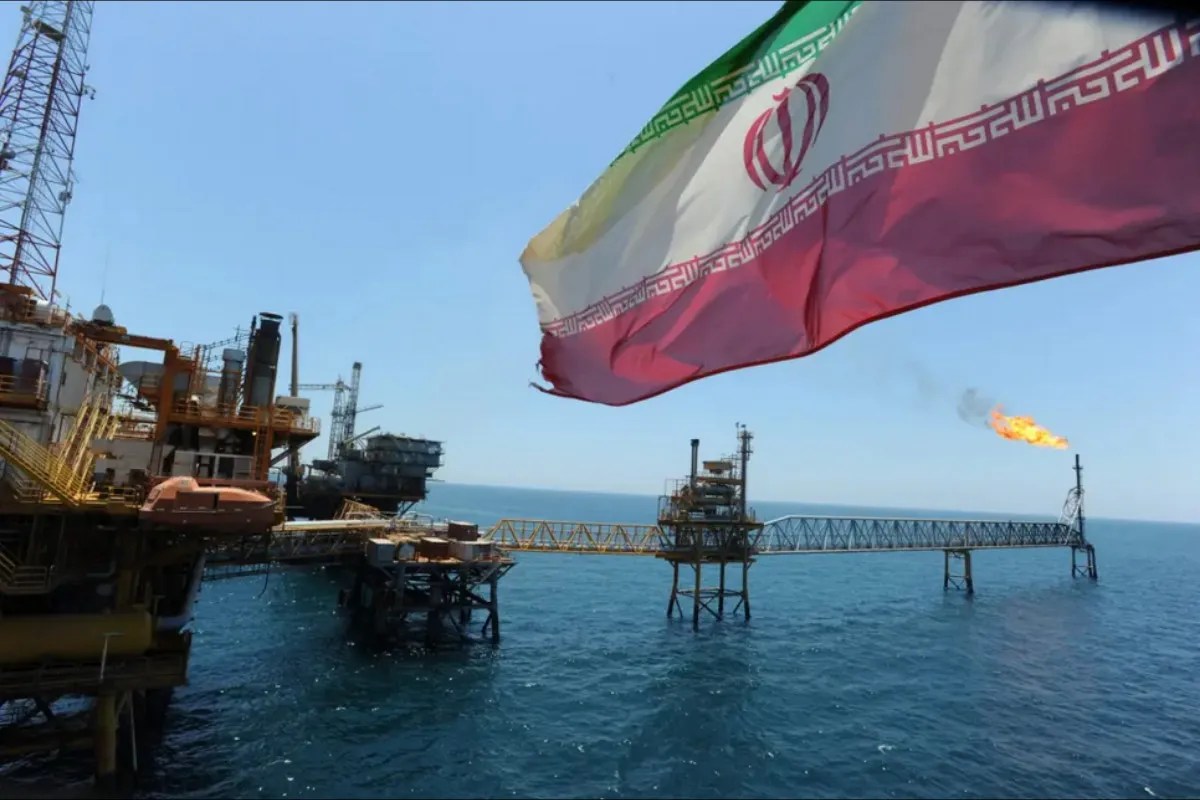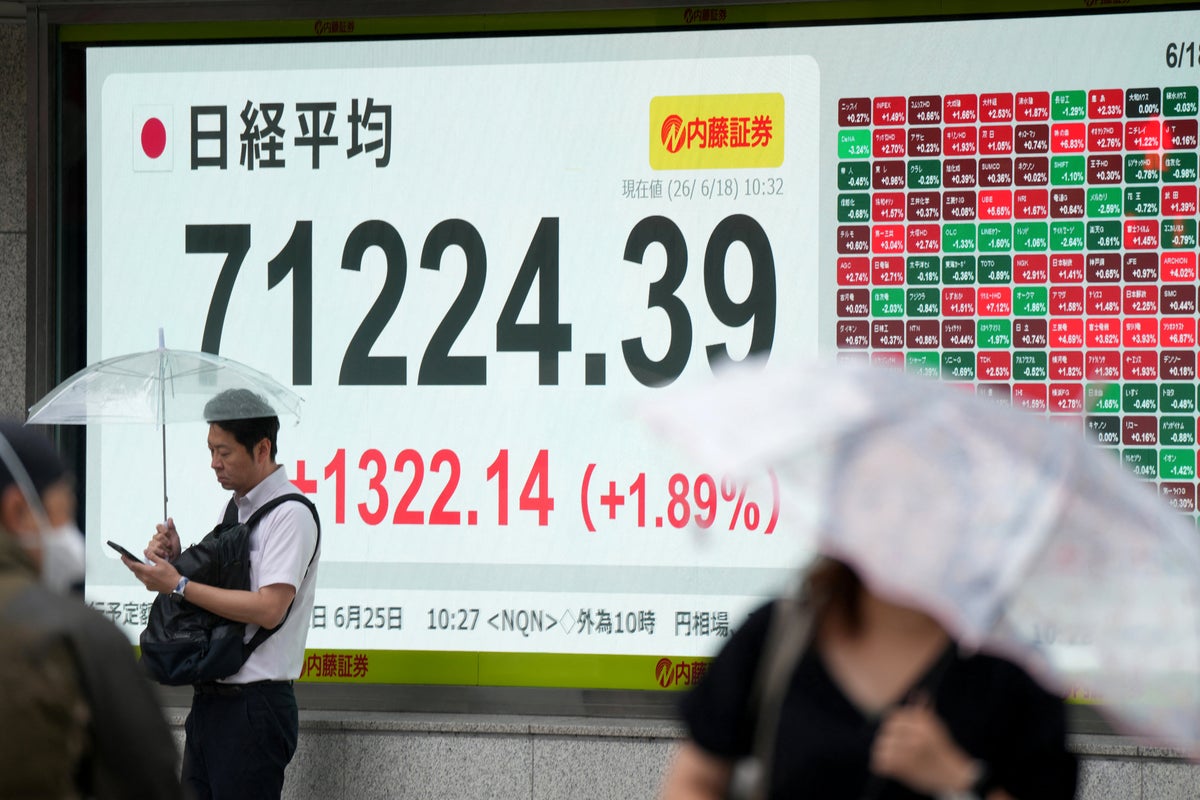
Financial markets love a good headline, and the tentative peace deal between the United States and Iran is the biggest one we have seen all year. When news broke that a framework agreement would lead to the Strait of Hormuz reopening, traders didn't wait around for the fine print. They bought everything in sight. Asian stock markets surged by over 5%, Brent crude plunged below $80 a barrel, and a collective sigh of relief echoed from Tokyo to New York. The worst energy crisis since the 1970s seemed to evaporate overnight.
But if you think the global economy is suddenly back to normal, you're misreading the situation.
Markets are priced for perfection right now. Investors are acting as if the global flow of crude will magically return to its pre-war volume the moment the ink dries on Friday's official signing ceremony in Switzerland. It won't. I have spent years tracking energy infrastructure and maritime supply chains, and I can tell you that reopening a blockaded chokepoint is not like flipping a light switch. The reality on the water is messy, dangerous, and incredibly slow. While the panic selling in oil might give your local gas station some breathing room, the structural damage from this three-month war will linger deep into the second half of 2026.
The Sudden Peace Deal and the Market Illusion
Let's look at what actually happened over the weekend. Washington and Tehran reached a memorandum of understanding to halt the conflict that began back in late February. Iran agreed to end its near-total chokehold on the strait. In return, the US promised to lift its naval blockade of Iranian ports and offer some sanctions relief.
The immediate reaction was pure euphoria. Look at the numbers from Monday's trading session. Japan's Nikkei 225 exploded by 5.1% to hit a record high. South Korea's Kospi leaped 5.2%, driven by tech giants like Samsung. Over in the West, the S&P 500 rose 1.7%, and the Dow Jones Industrial Average added hundreds of points to reach its own record.
Meanwhile, oil prices collapsed. Brent crude dropped 5% in a single day, settling around $78.96 a barrel. That is a massive drop from the $126 peak we saw back in April when the world realized that 20% of the global seaborne oil trade was stranded.
Traders are operating on a "sell now, ask questions later" mentality. They see a headline about the Strait of Hormuz reopening and immediately price in the absolute best-case scenario. It is a classic market illusion. The consensus view assumes that because the political will for peace exists, the logistical hurdles will simply vanish. They won't.
Why Clearing the Mines Takes Weeks, Not Hours
Here is the first major blind spot in the current market narrative. The physical state of the waterway is a nightmare. Earlier this month, US Secretary of State Marco Rubio openly warned that Iran had heavily mined large segments of the strait. You cannot just sail a 300,000-ton Very Large Crude Carrier (VLCC) through waters that have been seeded with naval mines for three months.
Maritime security sources and shipping executives are already raising the red flag. Jotaro Tamura, the chief executive of Japanese shipping giant Mitsui OSK Lines, explicitly stated that it will take weeks for shipowners to even consider restarting passages. They want proof that the waters are safe.
How do you make them safe? You have to bring in specialized mine-countermeasure vessels. French President Emmanuel Macron suggested that France and Britain are ready to lead a joint naval mission to clear the strait, but that operation cannot even start until the formal agreement is signed.
- The Mine-Clearing Timeline: Sweeping a narrow, highly contested body of water like the Strait of Hormuz is a meticulous process. Experts estimate it will take at least three to four weeks of active scanning just to map out a safe transit lane.
- The Debris and Stranded Ships: Dozens of vessels have been idling in the Gulf of Oman and the Persian Gulf since March. Managing the traffic jam while maintaining a strict security perimeter is going to create massive logistical friction.
- The Risk of Rogue Actors: The peace deal is fundamentally between the US and Iran. It does not explicitly bind every regional militia or rogue faction. A single stray sea mine or an unauthorized drone strike from a hardline group could instantly shatter the ceasefire and send oil prices right back past $100.
If you are a logistics manager or a commodities trader, you aren't looking at a full restoration of shipping traffic until late July or August. The market is treating Friday's signing as the end of the crisis, but it is actually just the beginning of a long, painful cleanup.
The Real Damage to Global Shipping and Insurance
The financial world tends to forget that ships do not move without insurance. When the conflict escalated in early March, protection and indemnity (P&I) clubs completely revoked war risk coverage for the strait. The economic risk became too high for corporate shipowners to bear.
Before the blockade, war-risk premiums for a single transit through the strait hovered around 0.125% of the vessel's value. At the height of the crisis, that number skyrocketed to between 0.2% and 0.4%. For a modern supertanker worth $100 million, that meant an extra $250,000 to $400,000 per trip just for insurance.
Even with the news of the Strait of Hormuz reopening, underwriters are not going to slash their rates overnight. Insurance companies are notoriously conservative. They will wait until naval forces declare the lanes completely clear of explosives.
This means shipping costs are going to stay elevated for months. It affects more than just oil. The 2026 crisis hammered other critical commodities. QatarEnergy had to declare force majeure on its liquefied natural gas (LNG) exports, which normally account for 20% of global LNG trade. Aluminum, fertilizer, and helium supplies were similarly strangled.
The supply shock forced agricultural and industrial sectors worldwide to find expensive workarounds. Gulf Cooperation Council states, which rely on the strait for 80% of their food imports, had to airlift basic food staples at exorbitant costs. Those supply chains cannot reset themselves in a week. The premium on maritime freight will take a long time to unwind, and that expense will get passed down to consumers.
How Asian Stocks Staged an Unreal Comeback
To understand why Asian markets reacted with such violence on Monday, you have to realize how close some of these economies came to absolute disaster over the last ninety days.
Asian nations are the primary consumers of Persian Gulf energy. Roughly 84% of the crude oil flowing through the Strait of Hormuz goes straight to Asia. China, Japan, and South Korea were staring down the barrel of a permanent energy famine. China was lucky enough to have around a billion barrels in strategic reserves, giving it a cushion, but smaller industrial nations were running out of time.
When the ceasefire was announced, the relief was palpable.
Market Rebound on Monday, June 15, 2026:
- Nikkei 225 (Tokyo): +5.1% to 69,367.06
- Kospi (Seoul): +5.6% to 8,577.62
- Taiex (Taiwan): +2.6%
- S&P/ASX 200 (Australia): +1.4% to 8,930.50
The rally in Seoul was especially crazy because it combined macroeconomic relief with the ongoing AI investment boom. Tech hardware manufacturers like Samsung Electronics require massive amounts of stable power to run their fabrication plants, and they are highly sensitive to global inflation. The drop in energy costs lifted a massive weight off the tech sector.
But notice who lost out during this rally. London's FTSE 100 actually fell 0.4% on Monday. Why? Because the UK index is heavily weighted toward traditional energy majors and defense firms. Shell and BP took a massive beating, dropping around 4% to 5% as their profit margins evaporated alongside falling crude prices. BAE Systems, the defense giant, slipped nearly 3% because investors realized the immediate threat of a wider Middle Eastern war was receding.
This divergence tells you exactly where the smart money is moving. Capital is fleeing defensive, war-hedged sectors and rushing back into high-growth, energy-dependent industries.
The Deflationary Reality for the Rest of 2026
The biggest macroeconomic takeaway from this geopolitical shift is what it means for central banks. Over the past three months, the Federal Reserve and the European Central Bank were forced to put their interest rate cuts on ice. Inflation was surging because of the blockade. In the US, average gasoline prices crossed $4.00 a gallon, rising 30% in mere weeks. The ECB even raised its 2026 inflation forecast, warning that Europe was on the brink of stagflation.
The Strait of Hormuz reopening changes the game for monetary policy in the second half of the year.
Lower energy costs will act as a natural deflationary force. It will lower the cost of everything from airline fuel to logistics and manufacturing. Before the peace deal, traders were pricing in a 71% chance that the Fed would have to raise interest rates again this year to fight supply-driven inflation. Right now, according to data from the CME Group, those odds have tumbled to just 57%.
Wall Street analysts are already rewriting their year-end playbooks. Goldman Sachs revised its oil price forecast down, predicting that Brent crude will anchor itself around $80 a barrel for the fourth quarter of 2026. Morgan Stanley echoed this view, suggesting that while the summer market will remain tight due to the logistical lag of clearing the strait, the medium-term trend is overwhelmingly bearish for oil.
Your Next Moves as an Investor
If you are trying to navigate this massive market pivot, sitting on your hands is a mistake. The transition from a wartime economy to a peacetime economy creates massive clear-cut winners and losers. Here is what you should be acting on right now.
Rotate Out of Oil Majors and Defense Hedges
The era of $120 oil for 2026 is over. Companies like ExxonMobil, Chevron, BP, and Shell enjoyed massive windfall profits during the spring blockade, but their short-term upside has vanished. The same goes for defense contractors who spiked on expectations of an extended military conflict. Take your profits here and reallocate that cash.
Target High-Fuel Consumers
The instant winners of this peace deal are businesses with massive fuel bills. Look at the airline and travel sectors. On Monday, United Airlines jumped nearly 4%, and Royal Caribbean rose over 6%. These companies have been getting crushed by fuel surcharges for months. As oil settles into the $70–$80 range, their operational margins will expand dramatically.
Lean Back Into Asian Tech and Global Growth
The explosive rallies in Tokyo and Seoul are not a fluke. Easing regional tensions means foreign institutional capital is pouring back into Asian equities. Focus on high-quality, energy-intensive manufacturing and semiconductor giants that were artificially depressed by the fear of a global energy shutdown.
The bottom line is simple. Do not get blinded by the immediate euphoria, but do not ignore the structural shift either. The physical flow of oil will take months to normalize, but the psychological shift in the market is permanent. Position your portfolio for a cheaper energy environment before the rest of the retail crowd catches on.