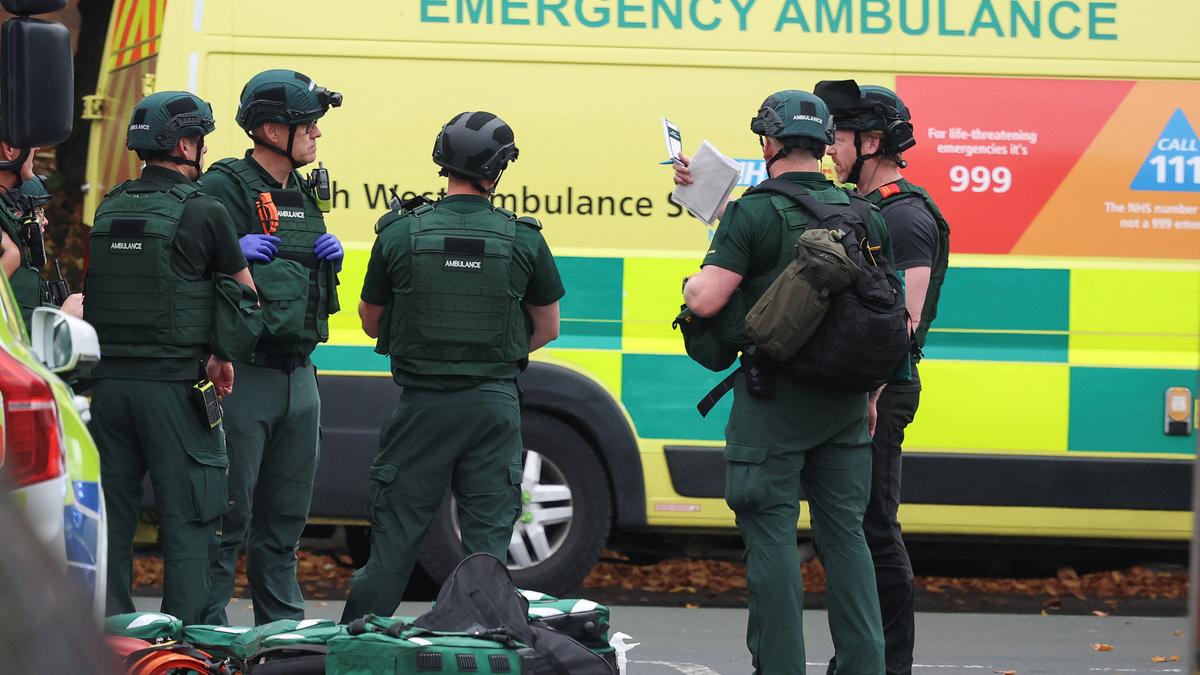
The horrifying seven-minute assault on the Heaton Park Hebrew Congregation Synagogue in Crumpsall didn't just shatter the peace of Yom Kippur. It completely rewrote the playbook for how security forces handle targeted urban terror. When Jihad al-Shamie rammed his Kia Picanto into worshippers before launching into a chaotic stabbing spree, he forced law enforcement into a brutal, split-second decision matrix.
If you think this was just another isolated tragedy, you're missing the bigger picture. The reality of what happened outside that Manchester synagogue on October 2, 2025, reveals terrifying operational challenges that security teams and counter-terrorism units are still struggling to solve.
Anatomy of a Seven Minute Nightmare
Understanding exactly how this unfolded matters because the speed of the attack is what made it so lethal. Worshippers had gathered for the 9:00 AM service on the holiest day of the Jewish calendar. Security staff had already chased al-Shamie away once after noticing him acting suspiciously fifteen minutes prior.
He didn't stop. He went home, grabbed a vehicle, and drove directly into the synagogue infrastructure.
- 9:30 AM: Al-Shamie rams a security guard and crashes into an exterior metal gate and wall.
- 9:31 AM: Emergency calls flood Greater Manchester Police reporting a vehicle ramming and active stabbings.
- 9:37 AM: Police officially declare a major incident under Operation Plato—the specific protocol for a marauding terrorist attack.
- 9:38 AM: Armed officers confront al-Shamie and open fire, killing him on the spot.
Seven minutes. That's all it took for the entire situation to escalate, peak, and end.
The High Price of True Bravery
We need to talk honestly about the victims, Melvin Cravitz and Adrian Daulby, because their actions prevented a massacre. Al-Shamie was wearing what looked like a viable suicide belt. He was carrying a knife and aggressively trying to force his way through the synagogue doors where a large crowd of worshippers was trapped inside.
Cravitz, 66, was stabbed and killed while trying to hold the line outside. Daulby, 53, took a position blocking the doors to keep the attacker from moving inward.
The tragedy deepened during the chaotic final seconds. Armed officers arrived to see a man running at them aggressively with a knife, wearing an explosive vest that they had to assume was completely real. When they opened fire to neutralize al-Shamie, Adrian Daulby was hit in the chest by a stray or deflected police bullet. He died at the scene. Another worshipper, Yoni Finlay, was also injured by police gunfire while helping to block the door.
It's easy to second-guess the police from the comfort of a keyboard, but the Independent Office for Police Conduct cleared the officers as witnesses rather than suspects. When a suspected suicide bomber is running toward a crowded building, the margins for error don't exist. The device was later found to be a dummy, but the threat was treated as absolute.
Radicalization Under the Radar
The profile of Jihad al-Shamie is exactly what keeps counter-terrorism experts awake at night. He wasn't on a watch list. He wasn't a known extremist flagged by British intelligence.
The 35-year-old was born in Syria, moved to the UK as a child, and became a naturalized British citizen in 2006. He had a minor criminal record for petty offenses and was out on bail for a rape investigation at the time of the attack. Neighbors described him as someone who didn't stand out and never talked about politics.
Yet, beneath that quiet exterior, something snapped. His father, Faraj al-Shamie, had openly praised Hamas on social media following the October 7 attacks. Investigators immediately targeted the wider network, arresting multiple individuals in Crumpsall and Prestwich on suspicion of preparing and instigating terrorist acts. The arrest of Mohammed Bashir later revealed that al-Shamie had conducted hostile reconnaissance of the synagogue alongside others, proving this wasn't a sudden, spontaneous mental health crisis. It was planned.
What This Means for Community Safety Moving Forward
The Manchester attack changed how we view soft-target security. It highlighted the terrifying reality that perimeter fences and security guards can only slow an attacker down for a few crucial seconds.
If you run a community center, a religious institution, or any public gathering space, the operational lessons here are stark.
Physical Barriers Aren't Optional
Al-Shamie crashed through a standard exterior metal gate. Regular gates don't stop a determined driver using a vehicle as a weapon. True security requires heavy-duty, crash-rated bollards that can completely stop a vehicle's momentum before it reaches the pedestrian zone.
Immediate Lockdown Capabilities
The worshippers survived because the doors were physically held shut. Relying on human strength to hold a door against a killer is a desperate last resort. Modern security requires electronic, single-button lockdown systems that instantly secure heavy internal doors from the inside.
The Role of Private Security Funding
In the wake of Heaton Park, the UK government committed over £250 million to protect Jewish community sites. This isn't just about paying for guards to stand at the door. It's about funding advanced surveillance, immediate-response alarms, and training community members on how to react in the first 180 seconds of an attack before the police arrive.
Take a hard look at your own local institutions. Check if they have clear line-of-sight cameras, physical reinforcement at the entry points, and a formalized emergency protocol. True safety means preparing for those seven critical minutes long before they ever happen.