American politics feels broken because it usually is. Right now, conventional wisdom says the 2026 midterm elections will follow the exact same script we have seen for a century. The president's party always loses seats in Congress during a midterm. It happened to Obama in 2010. It happened to Trump in 2018. History says the ruling party gets crushed.
But history didn't factor in what has happened over the last eighteen months.
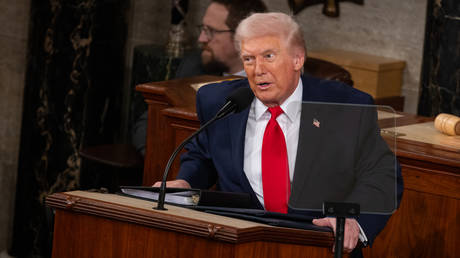
We are looking at a completely unprecedented political environment. Donald Trump is back in the White House, serving out a non-consecutive second term without the pressure of ever facing voters again. His disapproval rating is sitting stubbornly at 57.5 percent. By all normal metrics, Democrats should be preparing to sweep the floor this November. The generic ballot shows them up by more than six points.
Yet, anyone predicting a massive blue wave is missing the structural shifts that have quietly tilted the playing field. A combination of aggressive mid-decade redistricting, a massive Supreme Court ruling on campaign finance, and sudden vacancies at the federal level have changed everything. This is not a standard midterm election. It is an entirely different beast.
The Mid-Decade Redistricting Trap
Most people assume congressional maps are locked in until the next census in 2030. That rule is officially dead. Over the past year, we witnessed a highly unusual wave of mid-decade redistricting that rewritten the map in favor of incumbent power.
Look at Texas. In 2025, Trump openly pushed state lawmakers to adjust their maps. He said the GOP was entitled to more seats, and the state legislature delivered. Texas wasn't alone. States like Missouri, North Carolina, Ohio, Utah, and Virginia all adjusted their boundaries. California Democrats responded with their own line-drawing maneuvers, which the Supreme Court recently upheld.
This state-level map distortion means something critical for November. The number of actual swing districts has shrunk to a historic low. Most house seats are now safely locked down for one side or the other.
Consider the defense positions. Republicans are defending only eight House districts that Kamala Harris carried back in 2024. Meanwhile, Democrats are stuck defending twenty-three districts that Trump won, with nine of those being places he won by double digits. Even if a national wave of voter anger materializes, there simply aren't enough competitive targets on the board for a standard blowout. Gerrymandering has essentially built a shock absorber into the House of Representatives.
Unlimited Party Cash Rewrites the Playbook
Money has always flooded American campaigns, but a recent Supreme Court ruling just opened the floodgates wider than ever before.
In June 2026, the high court handed down a 6-3 decision in National Republican Senatorial Committee v. Federal Election Commission. Justice Brett Kavanaugh wrote the majority opinion, striking down a twenty-five-year-old restriction that limited how much a political party could directly coordinate spending with an individual candidate's campaign.
Before this ruling, parties and campaigns had to maintain a legal wall between their operations. The party could buy independent ads, but they couldn't sit down at a table with a candidate and co-manage the budget. Now, they can.
This gives a massive advantage to whoever has more raw cash sitting in their institutional bank accounts. Right now, that advantage belongs to the Republicans. They have amassed deep cash reserves that can now be deployed with surgical precision, directly managed alongside the campaigns of vulnerable incumbents. It makes every dollar more efficient. Democrats are raising massive amounts of small-dollar donations, but they are fighting an institutional spending machine that operates with zero legal friction.
Chaos at the Election Assistance Commission
If the changes to maps and money weren't enough, the literal machinery of our elections is under strain. Just days ago, Trump took the unprecedented step of removing the remaining sitting members of the U.S. Election Assistance Commission.
Democratic commissioners Benjamin Hovland and Thomas Hicks were fired, while Republican commissioner Christy McCormick resigned. The White House defended the move by citing executive authority to ensure officials are aligned with the administration's election security goals.
The result? The agency responsible for certifying voting systems and handing out federal election administration grants has zero sitting commissioners right before a major national vote.
While day-to-day cybersecurity operations are still handled by the Cybersecurity and Infrastructure Security Agency, the total vacuum at the EAC injects massive uncertainty into the system. If a state needs urgent guidance on voting technology or system certification between now and November, there is no bipartisan leadership at the top to approve it. This creates a vacuum where local election battles can become incredibly messy, fueling deeper distrust on both sides of the aisle.
The Realities of the Polling Numbers
Voters are deeply conflicted. If you look at the macro numbers, the electorate is deeply unhappy with the economy. A recent Fox News poll showed that 59 percent of voters are pessimistic about economic conditions, and only 20 percent believe Trump's economic policies help everyone.
But macro anger doesn't automatically translate into local losses for the GOP.
Gas prices have been dropping steadily. A gallon of regular gas is averaging $3.84 right now, down from $4.29 last month and $4.46 a few months ago. It turns out that cheap fuel is a powerful anesthetic for political rage. Every time the price at the pump drops, the Republican generic ballot numbers crawl back up slightly.
Over in the Senate, thirty-five seats are up for grabs. The current split sits at 53 Republicans and 47 Democrats (including the independents who caucus with them). For Democrats to take the chamber, they have to run a flawless campaign in incredibly hostile territory.
Long-running political streaks are on the line. Take North Carolina. Democrats haven't won a Senate race there in five consecutive cycles. But right now, former Democratic Governor Roy Cooper is consistently leading former RNC Chairman Michael Whatley in the polls for that open seat. If Cooper wins, it breaks a multi-decade Republican chokehold on that specific seat. Yet, even if Democrats flip a couple of vulnerable seats like that one, the broader map makes a total takeover highly volatile and incredibly tight.
Concrete Steps for Following the Uncanny Midterms
Stop looking at national polling averages. They are practically useless in an environment defined by hyper-targeted state maps and coordinated party spending. If you want to understand how this election will actually shake out, shift your focus to the structural mechanics.
- Track the local map lawsuits: While the Supreme Court settled some redistricting battles, state-level challenges are still moving through local courts. Watch whether late-stage map adjustments alter the baseline math in states like South Carolina or Florida.
- Monitor local election board rules: With the federal Election Assistance Commission empty, state and county election officials have more individual autonomy. Keep a close eye on your specific state's rules regarding mail-in ballot deadlines, which were recently impacted by the Supreme Court's ruling in Watson v. Republican National Committee.
- Watch the coordinated spending filings: Look at the FEC filings for the NRSC and DCCC rather than individual candidate fundraising. The real power this cycle lies in how effectively the national parties use their new legal freedom to co-manage local race budgets.
- Ignore the generic wave narratives: Focus on the specific subset of twenty-three Trump-won districts held by Democrats. Those races will determine the House majority, regardless of what the national popular mood looks like.