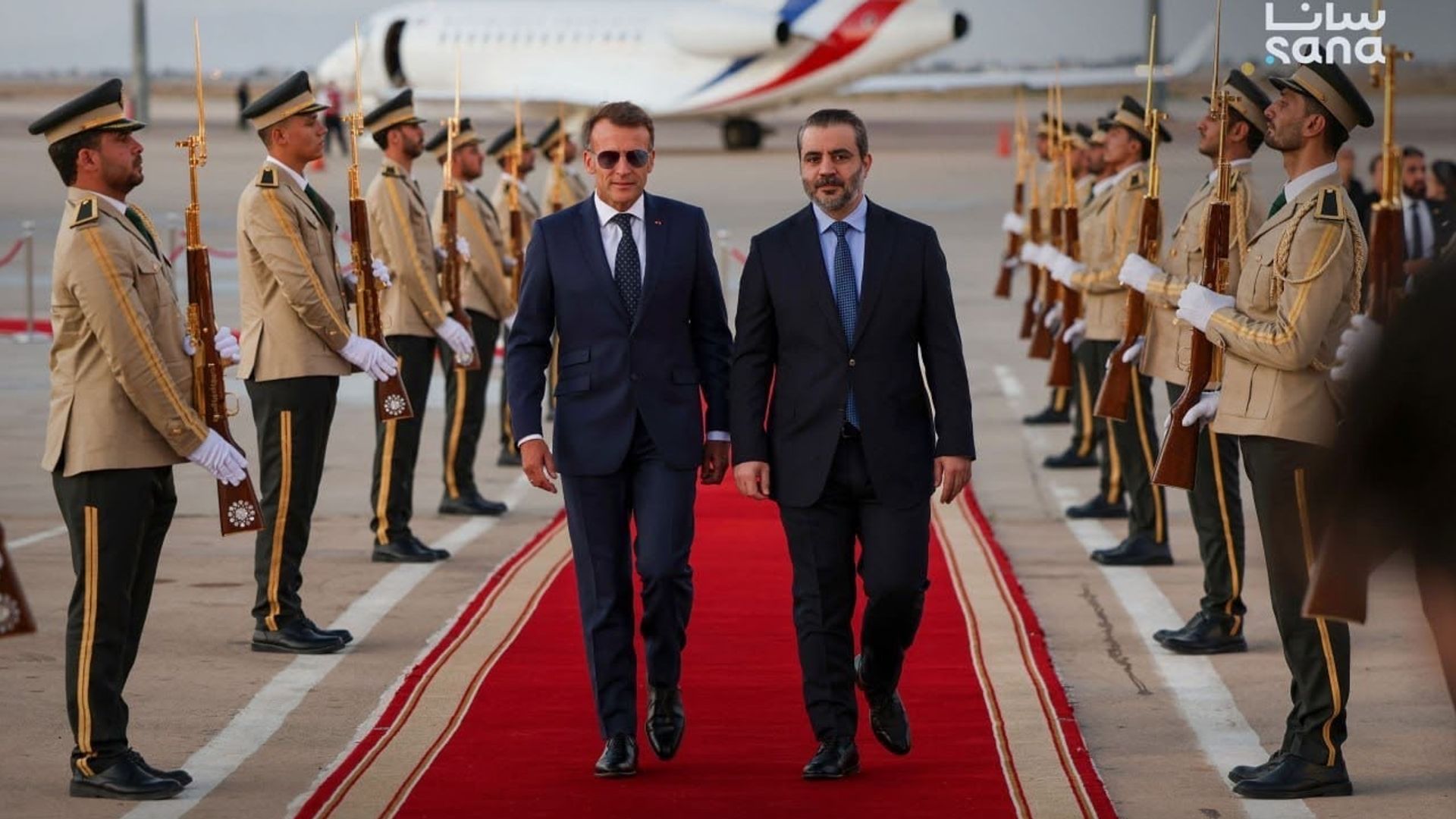
Emmanuel Macron just became the first major Western leader to touch down in Damascus since Bashar al-Assad fled the country in late 2024. This isn't just a standard diplomatic photo-op. It's a calculated, high-stakes gamble by France to stake a claim in the new Middle East before anyone else in the West gets their boots on the ground.
When Macron landed at Damascus International Airport, he wasn't greeted by the old regime's familiar faces. Instead, Syrian Foreign Minister Asaad al-Shaibani met him on the tarmac. The symbolism is thick. The last French president to visit Syria was Nicolas Sarkozy back in 2009, right before the country descended into a brutal thirteen-year civil war. Now, Paris is leading the charge to bring Damascus back into the international fold.
The driving force behind this shift is Syria's new president, Ahmed al-Sharaa. You might know him by his former militant handle, Abu Mohammed al-Jolani. He used to lead an al-Qaeda affiliate. Today, he wears tailored suits, meets global leaders, and runs a state that's desperately trying to rebuild. Macron has been his biggest Western champion, hosting him at the Elysee Palace last year and pushing hard to roll back punishing Western sanctions.
This visit matters because it signals a complete rewrite of regional alliances.
The Corporate Blueprint for Reconstruction
Macron didn't travel light. He brought a heavy-hitting delegation of French corporate royalty, including the CEOs of energy giant TotalEnergies and shipping colossus CMA CGM. Syria is a blank slate right now. It needs hundreds of billions of dollars to rebuild its shattered infrastructure, ports, and power grids. France wants those contracts.
Key Foreign Leaders Visiting Post-Assad Syria:
- Qatari Emir Sheikh Tamim bin Hamad Al-Thani (January 2025)
- EU Commission President Ursula von der Leyen (January 2025)
- Ukrainian President Volodymyr Zelenskyy (April 2026)
- French President Emmanuel Macron (July 2026)
While Qatar and regional Arab powers were the first to inject cash into the post-Assad economy, France is positioning itself as the primary Western gateway. By bringing top-tier executives directly to Damascus, Macron is sending a clear message to Washington and Brussels. France is ready to do business, and they aren't waiting for permission.
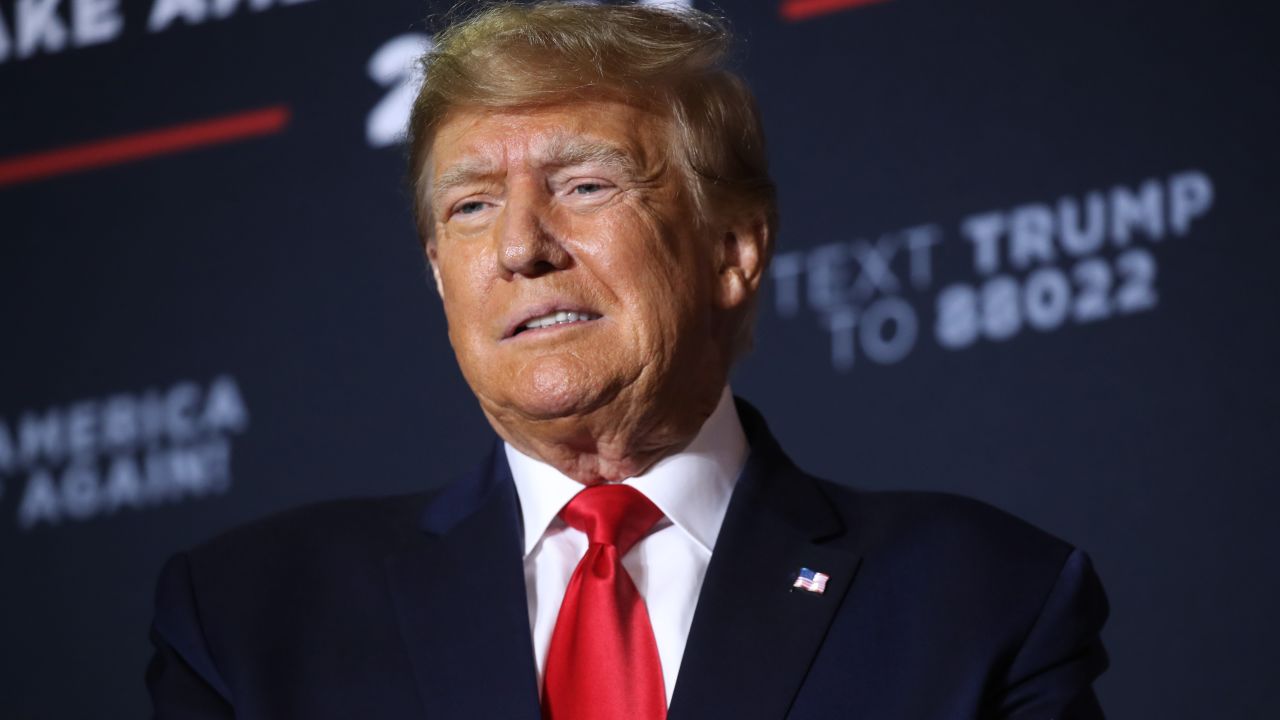
There's a strategic calculation here regarding American influence too. Diplomatic insiders note that Paris wants to establish its economic footprint before the US dominates the market. Syria recently extended olive branches to Washington, even sending formal congratulations to Donald Trump on the 250th anniversary of American independence. France knows that if it doesn't move quickly, American firms will inevitably swallow up the most lucrative reconstruction deals.
Security Guarantees and the Fight Against IS
The trip isn't without serious danger. Just last week, a bombing at a Damascus cafe killed ten people. It served as a stark reminder that while Assad is gone, absolute stability hasn't magically arrived. Sharaa is still fighting to maintain total control over a fractured nation.
Macron needs concrete returns on his political investment. France has suffered devastating terror attacks over the past decade, and a handful of French jihadists are still believed to be operating on Syrian soil. Security cooperation is at the top of the agenda. Syria formally joined the international anti-IS coalition last year, a move that Macron heavily leveraged to justify normalization to a skeptical French public.
Protecting Minorities in a New Syria
Another major sticking point for Paris is the safety of Syria's diverse religious and ethnic communities. The French presidency made it clear that Macron will press Sharaa to honor his pledges to protect Christians, Alawites, and Druze populations.
Sectarian violence flared up in the Druze stronghold of Suweida last year, and Damascus is currently running trials to punish those responsible. Macron needs to show voters back home that he isn't coddling a former militant without demanding human rights guarantees in return.
The Kurdish Conundrum
The situation gets even messier when you look at the north. Earlier this year, Damascus reasserted control over large swaths of northeastern Syria that were previously run by Kurdish forces. The Kurds, long-time allies of the West in the fight against ISIS, essentially had to fold and integrate their civil and military systems into the central state. It was a massive blow to their dreams of autonomy. Macron, who historically supported the Kurds, now has to balance that past relationship with the reality of Sharaa's centralized rule.
A Diplomatic Bridge to the Ankara NATO Summit
Timing is everything in geopolitics. Immediately after finishing his meetings in Damascus, Macron is flying directly to Ankara, Turkey, for a critical NATO summit. Sharaa is also expected to attend that summit, where he has a high-profile meeting lined up with US President Donald Trump.
Macron is effectively acting as the advance scout. By spending two days on the ground in Syria, talking to both the government and civil society groups, the French president will walk into the NATO summit with firsthand intelligence that no other G7 leader possesses. He wants to shape the broader Western strategy toward Syria rather than just following Washington's lead.
Not everyone is thrilled about this sudden normalization. Israel is watching these developments with deep suspicion. Some officials in Jerusalem view the new Islamist-led government in Damascus as an active threat, occasionally using much sharper rhetoric against Sharaa's administration than they ever did against Assad. They worry that a stronger, economically revived Syria will eventually turn its focus back to regional conflict. France is betting the opposite. Paris believes that tying Syria to global trade and Western capital is the only way to keep Damascus moderate and peaceful.
Returning History to Damascus
As a final gesture of goodwill, Macron is returning a collection of ancient Syrian antiquities that were loaned to France for safekeeping before the civil war broke out in 2011. It's a highly symbolic move meant to show that France views the new government as the legitimate custodian of Syria's heritage.
This trip shows that the diplomatic isolation of Syria is officially dead. Macron took a massive political risk by being the first Western leader to embrace Sharaa last year, and now he is doubling down. Whether this brings lasting stability or backfires spectacularly depends entirely on whether Sharaa can keep his promises of pluralism, security, and open markets.
Watch the upcoming NATO summit in Ankara closely. The conversations happening there will determine how fast American and European capital flows into Damascus, and whether Macron's gamble pays off. Buyers and investors are already moving. The race for the post-war Middle East has begun.