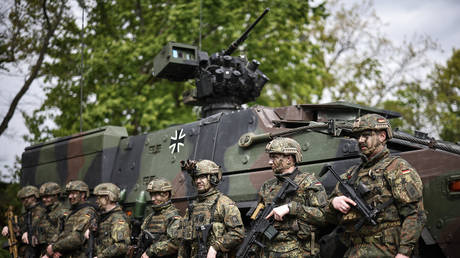
The transatlantic security alliance is undergoing its most radical mutation since the collapse of the Soviet Union. Washington is calling it NATO 3.0, and if you listen to the speeches coming out of the Pentagon, it sounds like a straightforward corporate restructuring. It isn't. It is a fundamental shift in how the Western world intends to wage or deter war, and the logic driving it is far more volatile than the official talking points suggest.
At the June 2026 NATO Defense Ministerial in Brussels, US Secretary of War Pete Hegseth didn't pull his punches. He explicitly labeled the old iteration of the alliance a "paper tiger" that drifted away from its hard-power roots into defense austerity and peripheral missions. The fix? A brutal ultimatum requiring European allies to take primary responsibility for their own conventional defense, backed by an aggressive demand to raise defense spending targets toward an unprecedented 5% of GDP. You might also find this similar story insightful: Why The Latest China Ballistic Missile Test Should Change How We See Pacific Security.
Beneath the rhetoric of a stronger Europe lies a chaotic strategy of conventional retrenchment. The US is actively looking to downsize its commitments in Europe to focus on the Indo-Pacific and homeland defense. While the concept aims to end European "free riding," the execution threatens to leave an unstable security vacuum right on Russia's doorstep.
From Paper Tiger to the Front Line
To understand why NATO 3.0 is so unstable, you have to look at how we got here. The alliance has gone through three distinct identities. As extensively documented in recent coverage by NPR, the results are worth noting.
NATO 1.0 was the Cold War machine. It had a clear, singular focus: deterring the Soviet Union through massive, integrated conventional forces and a highly credible US nuclear umbrella.
NATO 2.0 arrived after 1991. With the primary threat gone, the alliance transformed into an out-of-area policing force. It focused on nation-building in Afghanistan, interventionism in the Balkans, and political expansion. This was the era of defense austerity. European nations gutted their militaries, safe in the assumption that the US would always cover the bill and the hardware. German Chancellor Friedrich Merz openly admitted that Europe had been free riders, relying on Washington to guarantee its freedom.
Now, NATO 3.0 ends that bargain. The current US administration is forcing a return to hard power, but with a massive catch. Instead of a US-led conventional shield, Europe must build its own shield. Washington wants to act purely as a strategic safety net, providing extended nuclear deterrence while withdrawing the day-to-day conventional forces that historically prevented conflict from escalating in the first place.
The Illusion of the Five Percent Target
The cornerstone of this new doctrine is the demand for massive defense spending. Washington wants allies to hit a 5% GDP target. Honestly, this number is detached from economic and political reality for most of Europe.
Consider the numbers. For decades, most European members struggled to hit the bare minimum of 2%. Pushing that to 5% requires an absolute war economy. It means stripping funding from healthcare, education, and infrastructure during a period of persistent inflation and economic stagnation.
Even if European capitals miraculously find the money, you can't just buy a modern military overnight. Weapons factories take years to build. Supply chains are choked. Pumping billions into defense procurement without a coordinated plan just triggers bidding wars for the same limited supply of artillery shells and air defense batteries.
The Pentagon is framing this spending target as a test of political loyalty. Hegseth explicitly warned that future US contributions and even the upkeep of American bases would be tied directly to whether countries meet these targets. It turns strategic planning into political coercion.
The Dangerous Gap in Conventional Retrenchment
The biggest flaw in NATO 3.0 is the assumption that Europe can simply step into the shoes of the US military. It can't. The US isn't just providing warm bodies; it provides the highly specialized capabilities that keep NATO functional.
Washington has already started pulling forces back. The planned withdrawal of 5,000 American troops from Germany and the cancellation of key multi-domain tasks forces are just the beginning. This conventional retrenchment guts the exact capabilities Europe lacks.
- Intelligence, Surveillance, and Reconnaissance (ISR): Europe relies almost entirely on US satellite constellations and high-altitude drones to see the battlefield.
- Suppression of Enemy Air Defenses (SEAD): European air forces have incredibly limited capacity to destroy advanced Russian air defense systems like the S-400. Without US electronic warfare and specialized stealth aircraft, European jets would find it difficult to operate.
- Logistics and Airlift: Moving an army across Europe requires massive transport fleets and mobile refueling capabilities. Europe simply doesn't own enough of these assets.
When the US removes these advanced conventional systems, it doesn't just lighten its own load. It breaks the rungs on the escalation ladder.
Lowering the Nuclear Threshold
This is where the logic becomes truly dangerous. Historically, the presence of US troops and advanced conventional weapons in Europe served as a tripwire. If Russia attacked a Baltic state, it would instantly hit American forces, guaranteeing a full-scale US response. This kept the peace because Moscow knew a conventional land grab would lead to a global war.
Under NATO 3.0, that tripwire is missing. If Russia perceives that European conventional forces are weak, fragmented, and lacking US back-end support, the temptation to test the alliance increases.
If a localized conflict breaks out, a weak European conventional defense could face rapid attrition. Without intermediate US conventional options to push back Russian forces, European leaders would face a terrifying choice: surrender territory or escalate immediately to the use of French or British strategic nuclear weapons.
By retreating conventionally, the US thinks it's insulated itself. In reality, it has made a nuclear misunderstanding far more likely. A strategy meant to promote stability instead creates a highly volatile environment where minor miscalculations can spiral out of control instantly.
The Road to the Ankara Summit
The upcoming Ankara Summit is supposed to cement this new order. NATO Secretary General Mark Rutte has been trying to put a brave face on it, calling for a stronger Europe inside a stronger alliance. But behind the scenes, the friction is palpable.
Some European leaders are reacting with performative indignation. Others are quietly trying to figure out how to build strategic autonomy without completely alienating Washington. The administration in Washington views this friction not as a design flaw, but as proof that their pressure tactics are working.
They're treating force posture as a stick to punish allies who disagree with US policy on other fronts, such as Middle East strategy or trade tariffs. Hegseth openly criticized allies for denying the US overflight rights or port access during recent tensions with Iran, using that as justification to review and potentially shutter American bases.
This isn't strategic planning. It is transactional geopolitics masked as an alliance upgrade.
Actionable Next Steps for European Security
European policymakers need to stop panicking about Washington's rhetoric and start dealing with the structural reality. The US focus has shifted permanently, regardless of who occupies the White House in the future. To prevent NATO 3.0 from collapsing into a catastrophic security failure, Europe must take immediate, practical steps.
- Prioritize Capabilities Over Spending Metrics: Stop focusing entirely on arbitrary GDP percentages. European states must fix specific operational shortfalls. This means investing immediately in indigenous ISR drone programs, manufacturing electronic warfare pods, and buying heavy airlift assets.
- Standardize Defense Procurement: Europe wastes billions by maintaining dozens of different fighter jets, tanks, and artillery systems. Capitals must force their defense industries to standardize weapon systems to achieve true economies of scale.
- Establish an Independent European Command Structure: Europe needs the operational capacity to plan and execute large-scale conventional operations without relying on the US automated command and control systems. This infrastructure must be built inside the European pillar of NATO now, before the US retrenchment accelerates further.
The logic of NATO 3.0 is flawed because it treats security like a budget sheet. If Europe doesn't build a real, integrated conventional deterrent quickly, the alliance will find out just how dangerous a paper tiger can be.