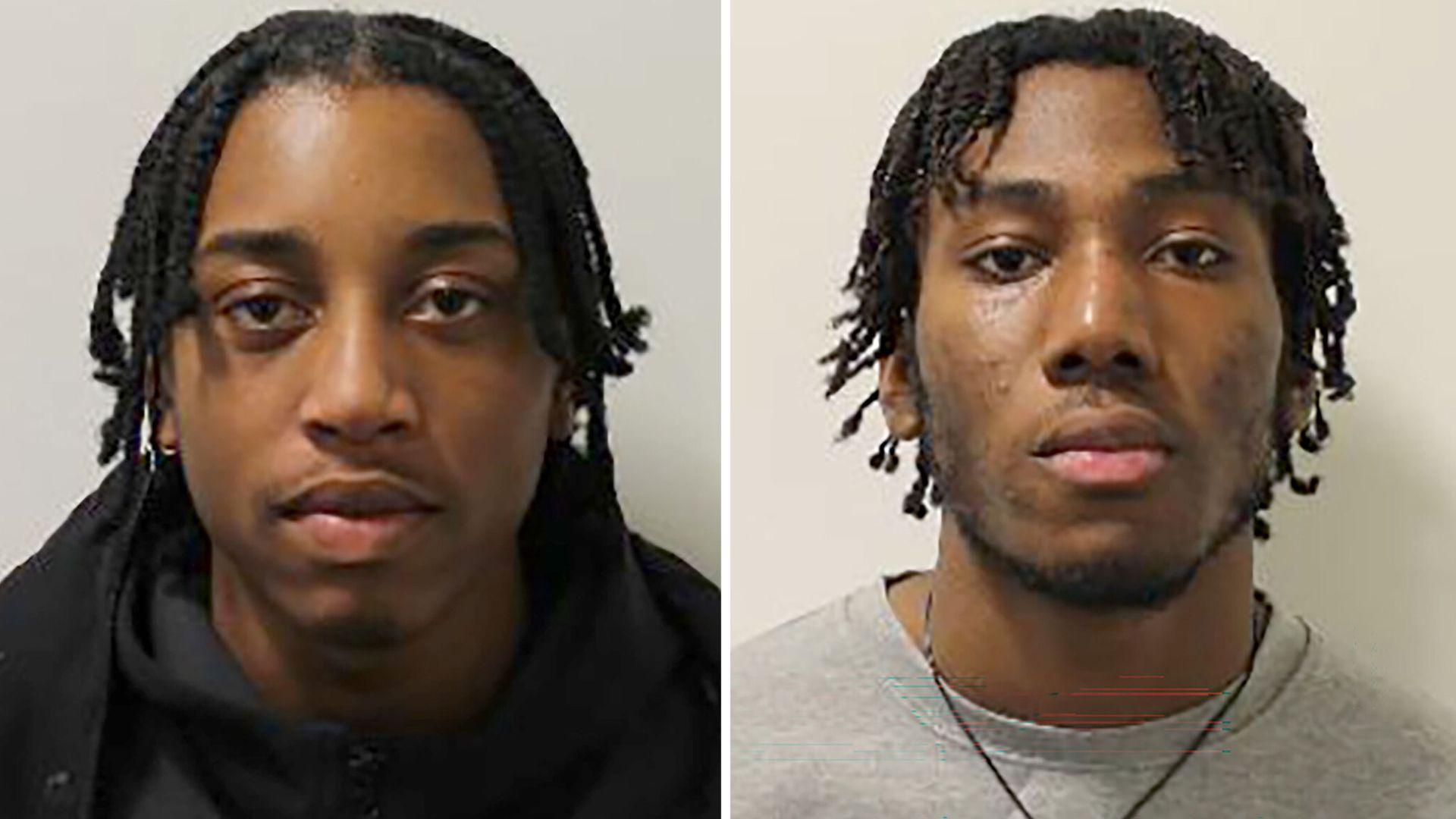
A standard voice note on Snapchat should not end with an 18-year-old dying in a pool of blood on a North London street. Yet, that's the grim reality of street violence today. On July 6, 2026, the Old Bailey saw the final act of a terrifyingly modern tragedy. Two teenage drill rappers, Emmanuel Popoola and Tayvon Etefia, were found guilty of murdering 18-year-old Keanu Harker.
This wasn't a complex, cinematic turf war over millions of pounds. It wasn't some deeply entrenched blood feud stretching back generations. The trigger for this brutal execution was an argument on a phone screen. Specifically, a group chat mockingly suggested that Popoola couldn't afford data for his mobile phone.
Street culture has morphed into something incredibly fragile and hyper-reactive. The conviction of these two teens shines a harsh light on how social media algorithms and drill music lyrics don't just reflect violence anymore. They actively accelerate it.
The Trivial Row That Escalated to Execution
The dispute erupted within the digital boundaries of Enfield, North London. For months, a bitter rivalry had been brewing between two local street gangs. On one side stood the 3x3 gang. On the other was the Get Money Gang, widely known as GMG. Keanu Harker found himself caught in the crossfire of this escalating friction.
The prosecution during the six-week trial mapped out a timeline that should terrify any parent. It started with petty insults. In a Snapchat group chat shared by rival gang members, voice notes flew back and forth. Someone dropped a comment mocking Popoola. They hinted he was too broke to top up his phone data.
To a normal teenager, that's an insult you shrug off or reply to with an emoji. In the world of Enfield gang politics, it was treated as an unforgivable stain on a reputation. Honor in these circles is a currency traded in blood. Popoola, who performed under the drill rap moniker Constancy, decided that a digital slight required a physical execution. He didn't wait around. He didn't seek a fistfight. He sourced a self-loading pistol.
Ambush on Great Cambridge Road
On June 26, 2025, the digital threats turned into a coordinated military-style hit. Keanu Harker was cycling down Great Cambridge Road in Enfield at around 8:45 PM. It was a warm summer evening.
He didn't see them coming until it was too late. Popoola and Etefia were hunting him. They didn't use a stolen car or a moped, opting instead for a high-powered Sur-Ron electric dirt bike. These e-bikes are virtually silent, incredibly fast, and have become the weapon of choice for urban hits because they can weave through traffic and escape down narrow alleyways effortlessly.
Etefia, who rapped under the name Take Risks, was at the handlebars. Popoola sat on the back as the passenger, gripping the loaded firearm.
Prosecutor Louise Oakley KC described the terrifying speed of the attack to the jury. The electric bike closed the distance instantly. As they pulled alongside the unsuspecting 18-year-old, Popoola didn't hesitate. He pulled the trigger three times from point-blank range.
Two bullets hit Harker square in the head and chest. Etefia didn't flinch or look away. He kept the throttle pinned.
Harker collapsed off his bicycle onto the asphalt, bleeding heavily. In his final moments, the fatally wounded teenager managed to crawl a short distance, seeking refuge in the front garden of a residential house just off the main road. He died right there on the grass. Passersby, startled by the sudden cracks of gunfire, found his blood-soaked bicycle lying in the middle of the road. They followed the trail of blood to his body, but it was already too late.
Inside the Mind of the Killers
The coldness didn't stop when the trigger was pulled. Popoola and Etefia fled toward Enfield Town Park to execute a pre-planned clean-up operation. They dumped the high-powered e-bike and stripped off their outer clothing to confuse eyewitnesses and destroy forensic evidence. Etefia even threw a massive machete into a stranger's garden.
When they walked away from the park, locals noticed them immediately. It was a hot evening, yet both teenagers were still wearing heavy balaclavas. One witness noticed Etefia had stripped down to shorts and a t-shirt, but his pockets were bulging with a heavy, distinctly gun-shaped object.
They had a network ready to shield them. An associate named Eliezer Mbaki picked the killers up in a black Ford Focus and drove them away from the immediate dragnet. Later that night, they even sent a 16-year-old boy back into Enfield Town Park to retrieve the abandoned e-bike.
The most chilling part of the entire saga came next. Instead of lying low, the gang did what modern digital crews always do. They bragged. Jurors were shown drill rap videos filmed and uploaded shortly after the killing. In the videos, gang members openly gloated about the murder, using coded lyrics to celebrate the fact that a rival had been wiped out over a data insult.
The music wasn't just a creative outlet. It was a public ledger of their crimes.
A Two Minute Margin and a Paris Trap
The Metropolitan Police investigation team, led by Detective Chief Inspector Lucie Card, relied heavily on digital forensics and relentless CCTV tracking. Analysts reviewed hundreds of hours of footage. They caught the defendants on camera speaking with associates at a sports court in Enfield Town Park just minutes before the murder. On that footage, Popoola was seen proudly showing off a plastic bag containing a heavy item. The police knew exactly what was in that bag.
As the net tightened, the killers panicked and tried to flee the country. They turned to their inner circle for help.
On June 28, 2025, just two days after Keanu was executed, Popoola’s girlfriend, Anais King, bought a one-way Eurostar ticket from London St Pancras to Paris. Popoola successfully boarded the 7:00 PM train and vanished into France.
Etefia tried the exact same tactic the following day. He booked a ticket for a train leaving at 8:31 PM. This time, the police were ready.
British Transport Police officers quietly boarded the train as it sat on the platform at St Pancras. They grabbed Etefia and dragged him off the train at 8:29 PM. He was caught by a margin of exactly two minutes.
Popoola thought he had beaten the system by hiding out in the French capital. He underestimated the patience of the homicide squad. Instead of kicking down doors blindly in Paris, detectives put a tail on his girlfriend, Anais King. On August 3, 2025, King traveled to France, completely unaware that French police gendarmes were tracking her every move from the moment she stepped off the train at Gare du Nord. She took a taxi directly to Popoola’s hidden apartment. The police walked in right behind her.
Popoola was arrested, extradited back to the UK, and forced to face a jury.
The Verdicts and the Fallout
The trial at the Old Bailey exposed a web of young people complicit in a young man's death. Popoola tried to deny his involvement entirely, but his co-defendant Etefia pointed the finger right at him. Etefia admitted he was driving the e-bike but absurdly claimed he had absolutely no idea Popoola was carrying a loaded gun.
The jury saw through the lies.
Both Emmanuel Popoola and Tayvon Etefia were convicted of murder and possession of a self-loading pistol with intent to endanger life. Their support network fell with them. Eliezer Mbaki, Anais King, and the 17-year-old youth were all convicted of assisting an offender.
Sentencing is set for July 9 and July 10, 2026. Because they were 17 at the time of the offense, their sentences will reflect youth sentencing guidelines, but they are looking at decades behind bars.
Keanu Harker’s family released a devastating statement after the verdicts. "Our son had just turned 18 when these individuals decided to take his life," they said. "We have been left with a lifetime of pain and loss that can never be undone. We hope this case opens people's eyes to how damaging gang culture has become for young people. Too many children are losing their lives."
The Broken Mechanics of Modern Street Violence
This case highlights a massive shift in how youth violence operates in the mid-2020s. Historically, street conflict required physical proximity. You had to look someone in the eye, cross into their neighborhood, or interfere with their illicit business to start a war.
Now, friction is constant and immediate. It lives in the pocket of every teenager. Snapchat groups, TikTok comments, and Instagram Live broadcasts create a continuous, high-pressure environment where young people are constantly perceived as disrespecting one another.
When you combine that toxic digital environment with drill music, the results are fatal. Drill rap rewards authenticity. To get views, streams, and respect in that subculture, you cannot just rap about violence; you have to prove you are willing to execute it. A diss track isn't just art anymore. It is a corporate memo for a hit.
The use of Sur-Ron e-bikes has completely changed the tactical landscape for urban police forces. They are silent. They don't require a license or registration. They can accelerate to highway speeds instantly. This lets killers get close to a target without alerting them, pull a trigger, and vanish before the first emergency call connects.
Real Steps to Dismantle the Cycle
We cannot keep reading these headlines and treating them like isolated incidents of bad behavior. The convergence of instant messaging, silent transport, and readily available firearms has turned minor teenage posturing into lethal operations. If we want to prevent another family from standing outside the Old Bailey mourning an 18-year-old, we have to target the infrastructure of these digital wars.
- Audit Tech Platforms Constantly: Social media companies must change how their algorithms handle localized gang content. Voice notes containing explicit threats or gang affiliations shouldn't be allowed to circulate unchecked in closed group chats.
- Regulate High-Powered E-Bikes: Bikes like the Sur-Ron operate in a legal gray area. They are often modified to run at speeds exceeding 50 mph while remaining unregistered. Stricter enforcement, point-of-sale tracking, and immediate confiscation of unregistered high-powered e-bikes in urban areas are vital.
- Target the Funding of Drill Exploitation: Independent labels and streaming platforms profit directly from the notoriety of jailed or active gang members. If a music video directly references a real-world violent crime or names a victim, it should be stripped of monetization and pulled down instantly.
- Equip Parents with Digital Literacy: Many parents have no idea what their children are listening to or who they are communicating with in encrypted group chats. Local councils need to provide aggressive, real-world digital safety training for parents in high-risk areas.
The conviction of Emmanuel Popoola and Tayvon Etefia provides justice on paper, but it doesn't bring Keanu Harker back. Two teenagers are going to spend their prime years in a maximum-security prison cell because they couldn't handle a joke about a phone data plan. It is a pathetic waste of human life, and until the digital ecosystem driving this behavior is dismantled, it will happen again.