Getting to the moon is brutally expensive, and if you mess up the landing, your entire business model vaporizes in a fraction of a second. The folks at Tokyo-based ispace know this pain better than anyone. After high-profile crash-landings in 2023 and 2025 using SpaceX Falcon 9 rockets, the company is completely changing its strategy. Instead of risking everything on their own small landers, they just paid Elon Musk's SpaceX $50 million for a 500-kilogram slice of cargo space on a future Starship mission targeting a 2030 lunar landing.
This isn't just another launch contract. It represents a massive shift in how private companies view the lunar economy. By buying into Starship, ispace is introducing a "bus and taxi" framework that could finally make commercial moon transportation sustainable. If you want to understand where the space economy is actually heading, you need to look past the flashy rocket launches and focus on the cold, hard math of freight cost per kilogram.
The Bus Versus Taxi Strategy
For years, the commercial space race focused on building proprietary landers from scratch. You design the structure, you build the propulsion system, you program the guidance software, and you pray everything works during the final ten seconds of descent. It's a high-stakes gamble that frequently ends in a pile of twisted metal on the lunar surface.
The new approach by ispace splits the problem into two distinct categories. They call it the bus and the taxi.
SpaceX Starship is the bus. It's an absolute monster of a vehicle designed to carry up to 100 tons of cargo. Because of its sheer size and reusability, the cost per kilogram to drop things onto the lunar surface plummets. But a giant bus only goes to the main station. It doesn't drop you off at your exact doorstep.
That's where the taxi comes in. Instead of trying to fly a massive spaceship to a highly specific, tricky crater to deploy a tiny sensor, ispace will use Starship as the heavy lifter. Once Starship lands, ispace will deploy a newly conceived "Mobile Cargo System" vehicle. This surface vehicle acts as the local transport, taking smaller client payloads from the Starship landing site to their final destinations across the lunar terrain.
This setup lets ispace stop worrying about the massive engineering headache of building huge engines and massive fuel tanks. They let SpaceX handle the heavy lifting, while they focus on the last-mile delivery system on the ground.
Learning from Public Failures
To appreciate why this $50 million deal matters, you have to look at ispace's track record. They aren't newcomers; they have practical, hands-on experience with the brutal reality of deep space exploration.
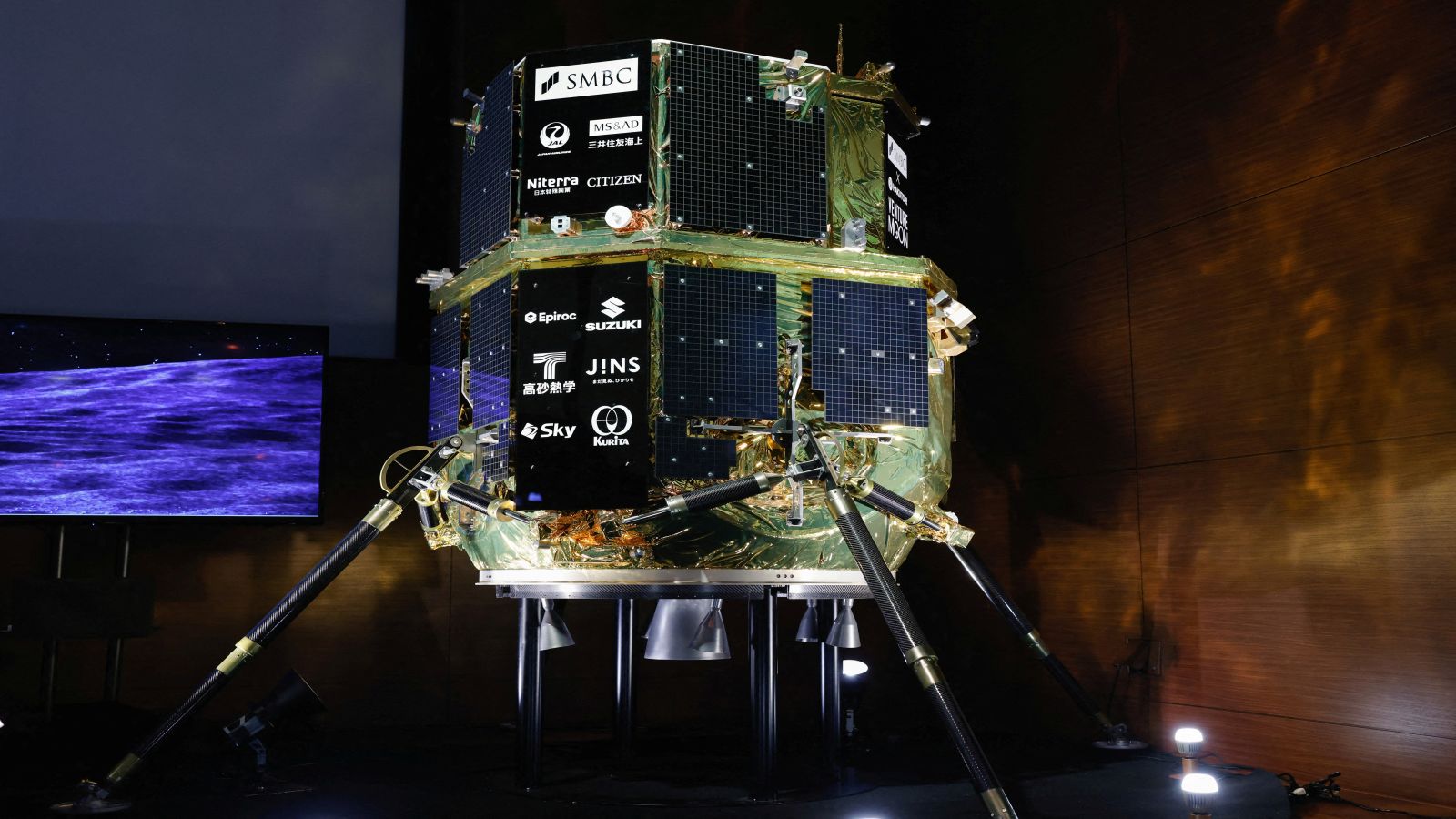
In April 2023, their Hakuto-R Mission 1 lander climbed down toward the lunar surface. An onboard computer got confused by the rim of a crater, calculated the altitude incorrectly, ran out of propellant while still hovering above the surface, and dropped like a stone. Then came another setback with their 2025 attempt.
ispace Lunar Timeline:
2023: Mission 1 Lander — Altitude miscalculation, crashed
2025: Mission 2 Lander — Secondary attempt, failed touchdown
2028: Upcoming Ultra Lander Mission — Targeted standalone tech test
2030: Starship Rideshare Mission — Integrated 500kg commercial deployment
Building hardware is hard. Building software that operates perfectly in a vacuum a quarter-million miles away is even harder. The traditional approach of relying solely on your own lander means every single failure puts your company on life support. Investors get skittish. Capital dries up.
By introducing this rideshare model, Chief Executive Takeshi Hakamada is diversifying the risk. The company is still actively developing its own proprietary landers, now called the "Ultra" series, with plans to soft-land three of them by 2030. One of those missions is even tied to NASA's Commercial Lunar Payload Services program. But if one of those Ultra landers fails, the company doesn't go under. The Starship rideshare deal provides an alternative revenue stream that keeps running regardless of what happens to their standalone hardware.
Inside the $50 Million Math
Let's break down the economics of this deal because the numbers are fascinating. Paying $50 million for 500 kilograms means ispace is paying roughly $100,000 per kilogram to get their equipment to the moon via Starship.
To the average person, that sounds astronomical. But in the space industry, that is an absolute bargain. For comparison, traditional small lunar landers often price their payload slots at anywhere from $1 million to $2 million per kilogram.
Lunar Shipping Rates (Estimated Cost per KG):
Traditional Small Lander:  $1,000,000 - $2,000,000
ispace Starship Wholesale: $100,000
By buying 500 kilograms in bulk, ispace acts as a logistics wholesaler. They buy the space from SpaceX at a bulk rate, build their Mobile Cargo System vehicle to occupy that weight, and then resell smaller slots within that vehicle to universities, private research firms, and space agencies worldwide. They can charge $300,000 or $500,000 per kilogram to their customers. They make a healthy margin, the end customer gets a cheaper ride than they could ever buy on their own, and SpaceX fills up its massive cargo hold.
It's the exact same business model used by ocean freight forwarders who rent entire shipping containers and sell off individual pallet spaces to smaller businesses. Space logistics is finally growing up and adopting standard industrial economics.
Engineering the Last Mile
The success of this entire venture hinges on the development of the Mobile Cargo System. We don't have all the technical schematics yet, but the engineering requirements are clear and incredibly demanding.
When Starship lands, it will kick up an enormous cloud of abrasive lunar dust. The ispace vehicle will need to deploy from Starship, navigate down to the surface, and operate reliably in an environment filled with sharp, electrostatic particles that love to ruin seals and bearings.
Furthermore, this vehicle isn't just a simple rover. It needs to serve as a mobile power grid and communication hub for the client payloads it carries. If a university mounts a small spectrometer onto the ispace vehicle, ispace must provide the battery power, thermal management during the freezing fourteen-day lunar night, and the radio link to send that data back to Earth.
It shifts the engineering focus away from rocket science and toward ruggedized robotics, battery efficiency, and remote automation. That's a domain where Japanese manufacturing and robotics expertise can actually shine, far more than in competing directly with SpaceX on massive rocket boosters.
The Reality of the 2030 Timeline
We need to talk about the timeline. The press release says "as early as 2030." In space industry talk, that means you should probably expect 2031 or 2032.
SpaceX is moving incredibly fast with Starship development, flying test flights regularly out of Starbase, Texas. They recently debuted their updated design variations, pushing the envelope of what their Raptor engines can do. But landing a massive, hundred-ton vehicle vertically on the airless moon is a completely different beast than splashing down a booster in the ocean. SpaceX has to master in-orbit propellant refueling just to get Starship out of Earth's orbit with a heavy payload.
If Starship hits delays, ispace's business plan shifts right along with it. This is the main vulnerability of the strategy: when you rely on someone else's bus, you are stuck at the bus stop if the engine won't start.
However, because ispace isn't funding the development of Starship themselves, those delays don't burn through their own capital at the same terrifying rate. They can focus on perfecting their surface vehicle while SpaceX spends billions testing and refining the launch vehicle.
Action Plan for Space Tech Operators
If you are running a research lab, a university space program, or a commercial hardware startup looking to get data from the lunar surface, this deal changes your immediate roadmap.
- Stop building custom landing legs. Do not waste your limited engineering budget designing mechanisms to survive a 3-meter-per-second impact on the regolith. Focus entirely on your core instrument.
- Design for standard form factors. Look at the interface specifications ispace releases for their Mobile Cargo System. Treat it like designing an app for an iPhone; match their power connectors, data protocols, and mounting brackets exactly.
- Budget for 2030, but build for survival. Ensure your instruments can handle extended storage and multi-year delays without degrading. Use components that don't rely on specialized, short-shelf-life chemistries.
The era of the bespoke, single-use moon lander is drawing to a close. Freight consolidation is taking over, and the companies that adapt to this wholesale logistics model early are the ones that will actually survive to see their hardware operate on the moon.