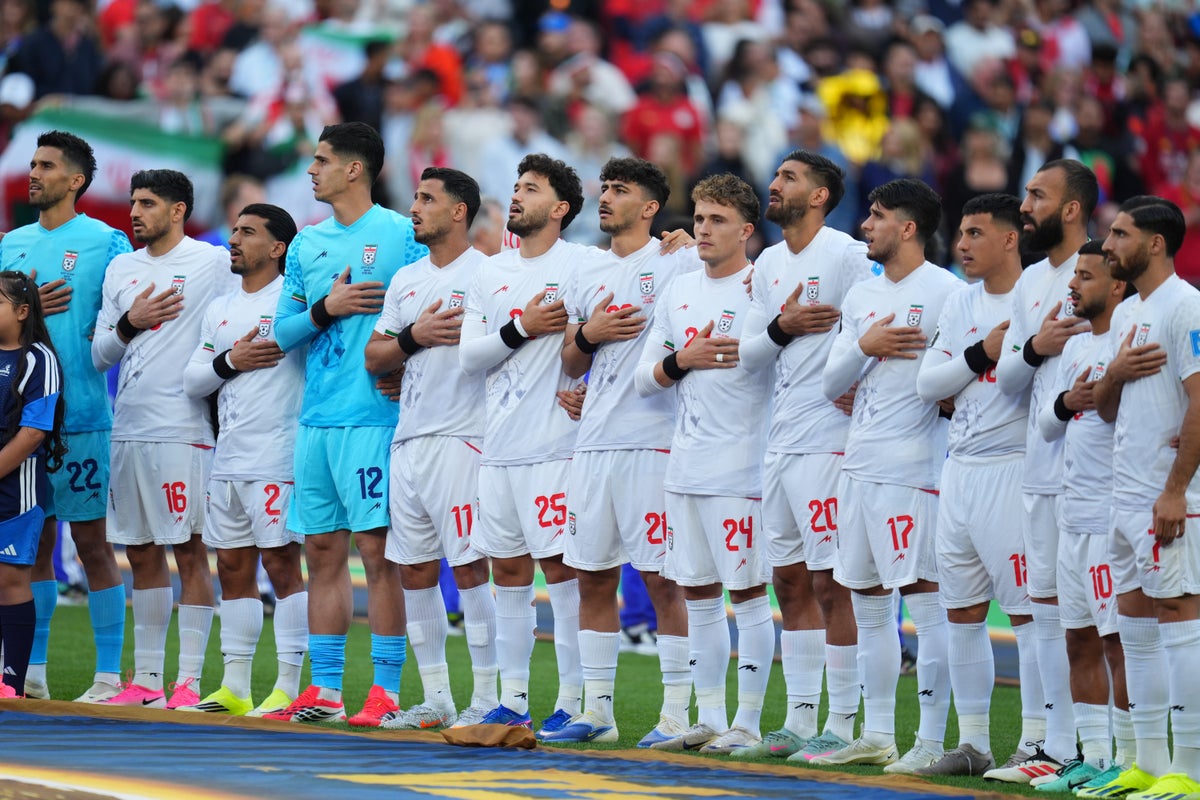
Sports are never just sports. Anyone who says otherwise is willfully ignoring what just happened in Group G. Iran is out of the World Cup, missing the round of 32 by a single heartbreaking spot. They didn't lose a game in group play, grinding out three raw, emotional draws against Belgium, New Zealand, and Egypt. They did it while their home country was literally under fire, while navigating a logistical nightmare designed to break them, and while carrying the heavy weight of international politics on their jerseys.
The final blow came in the cruelest way possible. Iran sat on the edge of their seats on Saturday night, watching Austria and Algeria battle. For a brief, shining moment, it looked like the football gods were smiling on Tehran. Algeria scored a stunning stoppage-time goal to take a 3-2 lead. If that score held, Iran was through via tiebreakers. Then, seconds later, the final whistle looming, Austria found an equalizer on the absolute last play of the match. A 3-3 draw. Just like that, Austria and Algeria moved on, and Iran was sent packing.
It's a devastating sports story. But the real story is what these players endured just to step onto the grass.
The Brutal Stoppage Time Drama That Sealed Their Fate
Football can be a beautiful game, but it's often an incredibly cruel one. Iran finished third in Group G with three points. They didn't lose, but they couldn't secure the single victory that would've guaranteed safety. Their fate rested entirely on the outcome of the Austria and Algeria match, a game played thousands of miles away from Iran's thoughts but entirely central to their survival.
When Algeria went up late, the Iranian bench erupted with a glimmer of hope. They had survived the travel bans. They had survived the hostile crowds. They had survived the constant threat of deportation. They were minutes away from an improbable, historic advancement.
Then came the equalizer. Austria's last-second strike didn't just end a game. It shattered a miracle. The sheer exhaustion on the faces of the Iranian players standing in Seattle told you everything you needed to know. They didn't just lose a tournament spot. They lost the one distraction keeping them away from a terrifying reality back home.
A Base Camp in Mexico and Constant Border Crossings
To understand how stacked the deck was against this team, you have to look at the logistics. The tournament is being hosted across North America, but the United States government made it clear from day one that the Iranian national team wasn't welcome to enjoy a standard tournament experience.
Back in March, realizing the political environment in the US was untenable, Iran tried to move all its group-stage matches to Mexico. Mexico has formal diplomatic ties with Tehran, offering a much safer environment. The request to move the games was denied, but they did secure a small victory. They were allowed to place their base camp in Tijuana instead of Tucson, Arizona.
Think about the physical toll that takes on an elite athlete. For their first two matches, held in the Los Angeles area, the team wasn't allowed to enter the United States until the single day before the match. They had to fly in, do a mandatory walkthrough, play a high-intensity World Cup match under extreme scrutiny, and then immediately board a flight back to Mexico the same night.
No recovery time. No chance to acclimate to the environment. Just a endless loop of border control, security sweeps, and flights.
By the time they were allowed to travel to Seattle two days before their final match against Egypt, the damage was done. The human body isn't designed to operate at a world-class athletic level under that kind of artificial stress.
Playing Soccer While Rockets Fly at Home
While the players were running themselves into the ground on the pitch, their homeland was experiencing a massive crisis. The geopolitical conflict involving Iran, Israel, and the United States escalated dramatically over the weekend.
On the very same Saturday that Iran was eliminated, Iranian forces launched a drone assault targeting Bahrain. Bahrain happens to be the home base for the US Navy’s Fifth Fleet. This drone strike was a direct response to overnight American airstrikes inside Iran. Hours after the drone attack, the US military struck back again, hitting multiple military targets inside Iran after an alleged attack on a shipping vessel near the Strait of Hormuz.
This war started on February 28, and it has cast a dark shadow over every single second of Iran's World Cup run.
Imagine trying to focus on a tactical briefing from your coach while knowing your family is sitting in a city that might be bombed before sunrise. Imagine answering questions about your defensive line when reporters really want to ask you about drone strikes and international maritime law.
The pressure didn't stop at the stadium gates. At Iran's opening match, the stands were a volatile mix of sports fans and political protesters. Hundreds of Iranian Americans gathered outside the stadium waving the pre-revolutionary lion-and-sun flag, screaming for regime change in Tehran. Inside, when the national anthem played, the sound was a deafening, confusing wall of boos and cheers. The players stood there trapped in the middle of a struggle they didn't ask to represent on a sports field.
The Worst Possible Host Treatment
Coach Amir Ghalenoei didn't hold back after the final whistle against Egypt. He was angry, exhausted, and fiercely protective of his squad. He made sure the international media knew exactly what his team had faced behind closed doors.
Ghalenoei stated plainly that his team was treated terribly by the host nation. He pointed out the constant travel restrictions, the deliberate visa denials for vital support staff, and the forced midnight flights back to Mexico. He called on the world to recognize the injustice of punishing athletes for the actions of their governments.
The coach believes what his players accomplished under these conditions belongs in the history books. He's right. To go undefeated in a World Cup group featuring top-tier global talent while your support system is stripped away and your country is at war is nothing short of heroic.
US officials have claimed that all restrictions were clearly communicated and agreed upon before the tournament began. That might be legally true, but it doesn't change the ethical reality. The rules were designed to make things harder for Iran, and they worked perfectly.
What Happens Next for the Iranian Squad
The tournament moves on without Iran. Had they advanced, their next stop would have been Vancouver, British Columbia, a city with a massive Iranian diaspora that surely would have provided a massive emotional lift. Instead, they have to pack their bags and face reality.
The immediate future for these players is deeply uncertain. Many of them play for domestic clubs inside Iran, meaning they are heading straight back into an active war zone. Those who play professionally in Europe face the daunting task of returning to their clubs while carrying the emotional trauma of this tournament and the ongoing anxiety for their loved ones back home.
For football fans, the lesson here is simple. Stop looking at sports as an isolated vacuum. The matches we watch on television are deeply tied to the messy, violent, and unfair realities of global politics. Iran's exit from the World Cup isn't just a story about a last-second goal by Austria. It's a story about how global superpowers can squeeze the life out of a sports team before they even lace up their boots.
If you want to support these athletes, keep sharing their stories. Don't let the technical brilliance of a last-second Austrian goal erase the reality of what the Iranian national team achieved just by showing up to play. Turn your attention to the news coming out of the Strait of Hormuz and Bahrain, because that's where the real match is being decided.