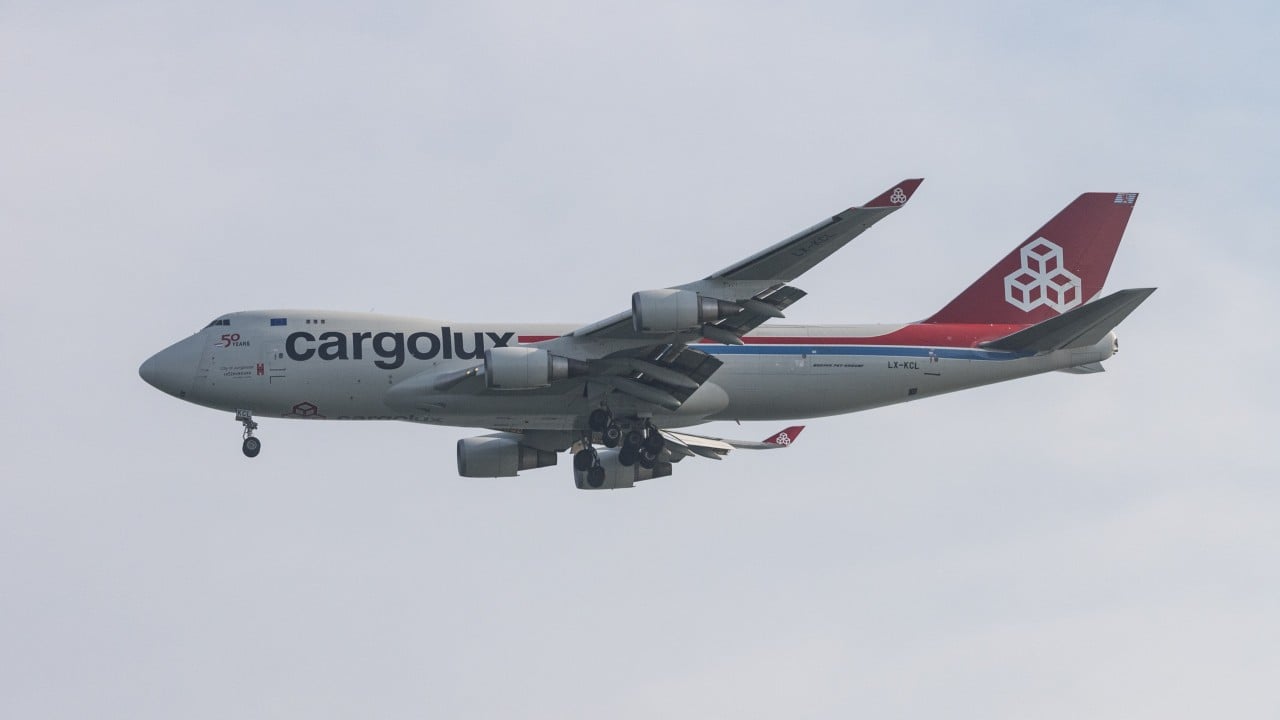
Ground crews at Hong Kong International Airport didn't expect their shift to involve a hazmat response when a routine cargo turnaround turned into an active spill zone. A suspected fuel leak under a massive Boeing 747 freighter operated by Luxembourg-based Cargolux Airlines has triggered an official investigation by local transport authorities.
When jet fuel starts pooling on asphalt under a widebody aircraft with a capacity of over 50,000 gallons, nobody panics, but everyone moves very fast.
The incident reminds us that ground operations remain the most volatile part of commercial aviation. While mid-air emergencies grab the cinematic headlines, it’s the highly congested tarmac environment where most structural, environmental, and chemical variables collide.
The Logistics Behind the Cargolux Ground Spill
The spillage was discovered directly underneath the fuselage of the giant cargo plane during ground handling. Airport fire contingents and emergency teams were immediately deployed to isolate the aircraft, applying chemical dispersants and containment booms to prevent volatile organic compounds from entering the airport's complex drainage network.
At a massive maritime hub like Chek Lap Kok, a jet fuel leak isn’t just a fire hazard. It's a major environmental threat. Hong Kong maintains strict maritime protections, including the Dumping at Sea Ordinance and the Water Pollution Control Regulation, to preserve the surrounding waters. Ground fuel can wash into storm drains and directly threaten local marine life if not contained within minutes.
Fortunately, no injuries were reported, and airport operations faced minimal cascading delays. The Civil Aviation Department and airport officials have launched an investigation to pinpoint whether the leak stemmed from a faulty fuel valve, an overfill during the pressure-refueling process, or a structural failure in the aircraft’s center wing tank.
Why Jet Fuel Leaks on the Tarmac Happen
Aviation fuel systems are remarkably resilient, but they aren't completely foolproof. When an aircraft like the Boeing 747 sits on the ground, several factors can cause fuel to escape its tanks.
- Thermal Expansion: Jet fuel is cold when it comes out of underground hydrants or when an aircraft just landed from high altitudes. As it warms up to ambient tropical temperatures on a hot Hong Kong tarmac, the liquid expands. If the tanks were fueled to maximum structural capacity, the excess volume vents out through the surge tanks located near the wingtips.
- Valve Malfunctions: The fuel system relies on a network of motorized cross-feed and transfer valves. If a valve sticks open or fails to seal under the high pressure of ground refueling pumps, fuel can backflow and escape through overflow lines.
- Refueling Coupling Issues: Sometimes the problem isn't the plane at all. High-pressure ground fueling hoses couple to the aircraft's underwing panel. A worn gasket, a misaligned lock, or a sudden pressure spike from the airport’s hydrant system can cause a dramatic spray or steady pooling of fuel before ground crews can slam the emergency shutoff.
A String of Modern Aviation Incidents in Hong Kong
This ground leak caps off an extraordinarily busy and stressful week for Hong Kong’s aviation sector and its regulator, the Civil Aviation Department. It comes right on the heels of two separate, high-profile safety investigations involving local carriers.
Just days ago, the city's aviation regulator ordered Cathay Pacific Airways to conduct an immediate, top-to-bottom review after a London-bound Airbus A350 passenger flight completely lost contact with civilian air traffic controllers over Europe. The communication blackout was severe enough to trigger NATO protocols, forcing Hungarian fighter jets to intercept the passenger plane in mid-air before communication was successfully re-established.
Simultaneously, investigators are tearing through flight recorders after another Cathay Pacific aircraft—an Airbus A330 arriving from Tokyo—suffered a severe "tail strike" during an aborted landing maneuver in rough weather. The underside of that aircraft's rear fuselage sustained extensive scraping after smacking the runway surface during a go-around.
With fighter jet interceptions, structural runway impacts, and hazardous material spills all hitting the desk of local regulators in a matter of days, air safety protocols are facing unprecedented scrutiny.
What Happens Next for the Cargolux Freighter
The grounded Boeing 747 won’t be going anywhere anytime soon. Before the aircraft is cleared for its next long-haul cargo leg, maintenance engineers have a strict protocol to execute.
First, the entire fuel system must undergo a pressure-check to trace the exact source of the moisture. If a tank panel or a valve is compromised, the plane will need to be defueled entirely—a tedious process that involves pumping thousands of gallons of Jet A-1 back into mobile fuel bowsers.
Environmental teams will continue monitoring the tarmac cleanup zone to guarantee that all chemical residues have been scrubbed clear of the runway infrastructure. You can expect the Civil Aviation Department to release a preliminary report on the specific mechanical breakdown behind the leak once the maintenance logs are pulled.
If you are a logistics manager or a passenger flying through Chek Lap Kok this week, keep an eye on tail numbers and cargo schedules, as aircraft rotations will likely see minor adjustments while these back-to-back safety investigations wrap up.