Brussels is playing a dangerous game it doesn't know how to finish. For months, European Union officials have ramped up aggressive rhetoric, threatening a massive trade war against Beijing over what they call a new wave of industrial overcapacity. Five major EU economies—France, Italy, Spain, the Netherlands, and Lithuania—recently formed a coalition pushing for emergency sector-wide tariffs, quotas, and aggressive enforcement tools. They want to stop what they call "China Shock 2.0" from decimating European industrial capability.
It sounds tough. It looks decisive on a press release. But let's be honest: Europe's threat of a trade war against China is a total farce.
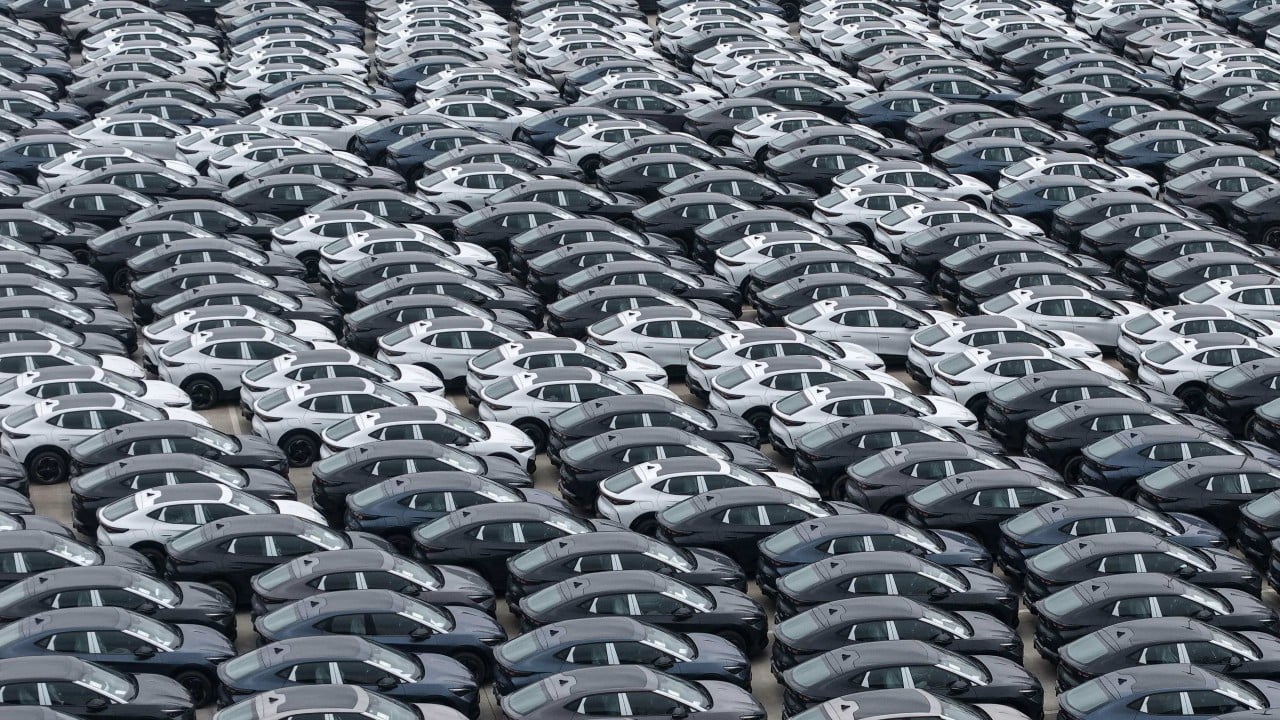
The numbers tell a brutal story. The EU goods trade deficit with China ballooned to a massive €359 billion ($418 billion) in 2025. That's more than double what it was in 2019. Cheap, high-quality Chinese electric vehicles, solar supply chain components, and advanced machinery are pouring into Europe because consumers and businesses want them. Trying to build a protectionist wall to block this reality won't save European industry. It will just expose how structurally weak the bloc has actually become.
The Illusion of Structural Leverage
The basic flaw in Brussels' thinking is the assumption that the EU holds the high ground. It doesn't.
When the United States launched its tariff campaigns against Beijing, it relied on a massive consumer market that wasn't deeply integrated into the manufacturing supply chains of the Chinese domestic market. Europe enjoys no such luxury. The European economic model, especially Germany's, is completely dependent on exporting high-end machinery, luxury cars, and industrial tools to China, while relying on cheap Chinese inputs to keep its own factories running.
Look at what happened between 2019 and 2025. Europe lost an estimated one million industrial jobs. A study by the Centre for European Reform shows that over 400,000 of those jobs were in Germany alone, tied directly to weakening export demand. If the EU triggers a full-blown trade war, Beijing won't sit on its hands. It will strike back where it hurts most. German luxury automakers, French wine and cosmetics giants, and Dutch semiconductor equipment manufacturers are highly vulnerable targets.
China's economy isn't on the verge of systemic collapse, despite what anxious analysts like to claim. It's going through a transition. Beijing holds massive state-owned assets, a sky-high national savings rate, and total control over its industrial planning. It can absorb economic pain and redistribute resources in ways a fragmented, 27-nation European trading bloc simply cannot match.
Blaming China for Homegrown Failures
Brussels policymakers love to use Chinese subsidies as a convenient scapegoat for Europe's lagging competitiveness. It's easier to blame foreign actors than to fix your own broken regulatory system.
The real problems crushing European companies aren't born in Beijing. They are manufactured right inside Europe:
- Extremely high energy costs caused by a chaotic green transition and the loss of cheap pipeline gas.
- Suffocating bureaucracy and compliance rules in the digital, environmental, and competition sectors.
- A systemic lack of venture capital and corporate innovation.
The EU is caught in a welfare trap. Member states spend the vast majority of their fiscal budgets on social safety nets and pensions, leaving almost nothing for strategic industrial investments. Meanwhile, Chinese firms spend decades scaling up value chains, building unparalleled manufacturing efficiencies, and securing critical mineral supply chains for the next generation of technology.
Imposing a 50% tariff on Chinese steel or putting massive countervailing duties on Chinese electric vehicles won't magically lower European electricity prices. It won't cut the red tape that makes building a factory in Europe take five years instead of five months. Tariffs just shield inefficient domestic companies from reality, allowing them to pocket profits without actually modernizing their operations.
Beijing Is Already Three Steps Ahead
Even if the EU manages to roll out fast-track emergency tariffs or implements its proposed "resilience tools" to force supply chain diversification, it's too late. The economic integration has already changed shape.
Chinese manufacturers are aggressively nearshoring. Instead of exporting directly from Shanghai or Shenzhen, giants like BYD, Chery, and SAIC are setting up production plants in Europe or in adjacent countries like Morocco, which have free trade agreements with the EU. They are building factories in Spain, Hungary, and the UK, turning local workforces into their own advocates.
If a Chinese EV is assembled in a revitalized plant in Galicia or northern England using a mix of local labor and imported components, a blanket border tariff becomes useless. Beijing is effectively bypasses the trade barriers by embedding its capital directly into the European continent.
Actionable Steps for European Businesses
Since you can't rely on Brussels to save the day with protectionist rhetoric, European business leaders need to adapt their strategies immediately to survive this shifting landscape.
1. Shift to Co-Opetition Models
Stop treating Chinese clean-tech and EV giants purely as adversaries. The incoming wave of Chinese factory investments inside Europe means localized partnerships are inevitable. Seek out joint ventures where your firm provides local regulatory expertise, brand management, and distribution networks, while leveraging Chinese speed and component supply chains.
2. Radical Supply Chain Transparency
The EU is drafting strict revisions to the Cybersecurity Act and introducing rules that force importers to disclose full value-chain ownership data. Map out your suppliers down to the raw material level today. If you rely on parts from Chinese companies that face high-risk designations, you need to find alternative sourcing in Southeast Asia or Latin America before the legal restrictions hit.
3. Hedge Against Targeted Retaliation
If your business relies heavily on exporting high-value consumer goods or specialized machinery to the Chinese market, prepare for sudden customs delays, sudden regulatory audits, or retaliatory consumer boycotts. Diversify your revenue targets toward India, the Middle East, or North America to cushion the blow of a sudden political escalation.
The era of easy, friction-free global trade is dead. Europe's attempts to use outdated anti-dumping tools to stop a hyper-efficient industrial competitor is like bringing a knife to a drone fight. True economic security doesn't come from building fragile tariff walls—it comes from out-innovating the competition.