Stop trying to drag people back to your website. They aren't coming.
For the past decade, traditional publishers have burned millions trying to build digital fortresses. They buy expensive content management systems, build proprietary apps, and optimize their homepages. Then they wonder why younger audiences ignore them. Discover more on a related topic: this related article.
The harsh truth is that modern audiences don't view themselves as news consumers anymore. They don't wake up wanting to check a news brand. They open social apps to scroll, laugh, and kill time. They're platform users. If you want their attention, you have to meet them inside the apps they already live in.
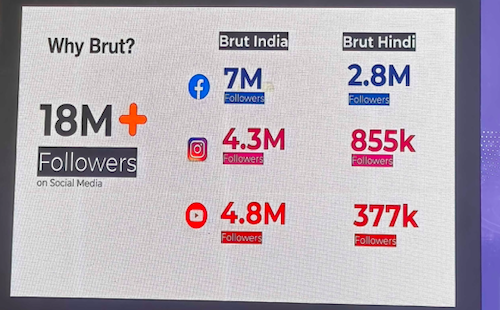
Brut India figured this out early. Over eight years of growth, the digital video giant skipped the traditional owned infrastructure strategy completely. They didn't focus on building a destination web hub. Instead, they built their entire presence directly inside the social media feeds of their audience. It sounded risky to legacy media executives, but it paid off massively. Further journalism by MarketWatch explores related perspectives on this issue.
By prioritizing platform users over traditional news consumers, they unlocked a blueprint that actually scales in a crowded market.
The Flaw in Legacy Media Infrastructure
Traditional newsrooms are obsessed with ownership. They want to own the platform, the data, and the distribution channel. While ownership sounds great in a board meeting, it creates immense friction for the end user. Asking a twenty-year-old to leave an app, click a link, accept cookies, and wait for a heavy web page to load is a losing strategy.
When you build for platform users, you accept that the feed is the final destination.
Mehak Kasbekar, Editor-in-Chief of Brut India, has highlighted that skipping proprietary distribution networks allowed the brand to focus entirely on storytelling formats that work natively. They didn't try to change how people behave online. They adapted to existing behaviors.
Legacy publishers often treat social media as a mere megaphone to broadcast links back to their websites. That approach fails because social algorithms penalize content that tries to pull users off the platform. By creating self-contained, native video content that begins and ends inside the feed, you work with the algorithm instead of fighting it.
The Myth of High Quantity Production
Most digital publishers believe that volume is the only way to survive the algorithm. They run content factories that pump out one hundred to two hundred low-quality videos or articles every single day. They hope that something hits the viral lottery.
That strategy is exhausting, expensive, and ultimately destructive to a brand.
Brut India flipped this approach by sticking to just four high-quality video uploads a day. Despite publishing a fraction of the volume of their competitors, they maintained dominant engagement metrics.
Quality beats noise. When you limit your output, you force your team to obsess over every single frame, script line, and hook.
This restraint matters because younger audiences have an incredibly high bar for authenticity. They can spot a rushed, low-effort video in the first two seconds. If you look at the demographics, around 89% of Brut India's viewership is under the age of 34. This demographic suffers from severe decision fatigue. They don't want to sift through hundreds of junk content pieces to find something useful. They want curated, high-impact stories delivered cleanly.
Speaking the Native Language of the Feed
You can't communicate with an internet-native audience using the stiff, formal tone of a traditional news anchor. It feels alien and untrustworthy to them.
Serious information doesn't need to be boring. You can communicate complex socio-political issues, economic shifts, or climate data using humor, sharp editing, and relatable language. This isn't about dumbing down the news. It's about translating it into the native dialect of social media.
Achieving this requires a deep understanding of short video formats. You have to script specifically for the format, keeping the pace brisk and the visuals raw. The name Brut literally translates to raw, reflecting a conscious effort to remove the over-produced, biased feel of traditional television news.
Monetizing Without Intrusive Paywalls
If you don't have a traditional website driving subscription revenue, how do you make money?
Many media companies claim that relying on platform distribution makes monetization impossible because platform ad-revenue splits are notoriously low. YouTube Shorts and programmatic banners rarely cover the bills for a serious journalistic operation.
The solution lies in native, values-aligned branded content.
Instead of slapping programmatic ads over stories, successful social-first publishers treat branded content as an extension of their editorial storytelling. The editorial team applies the same rigorous storytelling techniques to brand partnerships that they do to regular news stories.
Crucially, you have to be selective. Younger consumers demand ethical consistency. For instance, partnering exclusively with brands that prioritize sustainability or cruelty-free practices keeps the audience's trust intact. If a brand partnership feels fake, the audience walks away.
To scale this commercial operation further, the brand recently appointed Ashwanii Dandonaa as Chief Commercial Officer to drive sustainable revenue growth and forge deeper brand partnerships. This leadership shift proves that social-first media isn't just a passion project. It's a highly profitable business model when executed with commercial discipline.
Actionable Steps for Social First Media Strategy
If you want to transition your media operation from a legacy mindset to a platform-first model, you need to shift your execution immediately.
- Stop tracking page views as your primary metric. Shift your focus to retention rate, shares, and watch time. These numbers tell you if your content actually resonates within the platform ecosystem.
- Cap your daily output. Cut your content production volume in half and reinvest those hours into scripting, deep research, and visual hooks for your top pieces.
- Audit your tone of voice. Eliminate the corporate, detached jargon from your videos. Write scripts the way you speak to an intelligent friend over dinner.
- Build a dedicated branded content unit. Do not let traditional ad sales teams sell banner placements. Force partners to invest in native video storytelling that matches the aesthetic of your organic feed.