Imagine a noise so loud it rivals the scream of a jet engine taking off or the piercing wail of an ambulance siren passing right next to you. Now imagine that sound coming out of a human mouth.
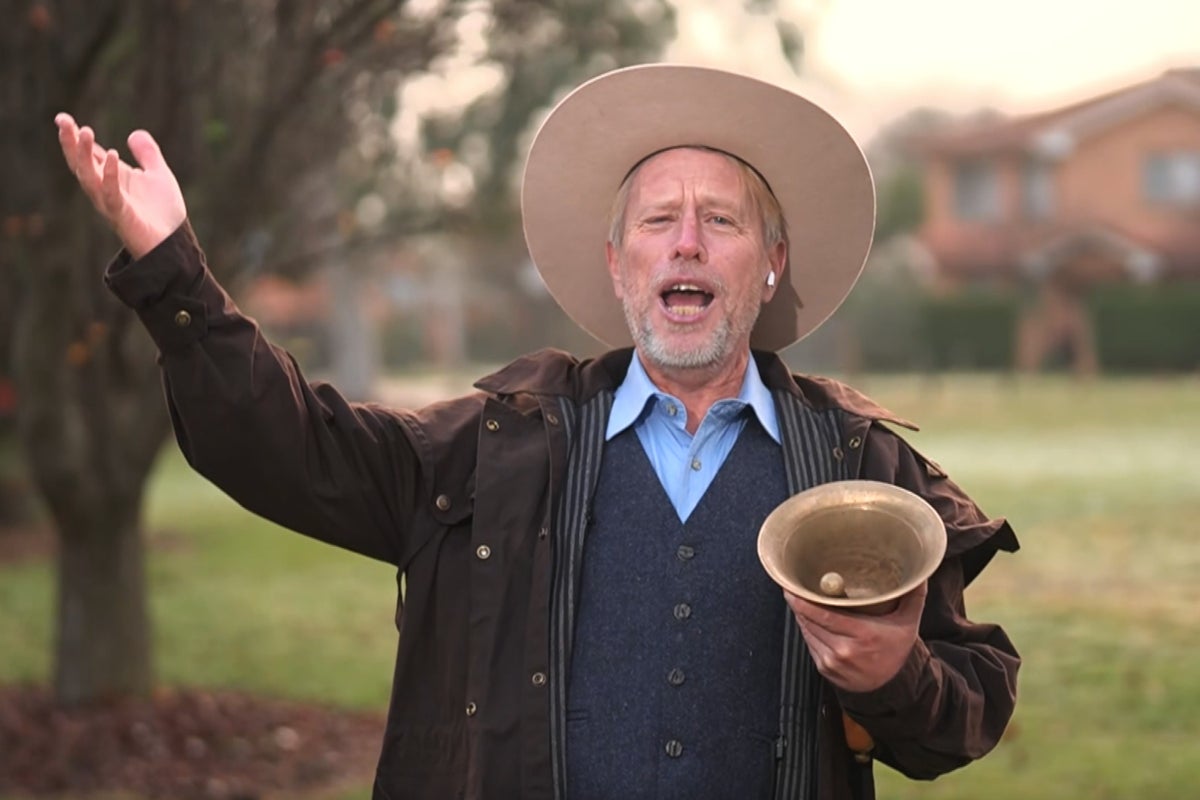
A 58-year-old Australian air conditioner cleaner named Joseph McGrail-Bateup just managed to hit that exact level of auditory chaos. He blasted his way into the Guinness World Records by producing a shout measured at 122.4 decibels.
What makes this feat bizarre isn't just the sheer volume. It's the fact that he didn't train for it. He literally couldn't.
If you try to practice screaming at the absolute limit of human lung capacity, you won't get a medal. You'll just get a ruined throat and a husky whisper for the next week.
The Auditory Reality of 122.4 Decibels
Most people don't really understand how decibels work. It's not a linear scale where 100 is twice as loud as 50. It's logarithmic. Every increase of 10 decibels represents a tenfold increase in sound intensity and roughly a doubling of perceived loudness.
To put McGrail-Bateup’s 122.4 decibels into context, let's look at how normal everyday sounds register on the scale.
- Normal conversation: 60 dB
- Heavy city traffic: 85 dB
- A gas-powered lawnmower: 90 dB
- A handheld chain saw: 110 dB
- An ambulance siren at close range: 120 dB
- A jet plane taking off: 120 to 130 dB
When you cross the 120-decibel threshold, you aren't just hearing sound anymore. You're feeling it. This is the official threshold of pain for the human ear. Prolonged exposure to this level of noise can cause immediate, permanent hearing damage.
McGrail-Bateup managed to push past this threshold using nothing but his vocal cords, a deep breath, and a single, explosive word.
He broke a record that had stood for more than three decades. Back in 1994, a schoolteacher from Northern Ireland named Annalisa Flanagan claimed the title by shouting the word "quiet" at 121.7 decibels. Irony aside, her record seemed untouchable until a radio studio in Canberra witnessed history on May 2.
The Air Conditioner Cleaner Who Moonlights as Royalty
Joseph McGrail-Bateup spends his regular working hours cleaning air conditioning units around Canberra, Australia's capital city. It’s practical, quiet work. But his true passion involves making as much noise as legally possible.
In 2017, the local government appointed him as the official, honorary town crier for Canberra. Going by the ceremonial title Lord Joseph, he dresses up in historical regalia to make public announcements at car shows, school fetes, and community festivals.
This isn't just a solo hobby. Australia has a surprisingly competitive subculture dedicated to this ancient art form. McGrail-Bateup is an active member of the Ancient and Honorable Guild of Australian Town Criers. These guys take their noise seriously.
In 2024, he won a national guild competition by belts-out the traditional opening phrase "Oyez, Oyez, Oyez" at a stunning 98 decibels. For context, that is loud enough to drown out a passing diesel truck.
That victory got him thinking. He started looking through the Guinness World Records database to see if there were specific records for town crying. He didn't find any. What he did find, however, was Flanagan’s 1994 shouting record. He realized his day job and his weekend gig had given him a weird, hidden superpower.
Why Now Defeated Quiet
Choosing the right word to shout isn't as simple as picking something you like. The physics of language dictate how air moves past your teeth and lips.
Annalisa Flanagan won her record with "quiet." It’s a sharp word with a hard consonant sound that forces a massive burst of air through the teeth.
McGrail-Bateup spent days experimenting with different words before choosing his weapon. He tested various vowels and consonants, looking for a sound that allowed maximum vocal cord vibration without choking off the airflow.
He settled on the word "now."
The word "now" starts with a nasal consonant that lets the throat open up completely before dropping into a wide, resonant vowel sound. It allows the speaker to throw the entire weight of their diaphragm into the air push without restriction.
The record attempt took place inside a professional recording studio in Canberra. A certified acoustic engineer set up calibrated microphones, and official witnesses stood by with their fingers firmly jammed into their ears.
It wasn't a clean, easy process. McGrail-Bateup had to scream the word seven separate times to get the perfect, peak-level reading. By the time the engineer confirmed the 122.4 decibel mark, the job was done, and so was his throat.
He spent the next several days speaking in a broken, husky whisper. His voice was completely shot.
The Human Biology Behind a Record-Breaking Scream
How does a human body physically produce that much noise without tearing itself apart?
Your voice starts in your lungs, which act as a bellows. When you decide to shout, your diaphragm pushes upward, forcing a high-velocity column of air up through your trachea. This air hits your larynx, commonly known as the voice box.
Inside the larynx are your vocal folds—two bands of smooth muscle tissue. As the air forces its way through them, they vibrate. This vibration creates the fundamental sound wave.
To hit 122.4 decibels, a couple of things have to go perfectly right.
Diaphragmatic Pressure
You can't shout loudly from your throat. The power has to come from the core of your body. Professional singers and opera performers spend decades mastering this, but town criers learn it out of sheer necessity to avoid losing their voices during long outdoor proclamations.
Vocal Tract Resonance
The sound wave generated by the vocal cords is actually pretty quiet on its own. It needs an amplifier. The spaces inside your throat, mouth, and nasal passages act as natural acoustic resonators. By shaping the mouth perfectly around the word "now," McGrail-Bateup turned his head into a physical megaphone, amplifying the raw sound waves before they escaped into the room.
This Is Not His First Weird World Record
McGrail-Bateup seems to have a knack for finding odd niches in the record books. This recent shouting victory is actually his second time holding a Guinness World Record.
Back in 2019, he decided to test his skills in traditional archery. He wasn't just aiming for accuracy; he wanted speed. He managed to shoot 10 arrows in a blistering 60.03 seconds, shaving a tiny fraction of a second off a world record that had stood since 2015.
He didn't get to keep that one for very long. Just nine months later, a 7-year-old prodigy came along and shattered his archery speed record by a massive 11.4 seconds.
Most people would be bitter about getting beaten by a kid. McGrail-Bateup just laughed it off. He openly admits he has no interest in trying to win the archery record back, and he feels the exact same way about his new shouting title. He maintains a classic, relaxed attitude about the whole thing, stating plainly that records are simply meant to be broken. If someone comes along and screams louder than 122.4 decibels next week, he'll be happy for them.
Protecting Your Ears From Extreme Sound
While watching someone break a world record with their mouth is entertaining, it also serves as a stark reminder of how fragile our hearing really is.
If you are ever exposed to sounds approaching the 120-decibel range, you need to take immediate steps to protect your ears. Unlike muscles, the microscopic hair cells inside your cochlea do not grow back once they are destroyed by loud noises.
If you find yourself at a loud concert, a racetrack, or working around heavy machinery like the air conditioning units McGrail-Bateup cleans, keep these simple safety steps in mind.
- Use foam earplugs correctly: Don't just stuff them into the opening of your ear canal. Roll them into a tight cylinder, pull your outer ear up and back to straighten the canal, insert the plug, and hold it in place with your finger while it expands to form a proper seal.
- Double up when necessary: If you are using high-powered tools or firearms, disposable earplugs underneath a pair of industrial earmuffs provide the maximum possible protection.
- Monitor your environment: Modern smartphones and smartwatches have built-in decibel meters. Pay attention to the alerts. If your device tells you the environment is over 90 decibels, you shouldn't stay there for long without protection.
McGrail-Bateup’s record is an incredible display of human capability, but it's a stunt performed under controlled conditions by a professional town crier. Don't try to replicate this in your living room unless you want a very hoarse voice and some highly annoyed neighbors.