You can't separate sports from politics. It's a nice sentiment, the kind of corporate branding FIFA loves to paste on stadium walls, but it's completely detached from reality.
Right now, the Iranian national football team is living through a bizarre, high-stakes contradiction. While Vice President JD Vance and Iranian officials from the "Minab 168" delegation are sitting in high-end rooms in Obbuergen, Switzerland, trying to build a foundation to end a military conflict that ignited back in February, eleven guys in white jerseys are running onto pitches in California.
They're supposed to be playing a game. Instead, they're carrying the weight of a fragile, unfolding peace deal while being hosted by the very superpower that was recently engaged in active military hostilities with their government.
The Disruption of Team Melli
If you want to know what it looks like to play under the shadow of a literal war, look at Iran's travel schedule.
World Cup squads usually spend months perfecting their routines, choosing serene base camps, and adjusting to the local climate. Iran didn't get that luxury. Thanks to shifting US visa policies, diplomatic standoffs, and administrative delays, Team Melli's base camp got aggressively yanked from Arizona and dumped across the border in Tijuana, Mexico.
When they finally flew into Los Angeles for their Group G opener against New Zealand, their plane couldn't even land on the first attempt. When they finally hit the tarmac and made it to their hotel in Manhattan Beach, they weren't met by fans holding sharpies and jerseys. They were greeted by a heavy grid of security, sniffer dogs, surveillance drones, and a crowd of angry protesters.
The irony is thick. California is home to roughly 375,000 Iranians. The western stretch of Los Angeles around Westwood is so densely populated by the diaspora that it's literally called Tehrangeles. But for star striker Mehdi Taremi and his teammates, it has never felt further from home.
Taremi didn't hold back in his press conference at SoFi Stadium. He pointed out that the endless visa drama, the forced relocation to Mexico, and the constant security circus have completely eroded the joy of the tournament. It ruins the actual spirit of the sport. Coach Amir Ghalenoei was even more blunt, calling his squad "the most oppressed one in the whole World Cup."
One Ball Two Different Fields
Let's look at the actual timeline of how absurd this is.
Just hours before Iran kicked off against New Zealand, negotiators in Switzerland announced a preliminary peace deal aimed at opening up the Strait of Hormuz and stopping military operations. You'd think a peace deal would alleviate the pressure. It didn't.
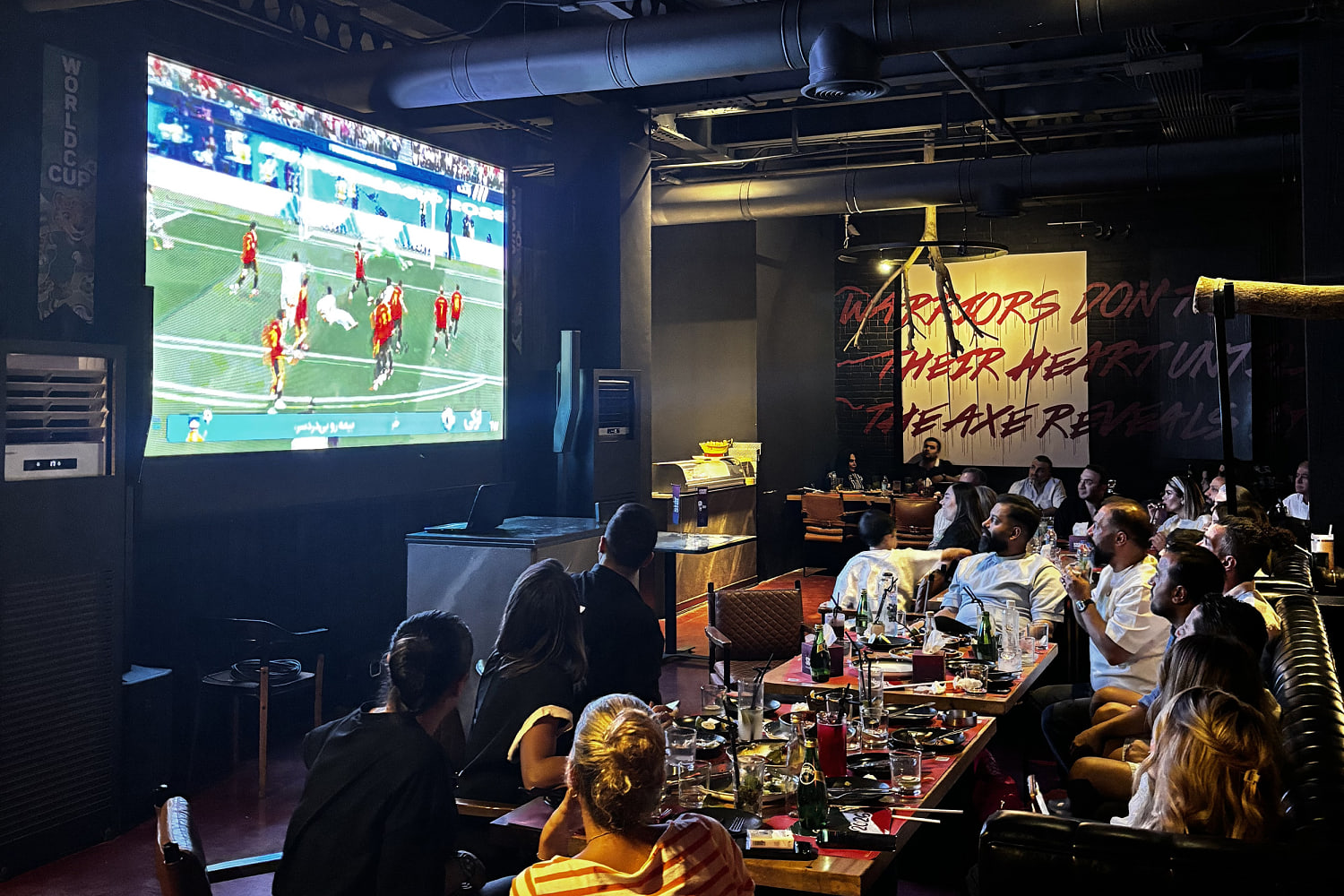
Inside the stadium in Inglewood, 70,108 fans showed up, and the atmosphere was split right down the middle. For decades, Team Melli was the one thing that could unite Iranians across generations, geographies, and political divides. The historic 1998 World Cup match against the US in France was a beautiful moment of shared cultural pride.
Not anymore. Today, the team is a contested vessel.
To some members of the diaspora, these players are representatives of a hard-line regime they despise. To others, they're just athletes trapped in a brutal political structure they didn't create, trying to represent ordinary citizens.
When the national anthem played, boos echoed through the arena. When right-back Ramin Rezaeian scored Iran's first goal in the 2-2 draw, he pulled his jersey completely over his face. He later admitted it was a political gesture because he simply didn't want to see the world. When asked about it, he said if there are problems between Iranians, it's their business, not the world's.
The Swiss Sandbox vs the American Pitch
While the players are dodging political questions, the actual politics are getting messy in Switzerland.
JD Vance has been defending the administration's aggressive social media posturing, chalking it up to responding to Iranian "trash talk." The talks are deeply complicated, with Qatari and Pakistani mediators trying to keep both sides at the table after the Iranian delegation threatened to walk out. To make matters more complex, Iran is trying to tie the negotiations to regional ceasefire violations involving Israel and Lebanon.
This is the reality of the 2026 World Cup. FIFA wants you to focus on the goals, the tactical formations, and the shiny sponsors. But you can't ignore the fact that several support staff members of the Iranian squad were flat-out denied entry visas. Even non-political figures, like Somali referee Omar Artan, were blocked from entering the US on vague institutional suspicions.
The Iranian team didn't even get to stay in the country after their match. Because of the strict travel rules and visa constraints, they had to pack up immediately after the final whistle against New Zealand and head straight back across the Mexican border to Tijuana. They'll wait there under armed guard until they have to fly back up for their next match against Belgium.
What Happens Next
If you're following this tournament for the sport, you need to look past the standard highlight reels. The intersection of international diplomacy and elite sports moves incredibly fast, and the margins for error are razor-thin.
Keep your eyes on these specific flashpoints over the coming days:
- Track the Tijuana Commute: Watch how the back-and-forth travel across the US-Mexico border impacts Iran's physical conditioning before they play Belgium.
- Monitor the Switzerland Updates: Follow the official briefings from the Obbuergen talks. If the preliminary framework stalls or if the Strait of Hormuz situation escalates, the security threat level around Group G matches will spike instantly.
- Watch the Stands, Not Just the Ball: Pay attention to the crowd dynamics in the upcoming matches. The behavior of the diaspora and the security response to political banners will tell you more about the state of the region than any press release from a politician.