A mom noticed her teenage son acting strangely and tipped off the feds. That single household phone call is the only reason the South Lawn of the White House didn't turn into a bloodbath last weekend.
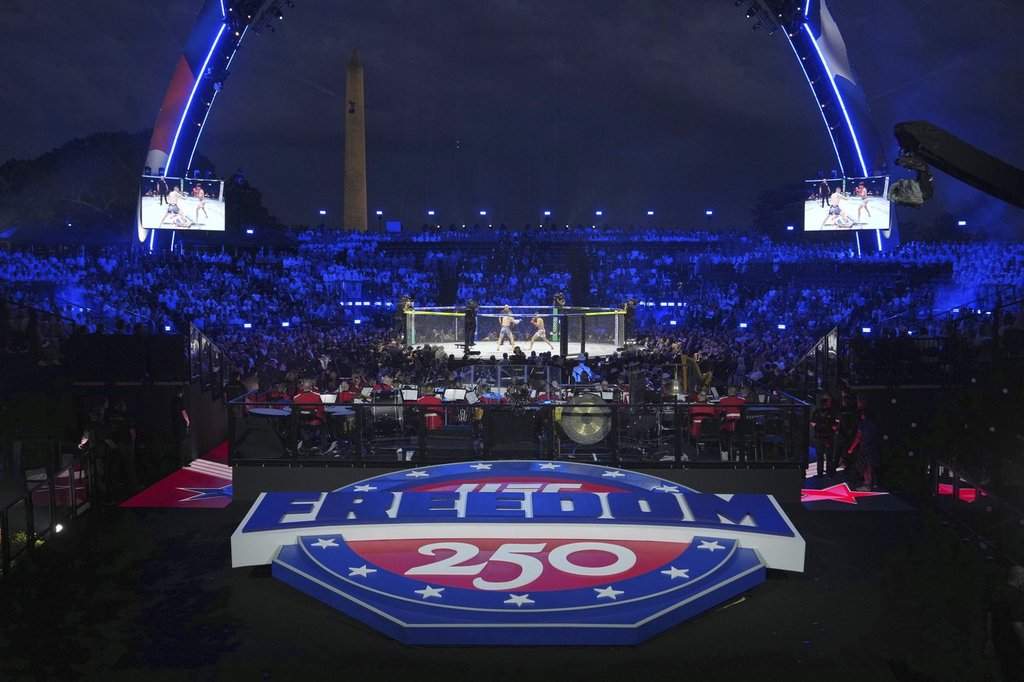
When the Ultimate Fighting Championship set up its Octagon outside the Oval Office for UFC Freedom 250, it was supposed to be a historic stunt. It was a double celebration: the nation’s 250th anniversary and President Trump's 80th birthday. Instead, an informal extremist group called "Vanguard of the Old" viewed it as the perfect high-profile staging ground for a multi-layered massacre.
Federal law enforcement stepped in just four days before the first punch was thrown. Five suspects are now in custody across Ohio, Missouri, Nebraska, and California. But the sheer complexity of what they almost pulled off shows that our current playbook for protecting massive public gatherings is completely outdated.
The Drone and Sniper Strategy We Barely Avoided
This wasn't a standard lone-wolf bomb threat. According to unsealed FBI court affidavits, the plotters organized through a TikTok group before migrating to an encrypted Signal chat room containing at least 23 active participants. Their blueprint was terrifyingly sophisticated and relied on creating a chaotic chokepoint.
First, the group planned to deploy small, commercial drones modified to carry explosives. They targeted buildings immediately surrounding the White House South Lawn perimeter. The goal wasn't just to cause immediate structural damage; it was to trigger total panic and force an immediate mass evacuation of the thousands of attendees.
[Drone Explosions] ──> [Mass Panic & Evacuation] ──> [Pre-Staged Sniper Kill Zones]
That's where the second layer of the attack sat waiting. The plotters had arranged for hidden sniper teams positioned along the expected evacuation routes. As wealthy attendees, politicians, and sports fans flooded into the streets outside the secure checkpoints, they would walk directly into a pre-staged kill zone. While local police scrambled toward the sniper fire, a final "second wave" team was tasked with storming the breached White House gates.
The group explicitly stated their targets in the chat logs: political figures, "capitalist elites," and billionaires. The front row of the event featured everyone from Donald Trump and Cabinet members to tech moguls like Meta CEO Mark Zuckerberg.
How the Network Unraveled From the Inside Out
The multi-state federal takedown started on June 10, 2026, when agents arrested 19-year-old Tycen Proper in Ohio. His mother’s tip gave the FBI the window they needed. Once agents secured Proper's phone, the digital encryption wall crumbled. Forensic analysts immediately extracted the Signal chat histories, revealing the identities of co-conspirators scattered across the country.
Within 72 hours, federal regional joint terrorism task forces executed simultaneous raids. They picked up Daniel Eskridge in Missouri, Abraham Hermosillo Alvarez in Nebraska, and Bryan Omar Roa alongside Michael Alan Thomas in California. Proper currently faces heavy federal charges, including the attempted murder of a federal officer and conspiracy to commit an offense against the United States.
FBI Director Kash Patel noted that while the rapid, multi-agency response represented the peak of domestic counterterrorism work, it highlights a deeply unsettling trend. These individuals didn't belong to a traditional, centralized foreign terrorist organization. They were an informal, decentralized collective that radicalized online via public algorithms before taking their operational logistics dark.
The Real Cost of Securing Mass Gatherings
We've entered an era where perimeter fencing and metal detectors aren't enough to keep a crowd safe. The security footprint for this UFC event was already gargantuan, led by the Secret Service with backup from the U.S. Park Police and D.C. Metropolitan Police. They set up massive multi-layered vehicle checkpoints, locked down major corridors along the National Mall, and paralyzed traffic across the downtown core.
The cost of the extra local policing alone hit nearly $12 million. UFC CEO Dana White reportedly picked up the entire tab out of pocket to ensure the show went on.
"If you look at what we pulled off tonight, I mean, just the security issues that we had... it was incredible." — UFC CEO Dana White
But if an amateur group can buy off-the-shelf drones, strap improvised explosives to them, and coordinate a multi-state sniper attack from a cell phone, a $12 million perimeter is still vulnerable. Physical barriers don't stop threats descending from the air or hiding in high-rise windows half a mile away.
The New Playbook for Event Organizers and Security Teams
If you're managing any large-scale venue, corporate gathering, or community festival, you can't view this White House plot as a bizarre, isolated exception. It's a blueprint. To protect your attendees in this new landscape, you need to pivot your security posture away from simple entrance screening and toward proactive threat mitigation.
Deploy Active Counter-Drone Technology
You can no longer assume the airspace above your event is secure. Standard local police lookouts can't spot a carbon-fiber drone flying at night. Invest in radio-frequency sensors that detect commercial drone signals the moment they power on within a two-mile radius. Use directional jamming tools to force unauthorized drones to land or return to their pilot automatically.
Audit the Outer Evacuation Perimeters
Most event plans focus 90% of their personnel on keeping bad actors out of the venue. But as this plot proved, the real vulnerability is when a crowd is forced out during an emergency. Work with local law enforcement to map out your evacuation zones. Ensure your emergency exit paths aren't narrow chokepoints lined with blind spots or unmonitored high-ground positions that snipers can exploit.
Establish Direct Channels for Community Intervention
The feds didn't catch this group using a super-computer or a sweeping dragnet; they caught them because a family member spoke up. Make sure your organization or local municipality has clear, anonymous, and heavily publicized threat-reporting systems. Train staff to recognize the warning signs of rapid behavioral changes or operational planning in online forums. Early intervention on the ground is still the most effective shield we have.