We need to stop pretending that Russia’s next move against NATO will look like a Hollywood blockbuster.
There won't be armored columns rolling across the Polish border under a sky full of fighter jets. That is a fantasy. Instead, the real danger is much quieter, much uglier, and far harder to stop.
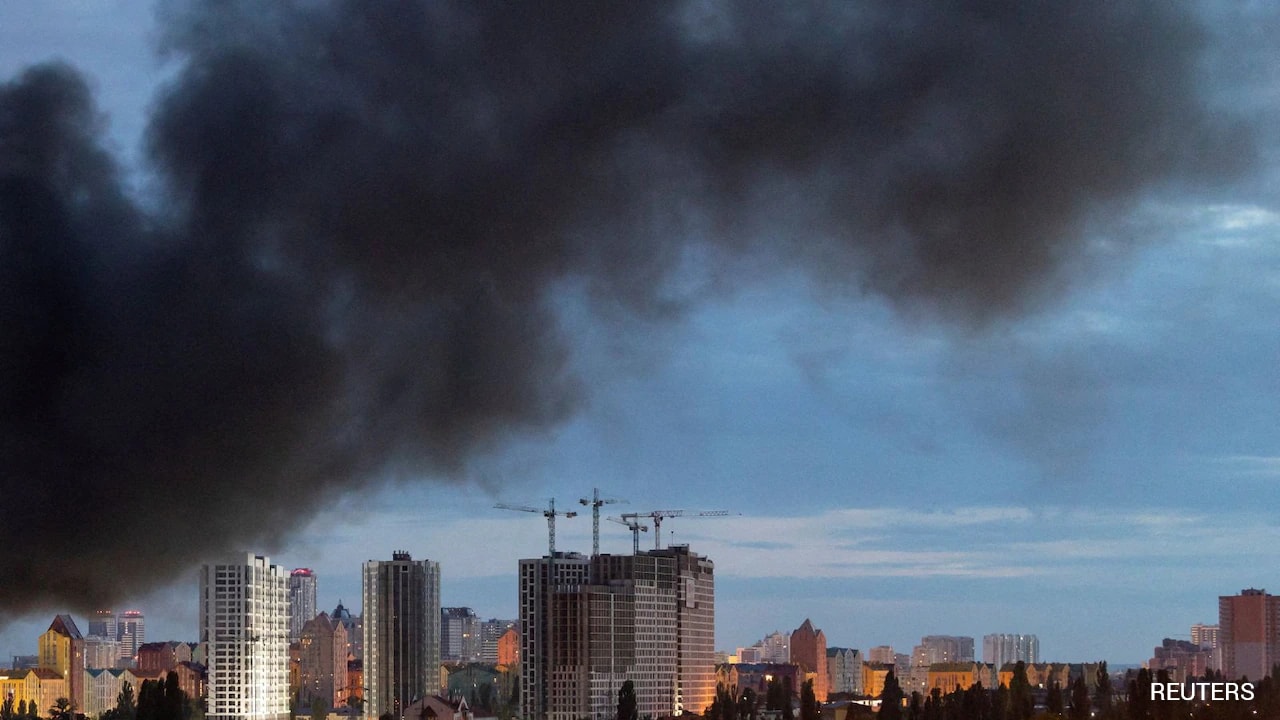
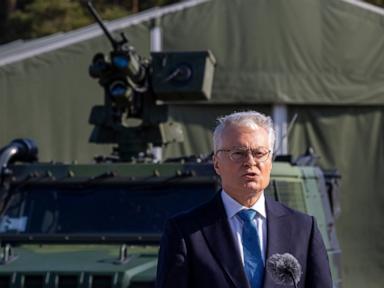
On July 15, 2026, the leaders of Poland and the Baltic states issued a series of chilling, coordinated warnings. Lithuanian President Gitanas Nausėda revealed that fresh intelligence points to imminent Russian "kinetic" or hybrid operations aimed at critical infrastructure. Latvian President Edgars Rinkēvičs took it a step further, warning that Moscow is actively looking to test NATO's Article 5 collective defense guarantee.
The Kremlin immediately laughed it off. Dmitry Peskov called the warnings a "fresh batch of bugaboos" designed to brainwash Western citizens.
But don't buy the Russian spin.
The Baltic states and Poland are not crying wolf. They're looking at hard data, recent military encounters, and a pattern of sabotage that has already begun. If you think NATO’s massive conventional military advantage makes you safe, you're missing the point of modern warfare.
The Illusion of the Safe Zone
Most people in Washington, London, or Berlin still view war as a binary state. You're either at peace, or you're at war.
Moscow doesn't see it that way.
To the Kremlin, the space between peace and total war is a playground. This is the gray zone. It's where you attack your enemy without ever triggering a declaration of war. It's where you sabotage a power grid, blind a radar system, or cause a train derailment, all while maintaining just enough deniability to keep the target’s allies arguing over whether to respond.
We're already seeing this play out. Just days before these warnings, Poland had to intercept Russian surveillance aircraft flying over the Baltic Sea. These planes weren't lost. They were mapping out Polish air defense networks. They wanted to see how fast NATO jets would scrambled, where the radars are located, and how the communication flows.
They're finding the soft spots.
If you think this is just theoretical posturing, look at what happened in Poland. The European Union recently tied Russia's FSB Center 16 to a wave of cyber-sabotage across Europe. That includes an attack on a Polish combined heat and power plant that supplied heat to nearly half a million customers in the dead of winter.
That isn't espionage. It's a trial run for civilian terror.
How to Trigger Article 5 Without Starting World War III
The biggest threat to NATO isn't a military defeat. It's a political fracture.
Latvian President Rinkēvičs laid out the nightmare scenario perfectly: Russia doesn't need to conquer a Baltic capital to win. They just need to prove that NATO won't fight for one.
Imagine this scenario.
A mysterious drone swarm knocks out an electrical substation in a remote Lithuanian border town. At the exact same time, underwater data cables in the Baltic Sea are severed. No troops cross the border. No missiles are fired from Russian territory.
Lithuania calls for an emergency NATO meeting and demands the invocation of Article 5.
What happens next?
Politicians in Western Europe start debating. Was it really Russia? Could it have been an accident? Is a drone strike on a power station worth risking nuclear escalation?
If NATO hesitates, even for forty-eight hours, the alliance is effectively dead. The security guarantee that has kept the peace in Europe since 1949 would be exposed as a paper tiger. Russia wins without firing a single shot at a NATO soldier.
This is the strategic goal behind "limited kinetic operations." It’s a stress test for Western political will.
The Baltic Power Struggle is About Physical Wires
We often talk about geopolitics in abstract terms, but this threat is deeply physical.
Right now, the Baltic states are in the final, delicate stages of fully decoupling their electricity grids from the Russian-controlled BRELL system. They want to sync completely with continental Europe. This is a massive geopolitical shift. It ends a legacy dependency on Moscow that dates back to the Soviet era.
It also makes their energy infrastructure a massive target.
Lithuanian President Nausėda pointed out that their energy connections with the European grid are highly vulnerable. When you're transitioning massive utility networks, the systems are naturally unstable. A well-timed cyberattack or a physical cut of a subsea cable could plunge entire regions into darkness, causing chaos and crippling local economies.
This is why Lithuania has deployed extra military units to guard these specific facilities. They aren't preparing to fight Russian tanks on the border; they're guarding power stations, gas terminals, and railway junctions.
The Shadow Fleet and Civilian Cloaks
Another weapon in this silent conflict is the Russian shadow fleet.
These are aging, poorly maintained, and often uninsured tankers that transport oil through the narrow Baltic Sea. But they aren't just commercial vessels.
A recent report by the International Institute for Strategic Studies highlighted a bizarre trend: Russia has been using these shadow vessels to launch civilian-style drones over Northern Europe. These flights have repeatedly disrupted civilian aviation and GPS signals across the region.
It's a brilliant, low-cost harassment campaign.
If a drone crashes or gets caught, Moscow points to the merchant flag on the ship and blames rogue operators or private entities. They get the intelligence, they create the disruption, and they face almost zero consequences.
Meanwhile, Polish Prime Minister Donald Tusk warns that the coming months will be critical. The war in Ukraine is changing. As Ukraine uses Western weapons to strike deeper into Russian territory, Putin is looking for ways to raise the cost for NATO allies. Striking back directly at Kyiv’s neighbors through hybrid means is his easiest option.
Moving Past the Red Tape: What Must Happen Now
If we want to stop these gray-zone provocations, we have to change how we think about defense. Standing armies are no longer enough. Here are the immediate steps the alliance must take to survive this phase of Russian aggression.
- Redefine Article 5 for the digital and hybrid age. We can no longer wait for a physical invasion to trigger collective defense. NATO needs to draw clear, public red lines regarding cyber sabotage on civilian infrastructure.
- Arm civilian defense groups. Protecting thousands of miles of pipelines, cables, and power lines is impossible for active-duty militaries alone. Local authorities, infrastructure operators, and regional security teams need integrated communication systems to report and respond to local disruptions instantly.
- Impose immediate, automatic costs for hybrid actions. If a Russian ship is linked to GPS jamming or drone launches, it must be banned from entering European ports or navigating Baltic waters. No exceptions.
- Invest in local grid redundancy. The Baltic states must accelerate their integration with European power grids while building localized, off-grid backup systems for hospital and military facilities.
We don't have years to figure this out.
The warnings from Vilnius and Warsaw are clear. The threat is real, the planning is underway, and the target is our collective resolve. If we don't start taking the gray zone seriously, we will find out just how fragile NATO's shield really is.