Xi Jinping just made a move that should make Washington sweat.
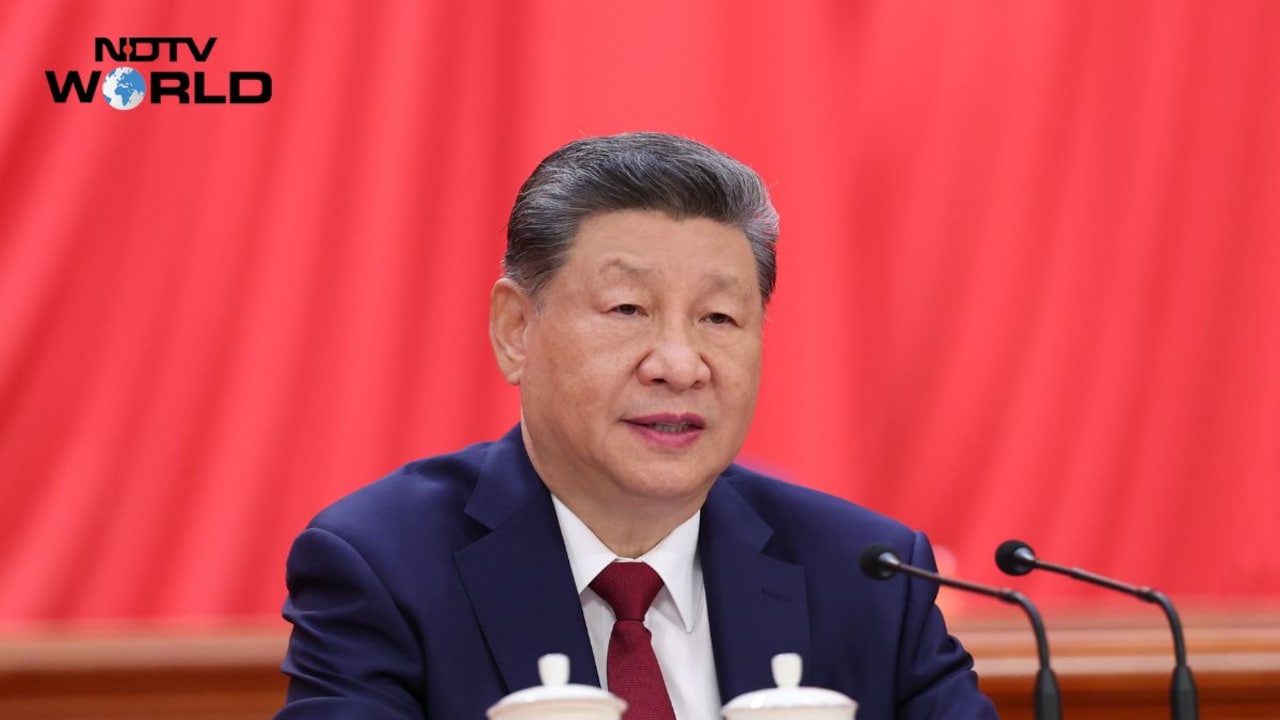
For the first time since the event began in 2018, the Chinese president took the stage to deliver the keynote address at the World Artificial Intelligence Conference (WAIC) in Shanghai. Historically, Xi left this gig to his premier. It was treated as a standard trade show. But not anymore. By stepping up to the podium himself, Xi has signaled to every provincial boss, state bank, and tech executive that artificial intelligence is no longer just a commercial sector. It is now a matter of national survival.
Western commentators love to focus on how far behind Chinese large language models are compared to Silicon Valley. They point to the latest OpenAI or Google releases and declare the race over before it has even started.
They are looking at the wrong scoreboard.
While Washington worries about keeping cutting-edge silicon out of Beijing's hands, China is quietly building an alternative tech ecosystem designed to bypass the West entirely. This is not about building the smartest chatbot to write poetry. It is about restructuring global technology infrastructure.
The Hardware Workaround They Said Was Impossible
For the past few years, the consensus in Silicon Valley has been simple. If you do not have access to Nvidia's top-tier chips, you cannot build frontier models. The US government placed aggressive export controls on advanced graphics processing units (GPUs) to bottle up Chinese progress.
It did not work. At least, not the way Washington hoped.
At this week's Shanghai forum, Huawei publicly debuted its Atlas 950 SuperPoD. This is a massive, large-scale computing system designed specifically to train and run massive neural networks. It is built entirely without Nvidia chips. Instead, it runs on Huawei's domestic Ascend processors.
[ US Silicon Bans ] ──> [ Forced Domestic R&D ] ──> [ Huawei Atlas 950 SuperPoD ]
                                                              │
                                                     (Bypasses US Supply)
Look at the software running on this hardware. DeepSeek, a major Chinese research lab, recently adapted its latest model to run directly on these Huawei Ascend clusters. DeepSeek's models perform remarkably well, often matching US open-source standards at a fraction of the operating cost.
This is a massive shift. Chinese engineers are no longer trying to copy the American hardware playbook. They are designing software specifically to squeeze maximum performance out of less powerful, domestic chips. If you can get comparable model performance using cheaper, locally produced silicon, the export ban loses its teeth.
The Battle to Control the Global Rules
The real story in Shanghai is not the product launches. It is the diplomatic push happening in the backrooms.
Alongside the main exhibition, China convened a High-Level Meeting on Global AI Governance. Delegations from over ten international organizations and dozens of countries showed up. The goal? To carve out a new global regulatory framework written by Beijing, not Washington.
China is actively pushing for the creation of the World AI Cooperation Organization (WAICO). They want this international body headquartered in Shanghai.
Think about the strategic genius of this move.
The US approach to AI regulation is heavily focused on safety, alignment, and risk mitigation. Washington wants to set strict rules that can easily end up locking out smaller players who cannot afford the compliance costs.
China is taking the opposite approach. They are pitching their AI as a public good for the Global South. They are offering low-cost, open-source models to developing nations that cannot afford expensive American APIs. By positioning themselves as the champions of "AI equality," Beijing is building a massive coalition of allies in Southeast Asia, Africa, and Latin America.
US Strategy: Tight export bans + complex safety rules = Walled gardens for the West
China Strategy: Cheap open-source + sovereign infrastructure = High adoption in the Global South
When those countries build their national systems on Chinese models and Chinese hardware, who do you think gets to write the rules for global data sharing and safety standards? Hint: It will not be the US.
Winning the Practical Application Race
While Western companies burn billions of dollars trying to achieve artificial general intelligence (AGI), Chinese firms are focused on putting current-generation technology to work.
They are integrating AI directly into physical manufacturing, logistics, and consumer devices. ZTE-owned Nubia and startup StepFun just used the Shanghai stage to reveal advanced AI agent smartphones. These are devices designed to run highly capable models directly on the hardware in your pocket, without constantly pinging a cloud server.
This brings us to the domestic signal sent by Xi Jinping's physical presence.
In China, state backing is the ultimate green light. By showing up, Xi has guaranteed that local governments will flow endless subsidies into local data centers, state enterprises will rapidly buy up domestic AI tools, and state-backed venture funds will bail out struggling local startups.
In the West, tech companies are facing a looming investor crisis. Wall Street is starting to ask when the massive capital expenditures on AI data centers will actually turn a profit. In China, that profit motive is secondary. The state has decided that sovereign computing power is national infrastructure. They will fund it indefinitely, regardless of quarterly earnings.
How to Prepare for a Two-Track World
We are rapidly heading toward a fractured technological ecosystem. The dream of a single, global internet with unified standards is dead. In its place, we will have two distinct systems:
- The US Track: Expensive, proprietary, highly capable models running on high-end Nvidia hardware, heavily restricted by Western safety regulations and intellectual property laws.
- The China Track: Cheap, open-source, highly efficient models running on domestic Chinese hardware, widely distributed across the Global South with minimal Western oversight.
If you are a technology leader or strategist, you cannot afford to ignore the China track. Here is what you need to do to stay ahead of this shift:
Assess Your Supply Chain Dependencies
If your software or hardware stack relies on global components, you need to map out exactly where your data sits. As Beijing and Washington build higher regulatory walls, holding a neutral position will become impossible.
Monitor Open-Source Efficiency
Do not ignore models coming out of labs like DeepSeek or 01.AI. They are pioneering techniques to train models on limited hardware footprints. Learning from their efficiency hacks will save you massive amounts of money on your own cloud computing bills.
Watch the Global South
If your business operates in emerging markets, expect to face stiff competition from heavily subsidized Chinese AI services. You must offer more than just raw performance; you need to offer localized solutions that compete on price and accessibility.
The global AI race is not a sprint to see who can build the smartest machine first. It is a marathon to see who can deploy useful technology to the most people, at the lowest cost, while setting the global rules of the road. Right now, the West is winning on raw intelligence. But China is playing a much bigger game.