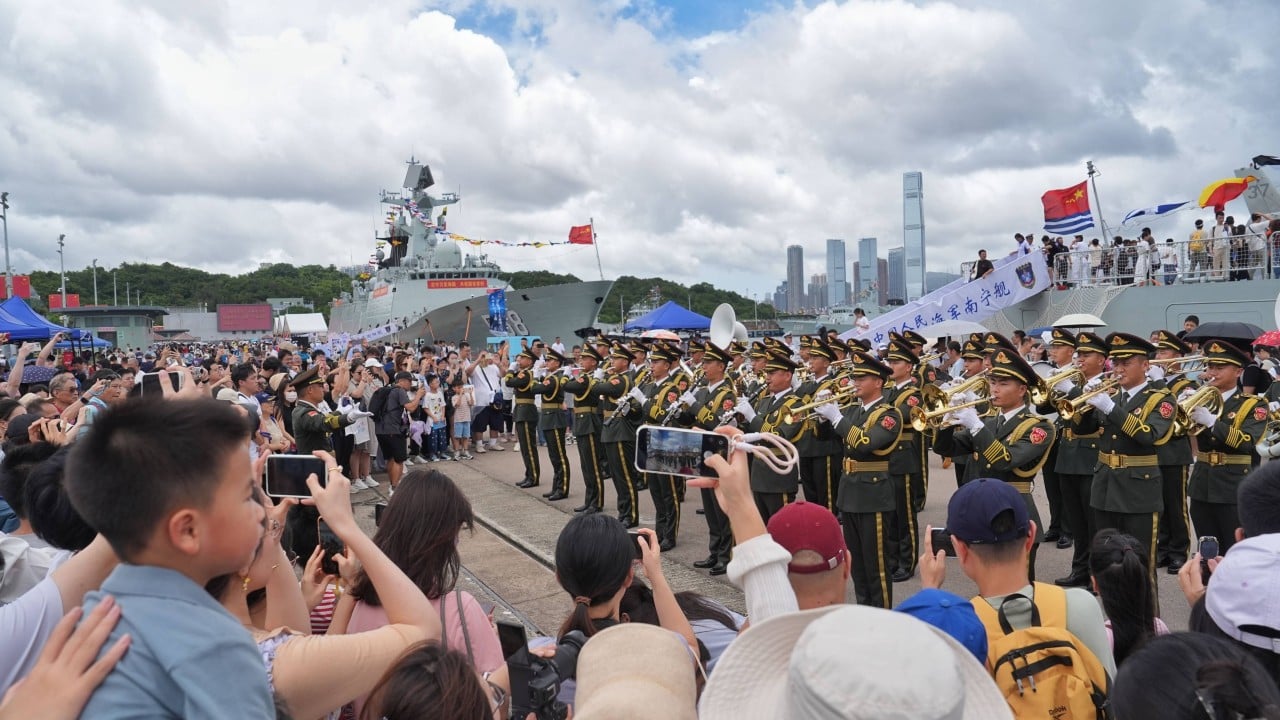
Step onto the deck of a 7,500-ton guided-missile destroyer and the first thing you notice isn't the gray paint or the vertical launching systems. It's the sheer scale of the human stories tied to the hull.
Thousands of Hong Kong residents flocked to the Ngong Shuen Chau Barracks to board the CNS Nanning and the guided-missile frigate CNS Hengyang. While most visitors queued up to snap photos of advanced hardware during the five-day military open house marking 29 years since the city's handover, the real substance lay in the firsthand accounts shared by the crew.
The highlight wasn't a technical brief. It was an intense look back at what happens when geopolitics hits the fan.
The Reality of Blue-Water Evacuations
When the Sudanese civil war erupted, trapped civilians faced a logistical nightmare. Dust-covered vehicles rolled into Port Sudan after traveling hazardous roads through active conflict zones. The scene at the dock was pure chaos until a massive grey silhouette appeared on the horizon.
Petty Officer Chen Yufei was on the destroyer Nanning when the orders came down. The crew had only hours to turn a front-line warship into a massive floating sanctuary.
- Rapid transformation: The crew split the warship into five distinct zones, turning military quarters into makeshift civilian cabins.
- Logistical strain: Feeding, housing, and comforting hundreds of terrified people who hadn't slept in days.
- Total headcount: The mission successfully pulled 940 Chinese nationals—including two Hong Kong residents—and over 200 foreign citizens out of the war zone.
Chen recalled that many civilians openly wept the second their feet touched the deck. Seeing the national flag meant the nightmare was over. For a destroyer built to hunt submarines and swat down anti-ship missiles, the sudden pivot to humanitarian rescue tested the crew's adaptability under intense psychological pressure.
Beyond the Military Muscle Flex
People look at these port visits as a show of force or a display of hardware. That misses the point entirely. The true significance of bringing ships like the Nanning and Hengyang to Hong Kong is bridging the massive gap between abstract national defense and the average citizen.
It's one thing to read about a naval evacuation in a news feed. It's another to stand next to the sailor who was handing out late-night snacks to exhausted families fleeing artillery fire. Naval officer Chen Jindang pointed out that during the scramble in Sudan, the crew didn't care where a citizen was from—if they held the passport, they got on the ship.
That hands-on reality hits differently when you're standing on the actual helipad where those operations were coordinated.
What the Public Misses About Naval Logistics
Converting a fighting vessel for civilian evacuation isn't just about clearing space. It's a logistical nightmare that most people don't think about. Warships carry precise rations, specific water supplies, and medical gear meant for a trained crew, not for children, elderly citizens, or traumatized families.
The crew had to handle immediate medical screenings, distribute dynamic watch schedules to monitor civilian safety, and manage waste systems never designed for that many active occupants. The Nanning and the supply ship Weishanhu ran these operations back-to-back across the Red Sea to Jeddah, Saudi Arabia. It proved that modern naval power isn't just about weapon range. It's about how fast you can project safety to vulnerable people thousands of miles from home.
If you ever get the chance to attend a naval open house, don't just stare at the missile tubes. Talk to the deck hands and the petty officers. Ask them what happens when the mission changes from deterrence to rescue in the middle of the night. That's where the real education happens.


