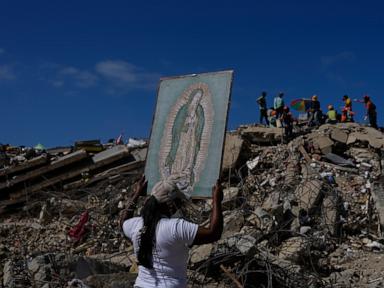
The ground in northern Venezuela did not just shake on June 24. It tore apart. Within a span of forty seconds, two massive strike-slip earthquakes—a magnitude 7.2 foreshock followed immediately by a devastating 7.5 mainshock—shattered the north-central coast. Now, weeks after the initial disaster, the true horror of the situation is coming to light as rescue teams pull more bodies from the debris.
The official death toll from the Venezuela earthquakes has crossed a grim threshold, surpassing 5,069 confirmed fatalities. Another 16,740 people are treated for injuries. But if you talk to anybody on the ground in the hardest-hit zones, they will tell you these numbers are only the surface of a much deeper tragedy. UN estimates suggest that up to 50,000 people are still missing.
The Anatomy of a Modern Seismic Catastrophe
This is not a typical natural disaster story. The twin quakes hit along the complex San Sebastián fault system, tearing a massive rupture zone from the epicenters in Yaracuy straight toward the capital city of Caracas and the coastal strip of La Guaira. Seismologists at Peking University and Italy's National Institute of Geophysics and Volcanology note that the second, larger rupture triggered massive energy release right off the coast, sending violent shockwaves into highly populated, structurally vulnerable areas.
Look at the structural wreckage. The numbers provided by the interim government under President Delcy Rodriguez paint a brutal picture:
- 856 buildings heavily damaged across northern states.
- 190 buildings completely collapsed, leaving nothing but concrete dust.
- 17,907 people instantly homeless, forced into makeshift transitional camps.
In the coastal state of La Guaira, the devastation is absolute. Local reports indicate that up to 80% of buildings collapsed or sustained structural failure. The region, sandwiched between steep mountains and the Caribbean Sea, is practically cut off from major supply lines.
The Logistics Nightmare Holding Back Relief
Getting help to the survivors is an uphill battle. Northern Venezuela already struggled with unstable public utilities before the disaster, and the double punch of the 7.2 and 7.5 quakes completely obliterated what was left.
Water treatment facilities are offline. Electricity grids are fried, and the telecommunication networks went dark hours after the event. When a bridge collapses in a mountainous coastal region, it doesn't just block a road—it cuts off entire towns from medical supplies, clean water, and search teams.
Humanitarian agencies are trying to pick up the pieces. National Assembly President Jorge Rodríguez recently confirmed that the government has tapped $346 million from the International Monetary Fund (IMF) to jumpstart reconstruction efforts. Meanwhile, United Nations humanitarian chief Tom Fletcher announced an urgent $298 million appeal to scale up emergency operations for the next six months. The money is aimed at keeping 1.3 million of the most vulnerable survivors alive, but moving funds into actual field aid takes time that trapped people simply do not have.
Children Bear the Heaviest Burden
The immediate trauma is visible in the rubble, but the long-term impact on families is quiet and insidious. Organizations like UNICEF are sounding alarms over the extreme vulnerability of children in the affected areas of Caracas, Miranda, Aragua, and Carabobo.
Thousands of kids are displaced, living in crowded camps with zero access to clean drinking water, putting them at extreme risk for waterborne disease outbreaks. Even worse, search operations are increasingly shifting toward debris removal rather than active rescue. This means hundreds of children are realizing they have lost their parents or caregivers to the collapsing structures. Psychological support teams are scrambling, but resources are stretched razor-thin across hundreds of kilometers of destruction.
What Needs to Happen Right Now
The initial global shock has faded from the front pages, but the crisis in Venezuela is expanding. Recovery teams face over 1,300 aftershocks that continue to rattle unstable ruins, making search operations highly hazardous.
If you want to support the relief efforts, look toward groups with active infrastructure on the ground. The Venezuelan Red Cross and international partners are focusing on the immediate delivery of water purification tablets, temporary shelters, and emergency medical trauma kits to La Guaira and Yaracuy. Directing attention and resources to these local distribution nodes is the fastest way to impact the ground recovery right now.