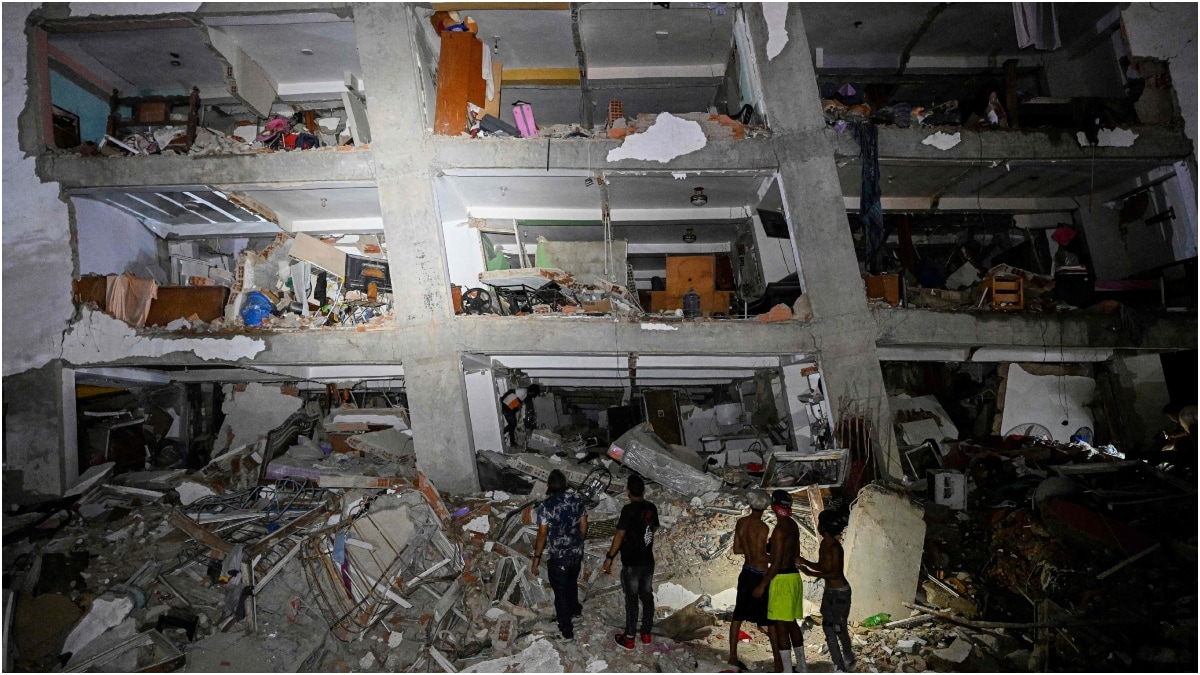
A horrific disaster just struck Venezuela, and the raw numbers don't even scratch the surface of how bad it actually is. On the evening of June 24, 2026, a rare and violent "doublet" earthquake hit north-central Venezuela. Two massive shocks tore through the region less than 40 seconds apart. The official death toll has quickly climbed to 164, with over 1,000 injuries reported, but those figures are practically meaningless right now.
Why? Because thousands of people are currently unaccounted for, trapped under a sea of unreinforced concrete. Emergency services are working frantically in the dark, but the structural devastation across Caracas and nearby regions means the worst is yet to come.
If you are looking at the headline figure of 164 dead and thinking this is a minor regional event, you are missing the horrifying reality on the ground. Predictive modeling from the US Geological Survey (USGS) paints a grim picture. The agency indicates a massive probability that the final death toll will climb into the thousands, with a high likelihood of passing the 10,000 mark. This isn't just a bad day of tremors. It is the most catastrophic seismic event Venezuela has faced in over a century.
Anatomy of a Doublet: The Twin Quakes That Blindside Science
What happened on Wednesday afternoon wasn't a standard earthquake followed by minor aftershocks. Seismologists call this a doublet event—two separate, major earthquakes striking almost simultaneously in the exact same area.
The nightmare began at 6:04 PM local time during a public holiday, catching families at home. The first quake hit with a magnitude of 7.2, centered in the Yaracuy region at a depth of about 22 kilometers. As people scrambled out of buildings, the ground didn't stop moving. Just 39 seconds later, a second, even larger 7.5 magnitude mainshock ripped through the fault line, this one much shallower at just 10 kilometers deep.
When a shallow 7.5 magnitude quake hits less than a minute after a 7.2 shock, structures that were already weakened by the first tremor simply vaporize. Seismologists at the USGS admit that back-to-back pairing of this scale is incredibly rare and hard to analyze. The double punch was felt as far away as Colombia and the Amazon regions of Brazil, causing panic and building evacuations in cities like Manaus, over 1,700 kilometers away.
The Destruction Zones: Where the Ground Swallowed Whole Blocks
While tremors shook neighboring countries, north-central Venezuela bore the full, violent force of the tectonic shift. Acting President Delcy Rodríguez declared a national state of emergency, specifically singling out La Guaira state as a complete disaster zone.
The capital city of Caracas looks like something out of an apocalyptic film. Whole blocks are buried under heavy masonry. The interior ministry reports that the worst-hit spots in the city include the Los Palos Grandes and Altamira municipalities.
Here is what the physical destruction looks like right now:
- High-Rise Collapses: In Altamira, multiple high-rises came down, including a massive 22-story residential building that completely pancaked into a heap of dust and twisted steel.
- Infrastructure Paralysis: The Simón Bolívar International Airport in La Guaira sustained critical damage. Rubble blocked the runways and ceilings fell in the terminals, forcing a total closure. This shutoff is severely bottlenecking international rescue teams trying to fly in.
- Utility Shutdowns: The government immediately cut off the main gas supply across Caracas to stop catastrophic explosions from ripped pipelines under the rubble. The Caracas Metro is entirely down, power grids are blacked out, and cell towers are dead.
Local residents describe climbing over mountains of concrete just to escape their streets. For many, the only thing they could do was spend the night on the asphalt, watching aftershocks rattle what remained of their homes.
Why the Final Toll Will Be Much Worse
The reason the official death toll remains at 164 is a mix of severed communication networks and the sheer physical impossibility of reaching the hardest-hit zones. The initial count completely excludes La Guaira state because emergency workers haven't been able to fully access or clear the debris fields there.
A missing persons tracker set up on social media by local communities already has more than 10,000 names logged. People are desperate for news of loved ones who were at home when the buildings collapsed.
The building style in Venezuela makes things drastically worse. Experts from the USGS point out that a large percentage of the housing and commercial buildings in urban Venezuela are built from unreinforced concrete. This material lacks the internal steel flexibility to handle lateral shaking. When the ground moves violently, unreinforced concrete doesn't crack or lean—it shatters and collapses entirely, leaving zero air pockets for survivors underneath.
What Happens Next: The Immediate Relief Challenges
Rescue groups are facing a race against time that they are currently losing due to logistical nightmares. International aid organizations, including the Canadian Red Cross and Islamic Relief, are preparing emergency responses, but getting boots on the ground is a massive challenge with the main airport out of commission.
The immediate priorities for the next 48 hours are purely focused on search and rescue. Local responders and the Venezuelan Red Cross are digging with their bare hands in some neighborhoods, listening for voices beneath the stone. However, as time ticks away, the focus will have to pivot toward keeping the survivors alive.
With water lines shattered and electricity gone, hospitals are struggling to treat the 900+ severely injured people already brought in. The risk of waterborne diseases will spike within days if clean drinking water and temporary shelters don't reach the displaced thousands living on the streets.
If you want to track this situation or find ways to support the ground relief, check out the live updates on ReliefWeb or monitor the emergency appeals from the International Federation of Red Cross to see where supply corridors are opening up. Avoid spread-out, unverified donation links on social media; stick to established organizations that already have active networks inside the country.