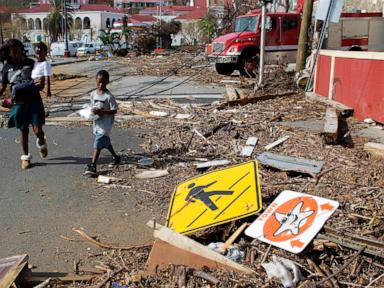
Nine years after Hurricanes Irma and Maria devastated the US Virgin Islands, $1.3 billion out of $1.9 billion in federal recovery funds sits untouched. Families are still living under temporary tarp roofs. Local electrical grids remain fragile. Meanwhile, top housing officials spent years lining their pockets through kickbacks and fraudulent disaster contracts.
The U.S. Department of Housing and Urban Development finally drew a line in the sand. Federal officials froze all future disaster recovery funding to the Virgin Islands Housing Finance Authority. The immediate freeze follows years of scathing audits, whistleblower lawsuits, and criminal convictions targeting senior leadership.
If you want to understand how taxpayer dollars meant for hurricane victims vanish into thin air, you don't need a complex legal manual. You just need to look at what went wrong in St. Thomas and St. Croix.
Nine Years Later and Over a Billion Unspent
The federal government allocated nearly $1.9 billion through the Community Development Block Grant Disaster Recovery program to help the territory rebuild. By July 2026, the local housing finance authority had managed to spend less than a third of those dollars.
In a scathing 13-page letter sent to housing authority executive Dayna Clendinen, HUD Deputy Secretary Andrew Hughes laid out the raw truth. Hughes noted that because of blatant mismanagement, local citizens still lack the stable housing and resilient power grids promised nearly a decade ago.
HUD Secretary Scott Turner made the federal government's position clear when announcing the immediate funding suspension. He stated that organizations riddled with corruption, mismanagement, and crime will no longer be allowed to squander billions of public funds. Turner emphasized that housing officials cannot prioritize personal kickbacks over helping displaced disaster survivors.
The agency's action puts $1.3 billion in remaining aid on ice until the federal government completes a thorough investigation. It marks one of the most severe interventions by federal housing authorities in recent territorial history.
Inside the Kickback Scheme That Broke the System
The corruption wasn't just a matter of sloppy paperwork or bureaucratic delay. It involved deliberate criminal self-dealing at the highest levels of executive leadership.
Former Chief Operating Officer Darin Richardson sat at the center of the fraud. While serving as chief operating officer at the housing finance authority, Richardson supervised procurement decisions for hurricane recovery efforts. In 2021, he helped steer a lucrative disaster recovery contract to Island Services Group and its subcontractor, D&S Trucking.
The contract involved storing and managing massive shipments of lumber sent to the territory for rebuilding commercial and residential structures after the 2017 storms. Richardson later expanded that contract value to more than $4 million.
Here is how the scheme actually worked on the ground. Davidson Charlemagne, the maintenance director for the Virgin Islands Department of Education, ran D&S Trucking alongside his wife, Sasha Charlemagne. Charlemagne used his government position to store the federal lumber pile rent-free inside the vacant Alexander Henderson Elementary School on St. Croix.
While storing the building supplies for free on public property, Charlemagne billed the housing finance authority roughly $83,000 every single month for storage and management fees. Federal prosecutors revealed that Charlemagne pocketed a 331% profit on labor under the contract, funneling tens of thousands of dollars directly to his wife.
What did Richardson get out of the deal? A $107,000 kickback disguised as a business investment. Richardson took those corrupt funds, combined them with money from a fraudulently obtained construction loan, and purchased real estate at a U.S. Marshals Service auction in St. Thomas.
When federal agents from the HUD Office of Inspector General, the FBI, and the Small Business Administration interviewed Richardson, he lied. He claimed he had recused himself from decisions involving the contractor. Federal records showed he had done no such thing.
A federal jury convicted Richardson of criminal conflict of interest, bank fraud, wire fraud, making false statements, and money laundering. A federal judge sentenced Richardson to 36 months in prison. His co-conspirators faced sweeping federal indictments for program fraud and money laundering.
Whistleblowers and Audits Warning Signs Were Ignored
The federal hammer didn't drop out of nowhere. Warning flares had been flashing inside the Virgin Islands Housing Finance Authority for years.
In late 2024, former chief operating officer Stephanie Berry filed a federal whistleblower lawsuit against the authority and its top executives in V.I. Superior Court. Berry had taken over oversight of planning, construction, and homeownership divisions in early 2023. She quickly discovered a toxic environment where staff routinely violated federal compliance rules.
Berry revealed that the agency's planning and construction division hadn't facilitated the construction of a single new home in over six years. That nonperformance happened despite the agency amassing $14 million from local stamp tax revenues specifically dedicated to housing.
Even worse, Berry exposed severe structural conflicts of interest. Agency staff members were drafting project specifications, setting target pricing, sitting on bid evaluation panels, and directly influencing which contractors received multimillion-dollar awards. Staff then inspected the work and approved payments for the very contractors they helped select.
Berry reported these blatant violations to senior executives. Instead of fixing the problem, leadership retaliated against her and pushed her out of the agency. Her lawsuit warned that the territory stood to lose millions in clawed-back federal funds if leadership didn't clean house.
Federal audits backed up her claims. A 2023 audit by the HUD Office of Inspector General found that the housing finance authority failed to track corrective actions, failed to verify whether federal objectives were met, and completely neglected subrecipient monitoring.
A follow-up 2026 audit rated the agency's fraud risk management capacity at or below the lowest possible score. Auditors described anti-fraud activities within the authority as disorganized, uncontrolled, and purely reactive. Important fraud controls expected in any public agency handling federal funds were entirely missing.
How the Virgin Islands Government Responded
Local government leaders scrambled to respond to the federal funding suspension. Virgin Islands Governor Albert Bryan Jr. held a press briefing to address the crisis, characterizing HUD's decision as both a serious allegation and federal overreach.
Governor Bryan argued that HUD based its funding freeze on audit findings that were two or three years old. He noted that the territory intends to file a formal appeal within the mandatory 30-day window to challenge the decision.
The governor's defense faces a steep uphill battle in court and in the court of public opinion. The housing authority scandal is far from an isolated incident in the territory. Over the past several years, multiple high-ranking territorial officials have faced federal prosecution for public corruption schemes:
- Former Police Commissioner Ray Martinez was convicted in federal court after accepting over $110,000 in bribes to push through an inflated $1.5 million cybersecurity contract.
- Former Office of Management and Budget Director Jenifer O'Neal was convicted alongside Martinez for her role in expediting payments on fraudulent invoices in exchange for kickbacks.
- Former Department of Sports, Parks, and Recreation Commissioner Calvert White was sentenced to five years in federal prison for accepting bribes.
When cabinet members and housing executives face serial prison sentences for exploiting disaster aid, appealing to administrative procedural delays rarely satisfies federal regulators. Taxpayers and disaster survivors want accountability, not procedural technicalities.
How Federal Grant Oversight Needs to Change
When disaster relief funds sit unspent or end up in offshore bank accounts, vulnerable communities suffer the consequences. The fallout in the Virgin Islands offers clear lessons for local government managers, federal grant administrators, and public policy experts.
Independent Procurement Oversight Must Be Mandatory
Local agencies cannot be left to grade their own papers when billions in federal recovery funds are involved. Allowing internal staff to write bid specifications, evaluate contractor proposals, and approve invoice payments creates an instant recipe for fraud. Independent third-party procurement monitors must sign off on every contract over $100,000.
Fraud Risk Assessments Cannot Be Optional
Federal agencies usually require grant recipients to certify compliance with anti-fraud guidelines. However, certifications mean nothing without real-time enforcement. Federal inspectors must conduct random, unannounced field audits of physical inventory and work sites. If lumber is supposed to be in a warehouse, an auditor needs to go touch the wood.
Mandatory Recusal Tracking Must Be Public
Conflict of interest policies only work when they are strictly enforced and publicly searchable. Verbal claims of recusal are useless. Any executive who holds oversight over a contract must sign a legally binding recusal disclosure that is uploaded to a public portal before any contract modification or payment authorization occurs.
Whistleblower Protections Must Have Real Teeth
Internal whistleblowers like Stephanie Berry are usually the first line of defense against systematic fraud. When an executive reports bid-rigging or compliance failures, federal regulations must trigger an immediate, independent external review before local leadership can take retaliatory employment actions.
Practical Steps for Local Residents and Grant Administrators
If you manage public grants or live in a community relying on federal disaster recovery funds, you don't have to sit back and wait for federal prosecutors to step in. You can take immediate, practical steps to demand transparency and protect public funds.
- Track local procurement portals regularly. Search for subcontracts involving local officials, family members, or newly formed corporate entities that lack a proven track record.
- File public records requests for monthly vendor invoices. Compare billed storage, labor, and management rates against standard regional market rates.
- Report suspicious bid-rigging directly to the HUD Office of Inspector General hotline at 1-800-347-3735 or through their online reporting portal. Do not rely solely on internal local reporting channels.
- Demand public town halls from local housing boards. Insist on quarterly public updates showing exact dollar amounts spent versus actual physical construction completed.
- Push local lawmakers to pass mandatory clawback legislation. Ensure local governments have the legal mechanism to seize personal assets from corrupt officials who misappropriate federal disaster funds.
Federal disaster aid exists to rebuild homes, repair electrical grids, and restore lives after catastrophic storms. When corrupt officials turn emergency funds into personal piggy banks, freezing the money is only the first step. Long-term recovery requires complete structural reform, uncompromising federal oversight, and total public transparency.

/cdn.vox-cdn.com/uploads/chorus_image/image/73064899/1255687.0.jpg)