The bloody math of modern warfare just crossed a terrifying threshold. As of June 2026, the full-scale invasion of Ukraine has officially raged for 1,569 days.
Let that number sink in. It means the fighting in Ukraine has now lasted longer than the entirety of World War I.
When the Russian military rolled across the border in February 2022, the Kremlin expected a lightning-fast campaign. The conventional wisdom said Kyiv would fall in three days. Instead, we're watching the longest, most brutal conflict on European soil since 1945 drag into uncharted territory. What was supposed to be a swift regime change has mutated into a multi-year war of attrition that refuses to end.
The Illusion of the Quick Victory
History repeats itself, especially when generals get arrogant. In the summer of 1914, European powers marched to war with enthusiastic promises that the troops would be home "by Christmas." They genuinely believed modern industrial economies couldn't survive a prolonged conflict.
Vladimir Putin made the exact same gamble. He figured the Ukrainian government would flee, Western allies would squabble, and the Russian army would throw a victory parade down Khreshchatyk Boulevard within weeks.
Both assumptions failed spectacularly. Take a look at how these two historical timelines actually stack up against each other.
- World War I: Lasted 1,568 days (From July 28, 1914, to November 11, 1918)
- Russia-Ukraine War: 1,569 days and counting (From February 24, 2022, to June 2026)
It's not just World War I that this conflict is outlasting. Earlier this year, the invasion surpassed the length of the Soviet Union's struggle against Nazi Germany between 1941 and 1945. Back then, the Red Army managed to repel a massive German invasion, turn the tide, and march all the way to Berlin in less time than it has taken Putin’s forces to seize a relatively narrow strip of eastern and southern Ukraine.
Mud, Drones, and the Meat Grinder
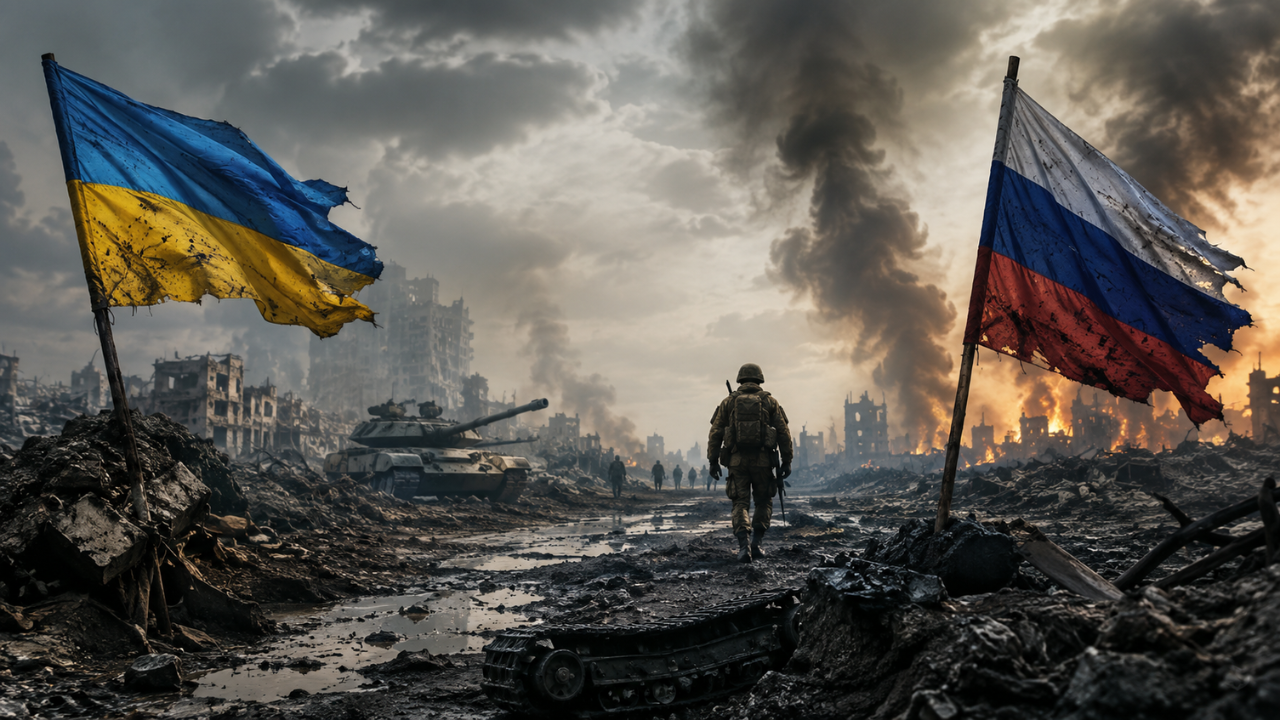
If you look at the frontline footage coming out of the Donbas, you can see why the comparison to the Great War is so eerie. You see miles of jagged trenches, cratered mud-scapes that look like Passchendaele, and soldiers huddled in wet dugouts. Artillery has returned as the absolute king of the battlefield, firing thousands of shells a day to fight over mere yards of territory.
But there's a twisted twist to this century's version. While 1914 introduced machine guns and mustard gas, 2026 features a terrifying sky filled with commercial FPV drones and precision-guided missiles.
This combination of old-school dirt trenches and high-tech digital surveillance has created a total deadlock. Neither side can mass tanks or troops for a surprise breakthrough because drones spot them the second they move.
The result? A brutal, grinding meat grinder. According to intelligence tracking from organizations like the Center for Strategic and International Studies (CSIS), Russian forces have suffered massive casualties for minimal territorial gains, sometimes losing up to 1,000 men a day just to capture a single ruined village.
The Logistics Battle Shifting into Russia
To understand why this war keeps dragging on, you have to look at how Ukraine is fighting back against Russia’s size advantage. Russia has more bodies to throw into the fight, but Ukraine is using smart, asymmetric tactics to choke off Russian supplies.
Lately, the strategy has shifted toward choking Russia's infrastructure. Ukrainian drone teams are systematically hitting oil refineries, fuel depots, and pipelines deep inside Russian territory. Just this month, strikes hammered fuel trucks and supply lines leading into occupied Crimea, sparking an immediate fuel crisis on the peninsula.
By knocking out bridges like the Chonhar crossing and hitting the Kerch Bridge, Ukraine forces Russia to route its military supplies through highly vulnerable highways. The Institute for the Study of War noted that this creates a double whammy: longer-range strikes destroy Russia's fuel production, while mid-range drone strikes destroy their ability to transport whatever fuel they have left.
Why a Clean Peace Is a Fantasy
A lot of people keep waiting for a historic, clean-cut peace treaty like the ones we read about in history textbooks. They want a definitive surrender or a grand signing ceremony.
That’s not going to happen here. When this conflict eventually slows down, it won't look like the Armistice of 1918. Russia isn't going to be a completely broken, defeated country forced to sign away its sovereignty in a railway carriage. Putin isn't going to hand himself over to an international court, and Moscow isn't going to willingly pay billions in reparations.
Any future ceasefire will likely be a messy, deeply frustrating compromise that leaves both sides angry. It'll be a frozen line on a map rather than a true resolution.
What This Means for the Immediate Future
If you're tracking this conflict, stop looking for a sudden, dramatic breakthrough on the map. The war has settled into a test of pure endurance: who runs out of ammunition, economic stability, or political will first?
To get a realistic sense of where things are heading next, keep your eyes on these specific indicators over the coming months:
- Watch the domestic fuel supply inside Russia: Monitor independent economic reports regarding Russian refinery capacity. If Ukraine's deep drone strikes keep causing domestic gasoline shortages inside Russia, it directly impacts the Kremlin's ability to fund its war economy.
- Track Western industrial production numbers: The real bottleneck for Ukraine isn't just funding; it's physical artillery shell manufacturing. Watch the production outputs from US and European defense plants to see if they can match Russia’s wartime economy production.
- Monitor Black Sea shipping corridors: Watch how effectively Ukraine can continue to suppress the Russian Black Sea Fleet using sea drones. If Ukraine maintains control over its grain shipping lanes without a traditional navy, it keeps its economy on life support.