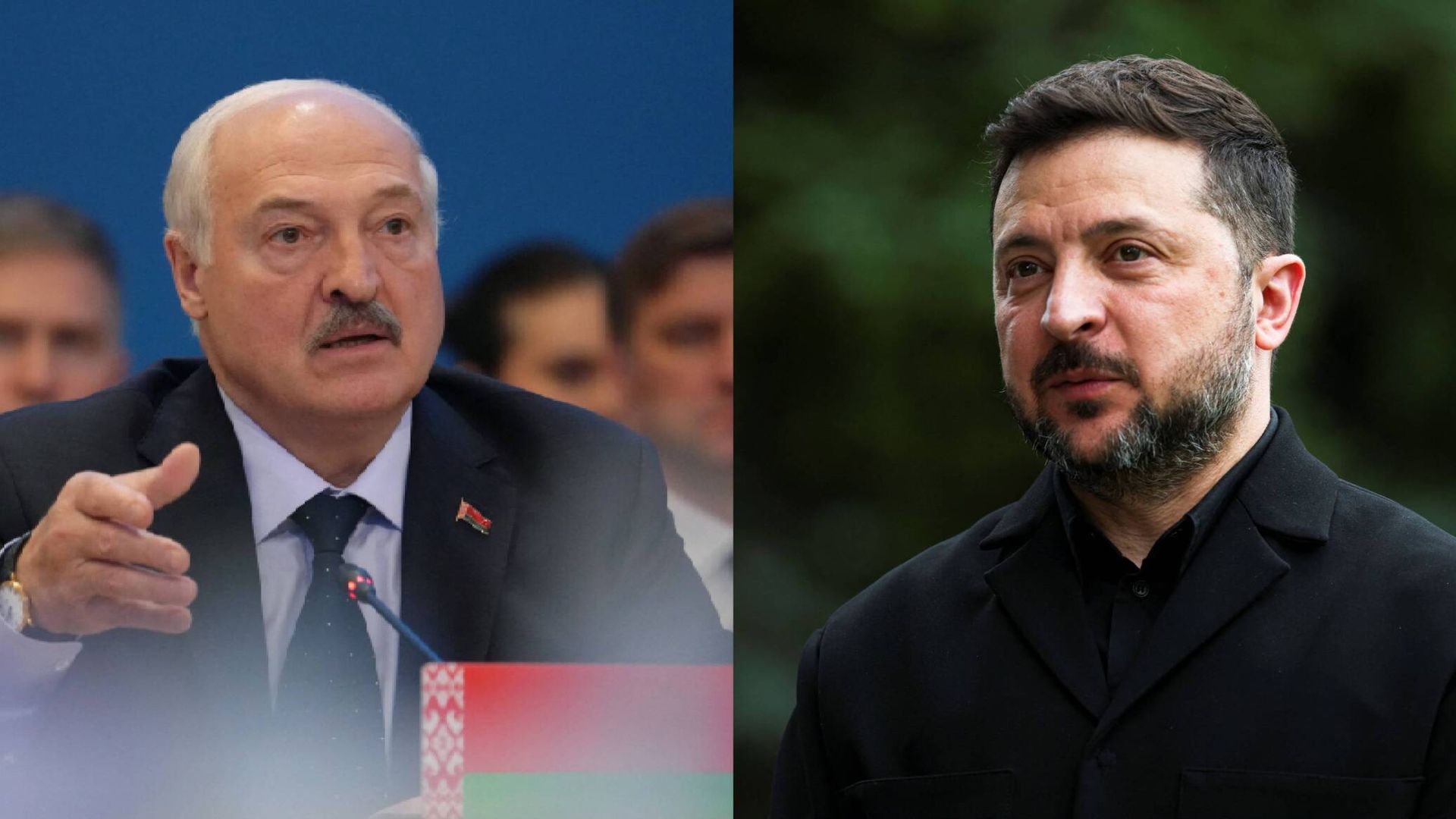
Volodymyr Zelenskyy just drew a massive line in the sand, and it points directly at Minsk. During a press conference in Kyiv with Honduran President Nasry Asfura, the Ukrainian president dropped a bombshell that standard news briefs completely underplayed. Kyiv is officially done playing nice with Alexander Lukashenko’s regime. The message was brutally simple: Belarus has exactly seven days to shut down the Russian electronic relay systems sitting on its border towers, or Ukraine will blow them up themselves.
This isn't typical wartime posturing. When Ukraine gives Belarus ultimatum over Russian drone equipment, it marks a fundamental shift in how Kyiv handles hostile neighbors who hide behind the excuse of non-participation. For over four years, Lukashenko has performed a delicate diplomatic dance, opening his territory for Russian troops and missile launches while swearing to his domestic audience that he won't get dragged into the fighting. That excuse just expired. You might also find this related article interesting: Why The Us Iran Peace Talks In Switzerland Are Already At Risk.
The real story here goes way beyond standard political threats. It comes down to tech, geography, and a soaring supply of Belarusian fuel that keeps the Russian war machine running. If you want to understand why this specific ultimatum matters right now, we have to look at the cold military reality on the ground.
The Technical Reality of the Border Relays
To understand why Kyiv is risking a major escalation with Minsk, you have to look at how modern drone warfare works. Russia regularly floods Ukrainian skies with attack drones, but these systems don't just fly blindly. They need constant, stable communication links to adjust their paths, correct errors, and bypass Ukrainian electronic warfare defenses. As reported in latest articles by USA Today, the effects are significant.
This is exactly where the Belarusian towers come in.
According to Ukrainian intelligence, Russian forces installed specialized relay and repeater systems on existing communication towers in two Belarusian regions bordering Ukraine. These devices catch the control signals from Russian military operators and blast them further into Ukrainian territory. It extends the active operational range of the drones and lets them make mid-flight adjustments.
Essentially, Belarus acts as a giant signal booster for Russian terror campaigns. Zelenskyy made a point to emphasize that there's no active front line along the Belarusian border right now. These drones aren't hitting entrenched military units; they're steering straight into civilian apartment blocks, infrastructure hubs, and regional cities like Kharkiv. By hosting these relays, the Belarusian government is directly facilitating the murder of civilians. Switching off a tower takes five minutes. Lukashenko has a week.
The End of Lukashenko Tightrope Walk
Lukashenko’s entire survival strategy since February 2022 relied on being useful to Vladimir Putin without sending Belarusian soldiers across the border. He gave Moscow the staging grounds to attack Kyiv in the opening weeks of the full-scale invasion. He opened up his airfields. He even let Russia park tactical nuclear weapons on his soil.
Yet, every time the topic of direct military involvement came up, Lukashenko backed away. He repeatedly claimed he was protecting Russia's flank from imaginary NATO invasions or that Ukraine was trying to provoke him. Zelenskyy openly dismantled that narrative during his address. The Ukrainian president recounted how Lukashenko previously called him to apologize for early missile strikes, claiming he didn't control the Russian forces operating inside his own borders.
Kyiv isn't buying that story anymore. If a foreign military fastens high-tech guidance systems onto your sovereign state infrastructure, you either permitted it or you lost control of your country. Either way, Ukraine treats those towers as active hostile threats.
How Ukraine Might Enforce the Ultimatum
What happens if the one-week deadline passes and the relays stay active? Zelenskyy was intentionally vague, stating only that "we will do it." But looking at Ukraine's current military options reveals exactly how this could play out.
Kyiv doesn't need to launch a ground invasion to neutralize these targets. Over the past year, Ukrainian long-range strike capabilities grew exponentially. We've seen Ukrainian drones smash targets deep inside Russian territory, hitting oil refineries in Moscow and airbases hundreds of miles from the border. A series of communication towers right along the border fence presents a much simpler target.
- FPV and Loitering Munitions: Since the towers sit right along the border oblasts, standard tactical drones can reach them easily.
- Precision Artillery: Some of these installations sit within range of Western-supplied or domestic guided artillery systems.
- Sabotage Operations: Ukrainian special forces or anti-Lukashenko Belarusian partisans operating inside the country could target the physical base stations.
Any of these actions mean striking inside sovereign Belarusian territory. In the past, Western allies pressured Kyiv to avoid hitting targets outside Ukraine to prevent a wider regional war. But that restriction largely applied to Western-provided weapons. With Ukraine's domestic drone and missile manufacturing hitting its stride, Kyiv feels entirely entitled to eliminate immediate threats to its population, regardless of which side of the border fence they stand on.
The Secret Fuel Pipeline Flowing to Moscow
While the drone relays grabbed the big headlines, Zelenskyy brought up a second, equally critical economic reality: the massive surge in Belarusian petroleum exports to Russia.
Since the start of 2026, Ukrainian drone strikes have relentlessly hammered Russia’s domestic oil refining capacity. The strategy worked brilliantly, creating sudden gasoline shortages inside Russia and forcing the Kremlin to implement fuel export bans to stabilize its own domestic market. To keep its military transport trucks, tanks, and logistics networks moving, Russia turned to its neighbor.
From January to May, gasoline and diesel shipments from Belarus to Russia surged dramatically. Belarusian refineries are essentially running at maximum capacity to plug the holes ripped open by Ukrainian strikes. Lukashenko’s state-owned energy sector is keeping the Russian army mobile.
By tying the drone relays and the fuel supplies together in his recent addresses, Zelenskyy is signaling a broader strategic shifts. Ukraine is showing that it views the Belarusian state budget and infrastructure as fully integrated pieces of the Russian war effort. If Belarus continues to bankroll and guide the invasion, its economic assets could easily find themselves on the target list next.
The Escalation Dilemma for Minsk and Moscow
This ultimatum leaves Lukashenko with zero good choices. If he backs down and orders his military to dismantle the Russian relay equipment, he publicly humiliates Putin and exposes the limits of his loyalty to Moscow. For a dictator whose grip on power relies entirely on Kremlin financial and security backing, that's a dangerous move.
If he ignores the ultimatum, Ukrainian strikes will likely take the towers down anyway. That leaves him looking weak to his own people and forces him to decide whether to retaliate militarily. Entering the war directly would be deeply unpopular with the Belarusian public and could trigger massive domestic unrest, potentially reviving the ghost of the 2020 mass protests that almost brought down his regime.
Moscow will undoubtedly pressure Minsk to hold the line, hoping to use Belarus as a shield or a distraction to pull Ukrainian air defense assets away from the eastern and southern front lines. But Kyiv’s calculated gamble suggests they believe Lukashenko is bluffing, or at least too terrified of his own shadow to launch a real counter-offensive.
What Happens Next
The clock is ticking down toward June 26. This isn't a situation that allows for prolonged diplomatic stalling. Western analysts, intelligence agencies, and regional observers need to watch several specific indicators over the next few days to see which way the hammer falls.
First, track the movement of Belarusian air defense systems toward the Ukrainian border. If Minsk starts heavily reinforcing these specific border towers with Pantsir or S-400 systems, it's a clear sign they intend to keep the relays hot and dare Ukraine to shoot.
Second, look for shifts in state media rhetoric inside Belarus. If Lukashenko starts setting the stage to blame Russia for "unauthorized actions" or downplays the presence of the tech, he might be looking for a quiet way to comply without looking like he folded under Ukrainian pressure.
Ultimately, Kyiv just rewrote the rules of engagement for the northern border. By giving a hard one-week deadline, Ukraine showed it's no longer willing to tolerate passive-aggressive neutrality from Moscow’s client states. If you help guide the weapons that kill Ukrainian children, you are an active participant in the war—and you will be treated like one.
Zelenskyy issues one-week ultimatum to Belarus
This video provides direct footage and context from the press conference where the Ukrainian president delivered his strict warning regarding the border relay infrastructure.