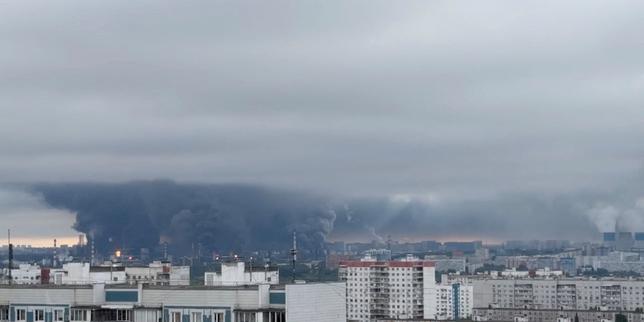
Ukraine isn't just defending its borders anymore. It's strangling Russia's fuel supply where it hurts most right outside the capital. On Saturday, Ukrainian long-range drones struck the Vtorovo oil pumping station in the Vladimir region for the second time in less than a month. It's a massive blow. Vtorovo isn't some random outpost. It's a core logistics hub located about 700 kilometers from the Ukrainian border, operated by Transneft Upper Volga.
If you want to understand how Kyiv plans to disrupt the Russian war machine, don't look at the trenches in the Donbas. Look at the smoke rising 100 miles east of Moscow. Read more on a similar subject: this related article.
The Security Service of Ukraine (SBU) confirmed that its Alpha special operations units executed the strike. According to early reports, the drones ripped into technical buildings at the facility, triggering a chain of secondary detonations. This isn't a one-off lucky shot. It's part of a highly coordinated, 40-day campaign approved by President Volodymyr Zelenskyy designed to apply maximum economic and logistical pressure directly on Russian soil.
The Strategy Behind Targeting Vtorovo
Most mainstream media reports treat these drone strikes as mere tit-for-tat retaliation. That's a mistake. The Vtorovo facility is the literal heart of Moscow's energy logistics. Additional journalism by The New York Times explores related views on the subject.
Think of it as a giant valve. Vtorovo pumps light petroleum products, specifically diesel, straight into the Moscow ring product pipeline. This pipeline network feeds the massive oil depots that keep Russia's capital moving. When Vtorovo burns, the fuel supply for Moscow's regional economy, transit systems, and military transport links chokes up.
It gets worse for the Kremlin. Vtorovo also directs petroleum products north toward the Baltic Sea ports for export. By hitting this single point, Ukraine achieves two goals at once. It disrupts domestic fuel stability around Moscow and slashes the export revenues Russia uses to finance its military.
Kyiv has figured out that the Russian air defense grid is Swiss cheese. Russia has plenty of Pantsir and S-400 systems, but they're mostly deployed at the front lines or ringed tight around Putin's personal palaces. They can't protect every square mile of industrial infrastructure. The SBU is exploiting these gaps with devastating precision. They hit Vtorovo on May 24, hammered it again alongside the nearby Lobkovo station on June 10, and just returned to finish the job.
Russia's Compounding Energy Crisis
You can't hide the economic reality of these strikes behind Kremlin propaganda. The numbers tell the real story. In May alone, Ukrainian drones hit at least 16 Russian fuel production and storage sites. They managed to strike eight of Russia's ten largest refineries.
The immediate financial damage is staggering. Industry experts estimate that these long-range drone operations cost Russian oil companies $13 billion last year. The continued barrage in 2026 is draining up to $100 million a day in potential revenues.
The Kremlin is panicking about domestic shortages. Moscow quietly enacted a temporary ban on aviation kerosene exports running all the way through November 2026 to protect its internal market. They've already restricted gasoline exports. While they haven't officially banned diesel exports yet, Russian media reports indicate that emergency measures are actively under review.
Vladimir Putin remembers 2018. That year, a sharp spike in domestic fuel prices triggered widespread public protests and drove up inflation. The last thing the Kremlin wants is angry Russian drivers facing shortages at the pump while the country tries to sustain a war of attrition.
What This Means for the Global Market
The timing of these strikes creates a massive headache for the rest of the world. Global oil markets are already incredibly tense due to the ongoing crisis in the Middle East, where the blockade of the Strait of Hormuz has essentially halted major maritime hydrocarbon shipments.
Oddly enough, the Ukrainian strikes have forced a weird shift in Russian export patterns. Because Russia's domestic refineries are damaged and can't process crude oil into gasoline or diesel, Moscow has been forced to export more raw crude oil. This sudden surge in crude exports provided a temporary lifeline to global buyers starved for oil due to the Persian Gulf shutdown, but it's a terrible deal for Russia. Exporting cheap raw crude brings in far less money than selling refined petroleum products.
The Next Phases of the Conflict
Don't expect Ukraine to let up. The 40-day SBU pressure campaign is specifically designed to force Russia into a corner before winter. By systematically knocking out pumping stations, refining towers, and storage depots, Kyiv is forcing Moscow to make an impossible choice: pull air defense systems away from the front lines to protect factories, or watch their energy infrastructure crumble.
If you are tracking the economic impact of this war, here is what you need to watch next:
- Watch the Russian domestic diesel price index. If local prices spike or regional rationing begins around Moscow, it means the Vtorovo strikes successfully broke the supply chain.
- Track the repair timelines. Refining equipment and advanced pump components rely heavily on Western electronics and specialized parts. Because of sanctions, Russia can't easily replace them. Watch how long it takes for thermal anomalies to disappear from satellite tracking at Vtorovo.
- Monitor Ukrainian drone ranges. Vladimir region is deep inside Russia, but recent strikes have hit facilities over 1,400 kilometers away in Ufa. The geographical safety net for Russian industry is officially gone.