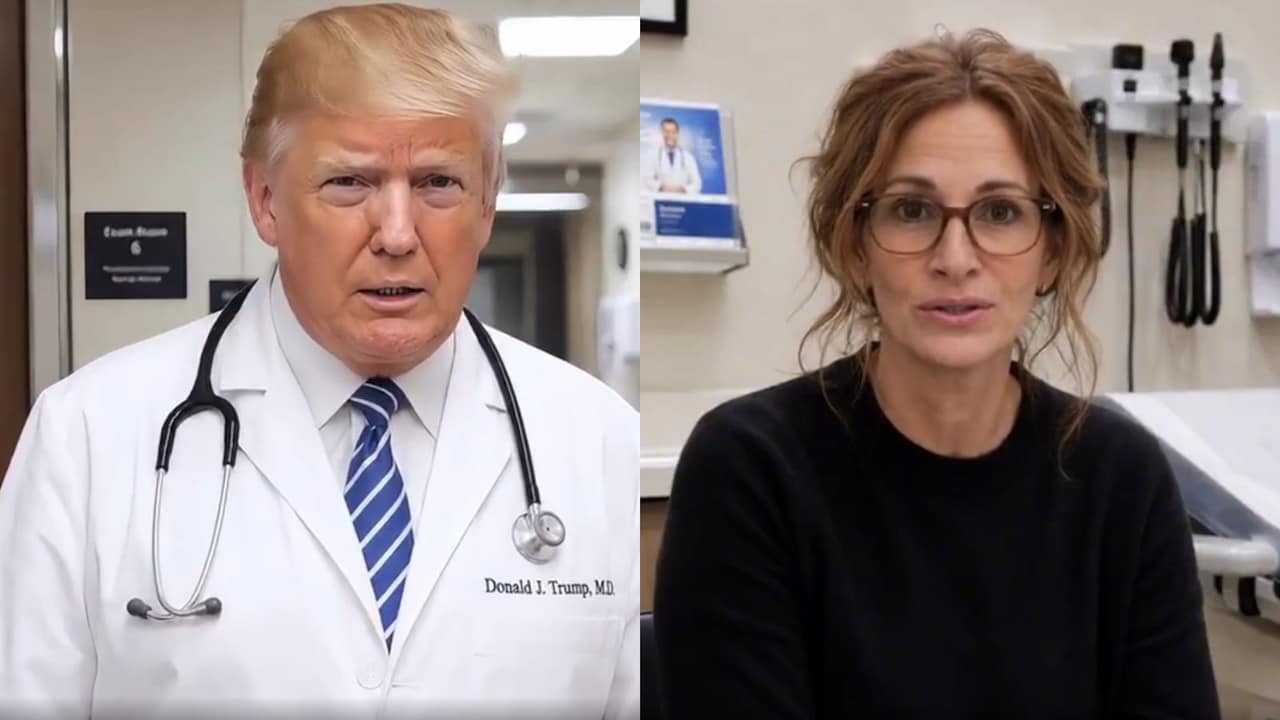
Donald Trump just took political trolling to a weird new level. On Thursday, July 2, 2026, the US President posted a hyper-realistic, AI-generated video on Truth Social. It features him dressed up as "Dr. Trump," complete with a white lab coat embroidered with "Donald J. Trump, MD" and a stethoscope slung around his neck.
The goal? Diagnosing his biggest Hollywood critics with a fictional condition called "Trump Derangement Syndrome," or TDS.
If you've been online at all, you've probably seen clips of the video circulating on X, formerly Twitter, thanks to White House Deputy Chief of Staff Dan Scavino Jr. reposting it. It looks and sounds exactly like a late-night pharmaceutical commercial. But instead of pitching cholesterol medication, this AI-generated commander-in-chief offers a cure for political dissent.
What makes this specific piece of digital theater noteworthy isn't just the weirdness of seeing Trump roleplay as an elite physician. It's the fact that the video uses highly accurate deepfakes of major celebrities without their consent to make them look like they're bowing down to his medical wisdom.
The Hollywood Patients in the Dr. Trump Ward
The video doesn't hold back on targeting specific high-profile actors who have spent years attacking Trump. The deepfake testimonial clip features AI versions of Robert De Niro, Julia Roberts, Whoopi Goldberg, Rosie O'Donnell, Edward Norton, and John Leguizamo.
In the video, these digital clones appear on screen acting like recovering patients in a commercial. The AI-generated De Niro delivers a hilariously fabricated confession, stating that before finding Dr. Trump, he couldn't eat, couldn't sleep, and made everyone around him miserable.
"I really wasn't sure I could help some of these people," the AI Trump says, staring directly into the camera. "They were so far gone."
The joke prescription at the end of the video is simple. Trump tells his "patients" to turn off fake news, say their prayers, and drink a Diet Coke whenever they feel anxious.
The Real World Pushback
While the White House is treating this as a harmless joke, the real-world targets are furious. Rosie O'Donnell quickly hit back at the video with her own unfiltered diagnosis, calling Trump "quite ill" and arguing that he's getting worse by the day. She even invoked the 25th Amendment, calling for him to be impeached and removed.
The White House press team is leaning heavily into the bit. White House spokesperson Davis Ingle backed the video, saying Trump had every right to post it. Ingle doubled down on the joke, calling TDS a "crippling disease that has unfortunately rotted the brains of many people."
What the administration isn't answering is the legal question. Did anyone ask Julia Roberts or Robert De Niro if their faces and voices could be used to promote a political joke? Absolutely not.
A Pattern of High-Tech Distractions
This isn't an isolated incident. Trump has been experimenting heavily with generative artificial intelligence over the last few months to shape his image and mock his enemies.
- The Jesus Image Controversy: Earlier this year, Trump shared an AI image that looked like him as Jesus healing the sick. After fierce pushback from Christian commentators who called it blasphemous, Trump claimed he thought the image just showed him as a regular doctor or Red Cross worker.
- The Pope Feud: During a public spat with Pope Leo XIV, Trump shared an AI image depicting himself as the Pope, telling the pontiff to stop catering to the radical left.
- The Medbed Hoax: In late 2025, his account posted an AI video announcing a fictional "medbed" healthcare program, tapping into long-running internet conspiracy theories before it was quickly deleted.
What This Means for Political Content Going Forward
We are past the point of wondering if deepfakes will impact politics. They're already the default language of political communication. By using AI to literally put words into the mouths of his critics, Trump bypasses standard media completely.
If you want to protect yourself from getting tricked by these kinds of deepfakes, pay attention to the small details. Look closely at the edges of the mouth when characters talk. Watch for unnatural blinking patterns or weird reflections in the eyes. Most political deepfakes right now are intentionally obvious because they want you to know it's a parody, but the technology is moving so fast that the line between satire and dangerous misinformation is practically gone. Expect to see a lot more of this as we move deeper into 2026.


