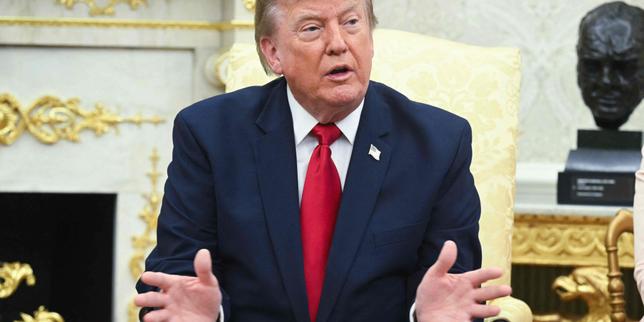
Donald Trump wants you to believe the war in Ukraine is on the verge of ending. In a fresh Fox News interview with journalist Trey Yingst, the US president claimed Vladimir Putin is ready to strike a deal. Trump even shared his personal message to the Russian leader, saying he tells him to stop because it is time for the war to end. He added a classic line about how it takes two to tango, but insisted Putin is ready to make a deal soon.
It sounds great. It makes for an excellent television soundbite. But it is fundamentally disconnected from the grim reality on the ground.
If you look past the theatrical optimism of the White House, the actual moves being made by Moscow show a completely different picture. Putin is not preparing to tango. He is preparing for a long, brutal war of attrition. Trump’s belief that personal diplomacy can wrap this up soon ignores the structural realities of Russian foreign policy, Putin's domestic constraints, and the literal bombs falling on Ukrainian cities.
The Illusion of a Quick Deal
Trump’s confidence in his ability to negotiate a swift end to the conflict has been a cornerstone of his foreign policy platform. He famously claimed during his campaign that he could end the war within twenty-four hours. Now, sitting in the Oval Office, he has adjusted that timeline slightly, predicting the war could end before his current term is up.
Trump is riding high on a genuine diplomatic success. His administration recently secured a major deal with Iran that reopened the Strait of Hormuz, a victory praised by G7 allies. That success seems to have convinced Trump that he can apply the same personal pressure tactics to Putin.
But treating Russia’s invasion of Ukraine like a real estate transaction or a trade dispute is a massive strategic error. Putin does not view this war as a negotiation. He views it as an existential struggle to redefine European security and re-establish a Russian sphere of influence. When Trump says "Vladimir, it's time for you to stop," he is treating a ideological dictator like a stubborn business partner. It has not worked before, and it won't work now.
The Ghost of Anchorage and the Shift in US Policy
To understand why Trump is so confident, you have to look back to August 15, 2025. That was the date of the highly controversial Alaska Summit in Anchorage. Trump and Putin met at Joint Base Elmendorf-Richardson for three hours of talks. The summit ended without a formal agreement, but Moscow walked away with a massive public relations victory.
For months after that meeting, the Kremlin pushed a narrative about the "spirit of Anchorage." Russian officials claimed the US had secretly agreed to pressure Ukraine into giving up the entire Donbas region in exchange for freezing the front lines.
That narrative fell apart in mid-2026. Trump’s stance on Ukraine underwent a dramatic and unexpected shift. During the G7 summit in Evian, France, in June 2026, Trump signed onto an unwavering statement of support for Ukraine. Even more surprising was his July 8, 2026, meeting with Ukrainian President Volodymyr Zelenskyy on the margins of the NATO summit in Ankara.
Trump was reportedly highly impressed by Ukraine's deep drone strikes into the Russian heartland. In response, he took a step that shocked Moscow. He agreed to license the production of Patriot air defense interceptors directly to Ukraine.
Now, Trump thinks this newfound pressure will force Putin to the negotiating table. He told reporters in Ankara that the US is putting a lot of pressure on the Russian leader. But while Trump thinks he has gained the upper hand, he is misreading how the Kremlin processes pressure.
What Moscow is Actually Doing on the Battlefield
While Trump talks about peace deals, Putin is talking about escalation. Just two days before Trump’s Fox News interview, Putin was public and aggressive. Meeting with pro-Kremlin activists on July 13, 2026, the Russian president vowed powerful retaliation for Ukraine’s recent drone strikes on Russian oil facilities, refineries, and tankers.
Putin promised that Russian retaliatory strikes would be several times more powerful than anything Ukraine had launched. This is not the language of a man ready to sign a peace treaty.
On top of the rhetoric, Russia has actually expanded its war aims. Putin has openly called for the "liberation" of Novorossiya, a historical term that covers huge swaths of southern and eastern Ukraine stretching all the way to the Moldovan border. This is a massive expansion from his original stated goals of focusing on the Donbas.
Russia is also aggressively targeting Ukraine's civilian infrastructure. Instead of moving toward good-faith negotiations, Russian forces have stepped up massive air strikes on Ukrainian cities. They are specifically exploiting gaps in Ukraine's air defense network before winter sets in, hoping to destroy the country's energy grid and force a capitulation.
When European allies and Ukraine organized a ten-country coalition in Paris on July 13 to build up European anti-ballistic missile defenses, the Kremlin's reaction was swift and hostile. Kremlin spokesman Dmitry Peskov dismissed the group as a "coalition of warmongers." He flatly rejected any diplomatic overtures from the West, calling the idea of forcing Russia into a strategic defeat a "profound delusion."
Why the Two to Tango Metaphor Fails the Reality Test
Trump’s favorite metaphor for negotiation assumes both parties want the same basic thing: an end to the music. But in this case, the two dancers are listening to entirely different songs.
Putin has successfully transitioned the Russian economy onto a permanent war footing. The defense budget is consuming massive portions of Russia's GDP, and the domestic political landscape has been completely cleared of any anti-war opposition. Ending the war without achieving his maximalist goals of Ukrainian neutrality and permanent territorial gains would be a massive political risk for Putin at home.
The Russian leader has no incentive to give Trump an easy diplomatic win. Putin knows that Trump’s primary motivation is domestic political branding. By dragging out the conflict, Putin can continue to test the resolve of the Transatlantic alliance. He wants to see if European countries, currently struggling with economic pressures, will lose patience and force Kyiv into major concessions.
Putin also knows that Trump’s decision to license Patriot interceptor production to Ukraine will take years to actually materialize on the battlefield. It is a long-term deterrent, not a short-term fix. Therefore, the Kremlin has a window of opportunity to press its advantage, escalate the air war, and try to break Ukrainian morale.
The Hard Mechanics of a Real Peace Framework
If a peace deal ever actually happens, it will not look like the sudden, dramatic handshake Trump envisions. It will be the result of exhausting, highly technical diplomacy that will likely take years to resolve.
A realistic framework for ending the active fighting is starting to emerge among diplomatic circles, but it requires cold compromises that neither side is currently willing to make public:
- A Ceasefire Along the Line of Contact: Kyiv will never formally cede territory that Russia occupies, but a practical freeze of the front lines may become necessary.
- Security Ties Short of NATO: Ukraine needs concrete security guarantees to prevent Russia from simply rebuilding its army and attacking again in five years. However, the US administration remains opposed to formal NATO membership for Ukraine, meaning creative, bilateral security pacts with Western powers are the only viable path forward.
- A Long-Term Security Dialogue: Any cease-fire is just the first step in a broader negotiation over the security structure of Europe that will stretch on for a generation.
Trump wants the glory of the finish line, but he has shown little interest in the grueling diplomatic work required to construct these kinds of complex international agreements.
Next Steps for European and Ukrainian Security
Relying on Trump's optimistic predictions is a dangerous strategy for Ukraine and its European allies. To prepare for a long-term conflict and put real pressure on Putin, several immediate steps must be taken.
First, European nations must accelerate the anti-ballistic missile defense initiative launched in Paris. Relying entirely on American air defense supply chains is too risky given the unpredictable shifts in US domestic politics.
Second, the licensing of Patriot missile defense systems in Ukraine must be fast-tracked. While experts warn this could take years, cutting bureaucratic red tape and establishing production facilities in safer western Ukraine or neighboring Poland is essential for long-term deterrence.
Third, Ukraine must continue to degrade Russia's economic capability to wage war. The deep drone strikes targeting Russian refineries and shipping vessels in the Sea of Azov have proven to be Ukraine's most effective leverage. By starving the Russian war machine of fuel and logistics, Kyiv can slowly shift Putin's cost-benefit analysis.
Trump is right about one thing: the war needs to end. But thinking Putin is ready to sign a piece of paper just because of some tough talk on Fox News is a dangerous delusion. True peace will only be won by changing the reality on the battlefield, not by hoping a dictator decides to dance.