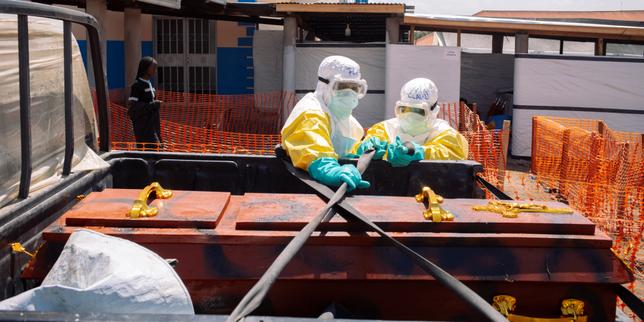
You can't fight a virus if you're fighting the community. Right now, in the eastern region of the Democratic Republic of the Congo (DRC), health workers aren't just battling a spike in Ebola cases; they're dodging rocks and threats just to bury the dead.
It sounds brutal, and it is. The latest numbers from the ground paint a stark picture. As of late June 2026, the country has crossed a grim threshold with over 1,333 confirmed cases and nearly 400 deaths linked to the Bundibugyo ebolavirus strain. It's a crisis mutating beyond medical charts into a deep cultural standoff.
Here's the reality: the virus is at its most contagious right after a patient dies. Traditional mourning practices—washing the body, dressing it, and gathering for final touches—are absolute fuel for the infection. But when teams from the Red Cross show up in white hazmat suits, spray bleach, and seal bodies away in plastic bags, it feels less like medical safety and more like desecration to grieving families.
We need to understand why this clash happens, because shouting "science" louder isn't working.
The Cultural Anatomy of a Funeral
In the Ituri and North Kivu provinces, an entry into the afterlife isn't a passive event. It's a hands-on obligation. Traditions mandate that loved ones touch, clean, and kiss the deceased to ensure safe passage.
When the response teams step in, they completely upend these ancient practices.
- The total absence of touch: Family members are kept at a distance while strangers handle the body.
- The sterile environment: The scent of chlorine replaces traditional herbs.
- The opaque body bags: Relatives can't even verify if the person inside the bag is actually their family member.
This creates an intense wave of grief mixed with profound suspicion. People look at the medical teams and think, "You're stealing our dignity, and maybe you're the ones bringing the disease in the first place." It's easy to dismiss this as misinformation, but it's actually a rational response to a terrifyingly alien intervention.
Why the Bundibugyo Strain Changes the Game
This isn't the standard Zaire strain of Ebola we've seen dominate headlines in previous years. The 2026 outbreak involves the Bundibugyo species.
The critical challenge: Unlike the Zaire strain, there is currently no licensed vaccine or highly specific therapeutic drug available for the Bundibugyo variant.
🔗 Read more: sumo deadlift high pull
Without a vaccine to offer immediate protection to contacts on the ground, containment relies entirely on isolation, active contact tracing, and safe, dignified burials. Because the clinical tools are limited, the burial protocol is literally the primary shield preventing this virus from tearing across Central Africa. When a burial team gets chased away or attacked, that shield shatters.
Moving Beyond the Hazmat Monologue
We've learned from past outbreaks that enforcement by decree fails. You can't police an entire population into giving up their ancestors. What actually works is radical transparency and co-authorship of the burial process.
If you are an international responder, a local health worker, or an advocate analyzing health emergencies, the strategy has to shift away from corporate-style medical directives and toward local dialogue.
Include the Family in the Protocol
Instead of sealing off the area, allow family members to put on personal protective equipment (PPE) to witness the process from a safe distance or participate in non-contact rituals. Let them choose the clothes placed on top of the body bag.
Involve Trusted Community Elders
People don't trust institutional acronyms; they trust their community leaders and religious figures. If a local pastor or tribal elder explains why the touch must be symbolic this time, compliance skyrockets.
Humanize the Burial Teams
The teams are exhausted. Local volunteers are risking their lives only to be treated like pariahs. Open forums where burial teams can speak directly with community members—outside the context of an active death—help break down the "us versus them" dynamic.
The data shows the outbreak is expanding, even reaching into neighboring Uganda and prompting strict screening across borders. The medical science behind containment is solid, but it's completely useless if it cannot coexist with human empathy.
To stop the spread of the Bundibugyo strain, the priority must be treating cultural trauma with the same urgency as biological infection.
.jpeg?width=1200&auto=webp&trim=0%2C15%2C0%2C14)