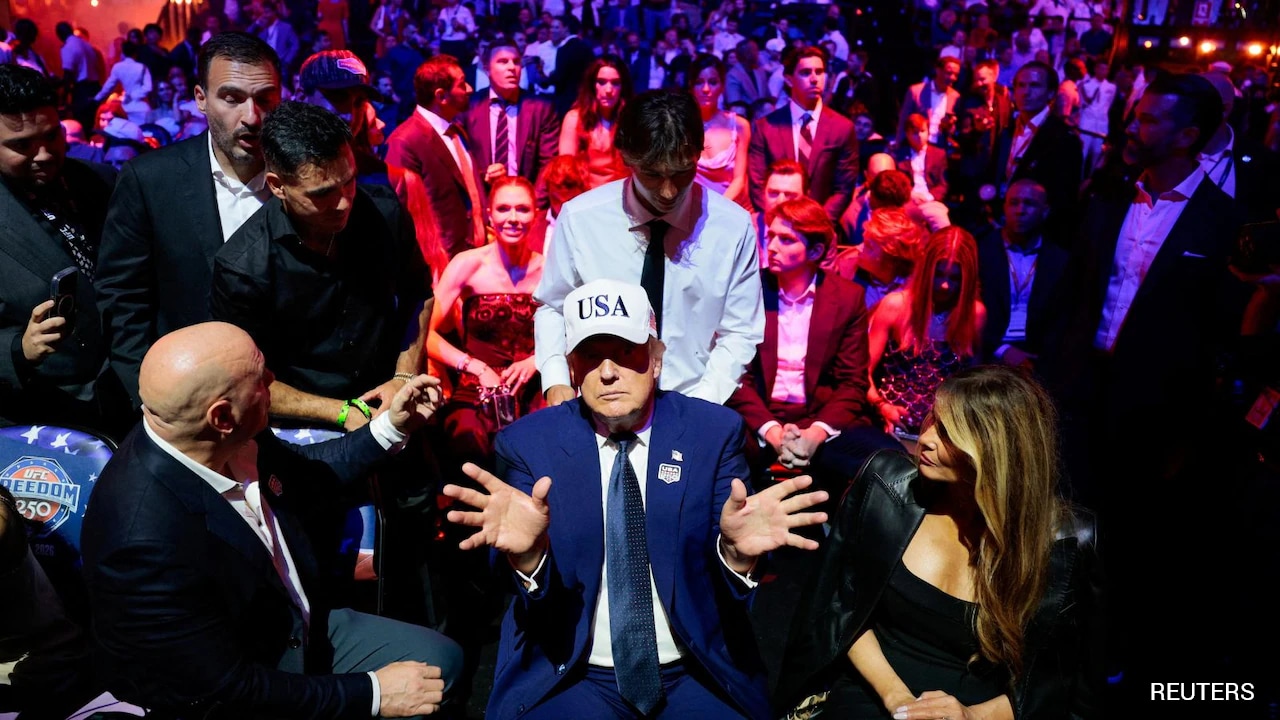
A mother's intuition just saved the lives of billionaires, politicians, and thousands of fight fans on the White House lawn.
When federal agents unsealed criminal complaints on Tuesday, they laid bare a terrifyingly modern assassination plot. A decentralized network of plotters aimed to turn the historic UFC Freedom 250 event on the South Lawn into a mass casualty zone. They didn't just want to sneak a weapon past a checkpoint. They planned to use a multi-tiered, asymmetric assault involving explosive-laden drones, pre-staged sniper teams, and a secondary ground assault to storm the gates.
If you think political violence in America still looks like a lone gunman with a rifle in a high-rise window, you're looking at the past. The newly unsealed court documents show that the threat landscape has shifted toward cheap, commercial tech and decentralized online radicalization.
Here is how the FBI stopped a highly sophisticated massacre just days before the cage fights began, and what it means for the future of high-profile security.
The Mother of All Tips
The entire operation didn't begin with advanced NSA surveillance or satellite tracking. It started on June 10 with a worried phone call from a mother in Ohio.
She called the authorities because of her 19-year-old son, Tycen Proper. He had been exhibiting increasingly erratic and disturbing behavior. When the FBI interviewed Proper the next day, the thread quickly unraveled. Proper admitted that he wasn't acting alone. He was part of a coordinated, multi-state cell planning an imminent strike on the capital.
Investigators quickly gained access to an encrypted Signal chat containing at least 23 users. This group wasn't a standard foreign terror cell. Instead, they were homegrown actors communicating through a TikTok group called "Vanguard of the Old." They were furious about the political direction of the country, specifically targeting what they called "capitalist elites," "billionaires," and politicians who accepted money from the American Israel Public Affairs Committee (AIPAC).
The timing was calculated. The UFC event doubled as President Donald Trump’s 80th birthday celebration and the kickoff for the nation's 250th anniversary of independence. The guest list was a security nightmare: Donald Trump, tech moguls like Meta CEO Mark Zuckerberg, and top administration officials including Secretary of State Marco Rubio, War Secretary Pete Hegseth, and FBI Director Kash Patel himself.
The Three Phase Trap
The details of the plot show a chilling understanding of crowd psychology and urban warfare. The suspects didn't expect to fly a drone directly into the secure cage-side seating. They intended to use the surrounding environment against the crowd.
- Phase 1: The Bottleneck: The group planned to launch small, commercial drones rigged with explosives into buildings immediately surrounding the White House perimeter. The goal wasn't just destruction; it was to cause widespread panic and force a sudden, chaotic mass evacuation.
- Phase 2: The Kill Zone: Plotters anticipated exactly which way the terrified crowds would flee. They allegedly established pre-staged sniper teams along those specific evacuation routes, ready to fire into the packed, trapped masses of fleeing attendees.
- Phase 3: The Breach: While the Secret Service and local police scrambled to handle the explosions and sniper fire, a "second wave" of attackers planned to storm the weakened gates of the White House itself.
The cell had already exchanged detailed maps of Washington D.C., scoped out potential escape routes, and actively discussed securing a local "safe house" to hide in after the bloodshed.
The Multi State Takedown
Once the FBI saw the active Signal chats, a massive clock began ticking. UFC CEO Dana White had spent nearly $12 million on intense local security measures, but all the physical checkpoints on earth wouldn't matter if explosives started dropping from the sky outside the perimeter.
Over a frantic 72-hour window, at least 12 different FBI field offices launched a synchronized, multi-state sting. Federal agents executed raid warrants across the country, arresting five key players just as they were preparing to travel or deploy equipment.
The suspects now facing federal charges include:
- Tycen Proper, 19, arrested in Ohio (facing charges of attempted murder of a federal officer and conspiracy).
- Daniel Eskridge, arrested in Missouri.
- Abraham Hermosillo Alvarez, arrested in Nebraska.
- Bryan Omar Roa, arrested in California.
- Michael Alan Thomas, arrested in California.
Because the FBI dismantled the communications network and grabbed the primary operators by Friday, the UFC event went off on Sunday without a single hitch. Over 4,300 attendees, including 1,200 active-duty service members, watched the fights under a temporary open-air arena called "The Claw." Trump, currently attending the G7 summit in Évian-les-Bains, France, told reporters he hadn't even been fully briefed on how close the threat had come.
Why Traditional Security is Broken
This incident proves that checking bags and putting up metal detectors is no longer enough to protect public figures or massive crowds. The plotters didn't try to smuggle anything into the venue. They used the perimeter boundaries as a weapon, knowing that standard security protocols dictate pushing people out of the zone during an emergency.
Commercial drones cost a few hundred dollars and can be modified with off-the-shelf components. When combined with encrypted apps like Signal and social media recruitment platforms like TikTok, small groups of isolated individuals can build a lethal command structure without ever meeting in person.
If you manage security for large public venues, corporate gatherings, or local events, this is your wake-up call. You need to stop focusing exclusively on who is walking through your front doors.
Act immediately on these three security shifts:
- Invest in Counter-UAS (Unmanned Aircraft Systems) Tech: If your event security plan doesn't include radio-frequency jammers or drone-detection radar, you are exposed from above.
- Audit Evacuation Chokepoints: Work with local law enforcement to ensure your emergency exit routes don't channel people into open, unmonitored areas that can be easily targeted by long-range firearms.
- Monitor Peripheral Structures: Secure the rooftops and sightlines of buildings outside your official event boundary. The threat is no longer inside the gates; it's waiting on the edge.

