When French President Emmanuel Macron stepped off a plane in Damascus on July 7, 2026, the political optics were staggering. It marked the first visit by a European head of state to Syria in eighteen years. Yet beneath the smiles and the formal state handshakes lies a massive domestic calculation. Syria's al-Sharaa bets on relaunching economy to solve other issues, operating on the theory that if you fix the markets, the political and social fractures of a broken state will naturally begin to heal.
It is a high-stakes gamble. Ahmed al-Sharaa, who assumed leadership after the collapse of the Assad regime in December 2024, inherited a country with ruined infrastructure, a hollowed-out currency, and a deeply suspicious international community. His administration is betting everything on a rapid economic turnaround. They believe economic survival is the only thing that can neutralize persistent internal dissent and secure long-term legitimacy.
The Strategy Behind the Push for Rebuilding
For years, global observers assumed that any post-Assad government would focus entirely on writing constitutions or hunting down remnants of the old regime. Al-Sharaa flipped that script. His focus is explicitly commercial. He wants factories running, cargo moving, and banks functioning.
The rationale is practical. Empty stomachs do not care about democratic ideals or transitional justice. By making economic survival the primary pillar of his government, al-Sharaa aims to pacify a weary population that has endured over a decade of brutal civil conflict. If regular citizens can find work, feed their families, and see stable prices at the grocery store, they are far less likely to pick up weapons or join anti-government insurgencies.
This approach also targets international skepticism. Western capitals remain hesitant to fully embrace a government led by a former militant figure. By presenting Syria as an indispensable trade partner rather than a charity case or a security threat, Damascus hopes to bypass political roadblocks.
Turning Damascus Into a Global Transit Link
Syria is capitalizing on a massive shift in global trade dynamics. Recent disruptions affecting major maritime shipping routes, especially ongoing vulnerabilities in the Strait of Hormuz, have forced international shipping lines to hunt for secure overland alternatives. Al-Sharaa sees this as Syria's ticket back to global relevance.
During the economic forum held with French officials in Damascus, Syrian leadership outlined a plan to transform the country into a regional logistics and transit hub. The objective is to reconnect trade pathways between the Mediterranean Sea, the Persian Gulf, and wider European markets.
Instead of begging for traditional foreign aid, Damascus is pitching concrete commercial investments. They are selling access to geographical positioning. They want European companies to fund the repair of highways, railway networks, and freight terminals. In return, these companies get a direct, faster route to Gulf markets that avoids volatile maritime chokepoints. Macron openly endorsed this vision during his visit, noting that France views Syria as a vital component of future regional energy and trade corridors.
Fixing a Broken Banking System
You cannot run a regional transit hub if your banks cannot handle international wire transfers. The Syrian financial sector is currently a mess of black-market exchange rates, outdated infrastructure, and lingering sanctions complications.
Fixing the banks is a core element of why Syria's al-Sharaa bets on relaunching economy to solve other issues. During joint press conferences in Damascus, Macron announced that France is prepared to directly assist the Syrian Central Bank with structural reforms. This means sending technical experts to help restructure the banking sector, implement anti-money laundering protocols, and build a framework that can handle major foreign direct investment.
This cooperation yields immediate financial benefits too. The French government confirmed it will return more than €50 million in frozen, illicit assets linked to the deposed Assad family. That cash will go straight toward infrastructure rehabilitation. For al-Sharaa, securing French technical backing for the financial sector provides a badge of institutional legitimacy that no political speech ever could.
The Shadow of Ongoing Violence
The economic strategy looks brilliant on paper. On the ground, reality is much messier. The risks were put on vivid display right during Macron’s historic visit.
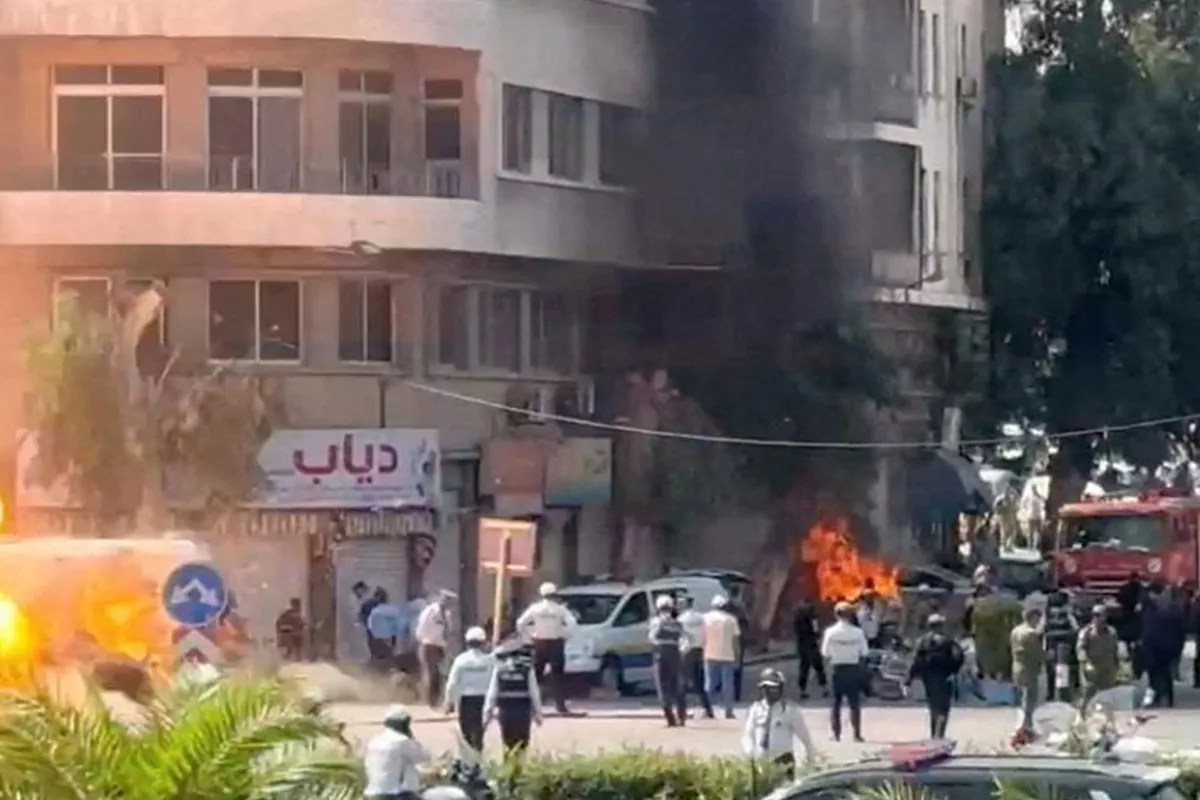
Two explosions rocked Damascus just a short distance from the hotel where the French delegation held its initial meetings. Plumes of black smoke rose over the capital while security forces scrambled to cordoned off roads. The explosions served as a stark, violent reminder that Syria's security crisis is far from resolved. Remnants of old factions, minority clashes, and geopolitical friction points still litter the territory.
Damascus Security Incident (July 7, 2026)
--------------------------------------------------
Event: Two sudden explosions in the capital
Location: Near the French delegation's meeting hotel
Outcome: Schedule continued, but highlighted systemic investment risks
This presents a massive paradox for the current administration. Al-Sharaa argues that economic growth will bring security. However, getting the investment needed for that growth requires security to exist in the first place. French investors and corporate executives who accompanied Macron to Damascus are walking a tightrope. They see the immense profit potential in rebuilding a nation from scratch, but they are terrified of losing assets to sudden rocket attacks or localized bombings.
Changing Minds on the International Stage
Al-Sharaa is also executing a calculated diplomatic dance. His transition from a militant commander to a suit-wearing statesman chatting with European leaders in Nicosia and Paris is one of the strangest geopolitical shifts of the decade.
He is leaning hard into a narrative of pragmatic national integration. In interviews with European media, he repeatedly frames France as an essential partner in rebuilding state institutions, developing human resources, and modernizing the civil aviation, tourism, and agricultural sectors.
By avoiding ideological rhetoric and focusing purely on business contracts, implementation schedules, and commercial commitments, he makes it easier for Western leaders to justify working with him. Macron’s visit, which included an agreement to formally reinstate ambassadors between Paris and Damascus, proves that this economic pragmatism is yielding diplomatic dividends.
Your Next Steps to Understand the Syrian Recovery
If you want to track whether this economic gamble will actually pay off, stop watching the political speeches. Watch the hard data instead.
- Track the exchange rate: Keep an eye on the stability of the Syrian Pound against major global currencies. True stability starts here.
- Monitor infrastructure contracts: Watch for signed, legally binding implementation dates between the Syrian private sector and European firms, rather than vague memorandums of understanding.
- Watch the transport data: Look at the volume of commercial freight moving from Syrian ports like Lattakia and Tartus toward the Iraqi border. That will tell you if the transit hub concept is real or just a marketing slogan.
The coming months will determine if commerce can truly cure the deep wounds of a decades-long conflict, or if the underlying security threats will blow the economic plan apart.