The battlefield doesn't care about a business plan. It cares about what works when the artillery starts falling. For the longest time, venture capital stayed as far away from military hardware as humanly possible. It was too slow, too heavily regulated, and too risky.
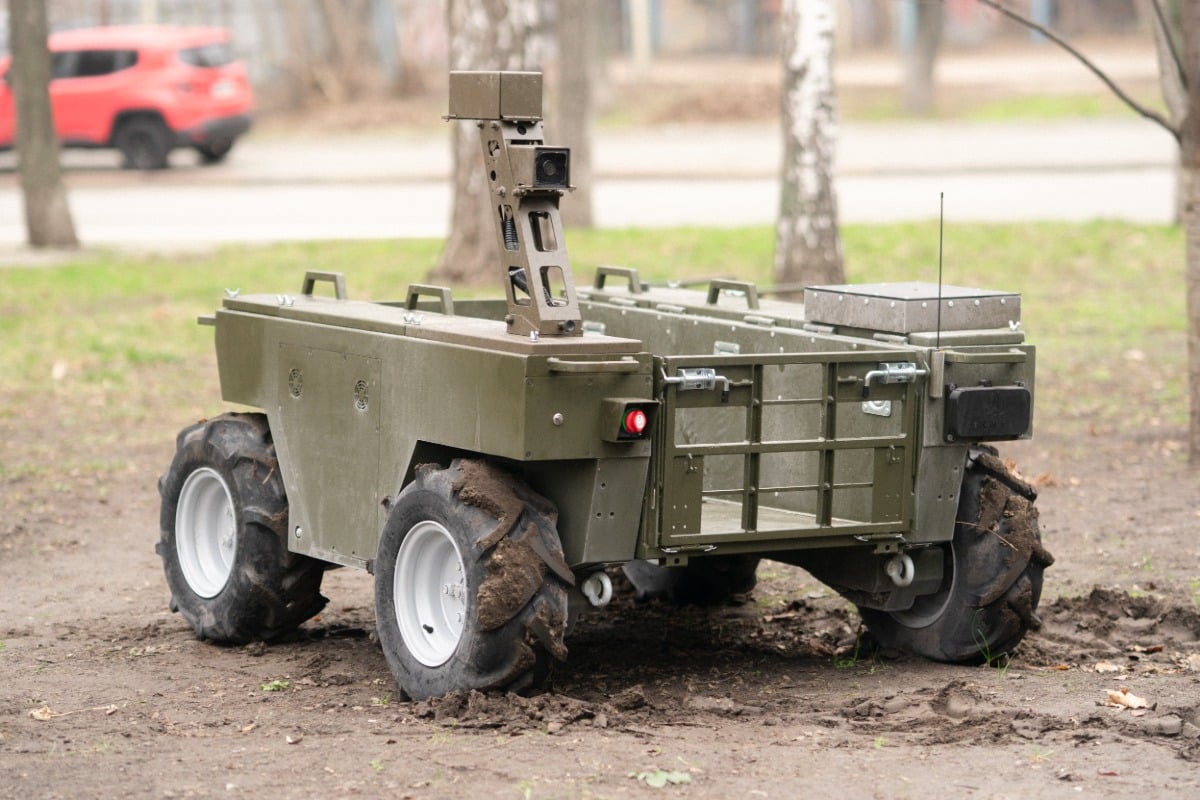
But things changed. Western investors are realizing that the fastest hardware innovation on earth is happening right now in Ukraine. The recent partnership between Ukrainian developer AIDronesUA and Sweden's Njord Technology AB to move production of the MAUL unmanned ground vehicle (UGV) to Swedish soil is proof of this shift. This isn't just charity or wartime aid. It's a calculated business move by Nordic investors who see that battle-tested robotics are the future of European defense.
If you want to understand where military tech is going, you have to look at why these deals are happening now, how the tech actually works, and why moving production out of drone strike range is the new industry standard.
The Reality of Scaling Battle-Proven Hardware
Building a robot in a quiet laboratory in Stockholm is easy. Building one that can navigate a muddy trench line while its radio signal is being hammered by heavy electronic warfare (EW) is a completely different story.
Ukrainian startups have spent years modifying their designs based on direct feedback from the front lines. The MAUL platform, for example, was built because the First Separate Medical Battalion needed a reliable way to get wounded soldiers out of hot zones without risking more medics.
The biggest bottleneck for these teams isn't engineering anymore. It's factory space. You can't scale a assembly line to mass-production levels when your workshop might get hit by a Shahed drone at three in the morning.
By partnering with Njord Technology, AIDronesUA gets to use Swedish manufacturing facilities that are completely safe from long-range strikes. The Swedish team brings experience in building rugged, all-terrain vehicles and snowmobiles, which aligns perfectly with what a heavy logistics robot needs to survive off-road.
The Inside Specs of the MAUL System
This isn't a hobbyist project. The MAUL is a 620 kg beast designed for casualty evacuation (CASEVAC), moving ammunition, and running logistics in areas too dangerous for soft-skinned vehicles.
Let's look at the actual numbers behind this machine:
- Payload Capacity: 200 kg (enough for a fully geared soldier and extra medical supplies)
- Top Speed: 50 km/h on paved roads, dropping to 40 km/h when hitting rough terrain
- Power: An internal combustion engine running on standard A-95 gasoline with a 15-liter tank
- Operating Range: Up to 110 kilometers on roads, with a continuous driving time of 5 hours
The most interesting part of the engineering is how they handle communication. Russia's electronic warfare environment is the most intense in history. Traditional radio controls get blocked instantly. To get around this, the MAUL uses a hybrid system. It can run on low-Earth orbit satellites, LTE, Wi-Fi, or secure mesh networks from companies like Silvus and Himera. When the jamming gets totally overwhelming, it can even deploy a physical fiber-optic control cable. If you can't broadcast a signal, you run a wire. It's basic, but it's completely unjammable.
Why the Nordics are Funding the Front Lines
Sweden isn't the only country noticing this. Swedish investment firms like Front Ventures AB and Hede Capital Partners have been quietly writing checks for other Ukrainian defense startups too. They recently led a funding round for Trinity Robotics, the creators of the Konyk One pack mule robot, and backed radar developer Molfar Defence Technologies.
The logic here is straightforward. European defense budgets are surging, but traditional defense primes take five to ten years to build anything new. Ukrainian companies are designing, testing, and deploying new hardware iterations in weeks.
Nordic investors are acting as a bridge. They provide the capital and the safe industrial capacity in the West, while the Ukrainian teams provide the real-world operational data. It's a loop that turns prototype gadgets into mass-produced military assets faster than any traditional procurement office could ever dream of.
Moving Beyond the Lab
If you are an engineer or investor watching this space, the takeaway is clear: the era of theoretical defense tech is over.
The immediate next step for the AIDronesUA and Njord Technology partnership is finalizing the Swedish factory layout and beginning component sourcing outside the conflict zone. For the broader industry, expect to see more "Build with Ukraine" initiatives where Western manufacturing lines are handed over to Ukrainian software and chassis designs.
To track how these systems perform as production scales, keep an eye on the official updates from the Brave1 defense tech cluster, which handles the initial vetting for most of these joint ventures. The future of autonomous logistics is being built right now, and it's being forged between the combat zones of Ukraine and the factories of Scandinavia.