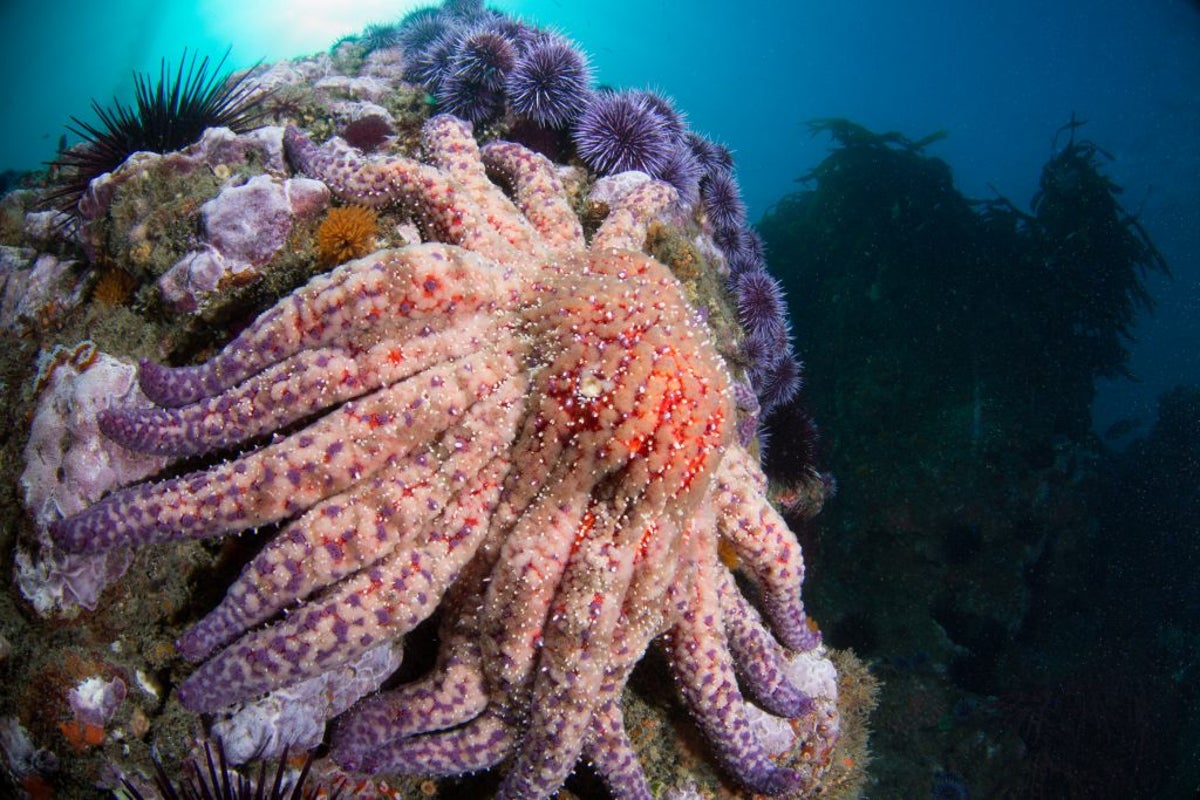
Scientists just found something incredible hiding in the cold waters off Northern California. Eighteen giant sunflower sea stars were spotted crawling around the Greater Farallones National Marine Sanctuary. If you aren't an ocean nerd, this might sound like a minor blip in environmental news. It isn't. It is an absolute massive deal for the entire West Coast ecosystem.
For the last ten years, these multi-armed creatures were essentially ghosts in this region. A brutal marine epidemic wiped out billions of them, leaving scientists to wonder if they would ever return to these specific waters. Then came Pycnopalooza. That is the actual name Sonoma State University gave to a recent diving event where researchers and divers went hunting for what they call "Seasquatches." Finding eighteen healthy individuals is a major spark of hope. In similar developments, take a look at: Why The New Strait Of Hormuz Evacuation Plan Changes Everything For Stranded Ships.
The brutal reality behind the disappearing sunflower sea stars
To understand why everyone is celebrating, you need to understand the horror show that happened in the Pacific Ocean about a decade ago. Around 2013, a catastrophic event known as sea star wasting disease tore through marine populations. It became the largest marine epidemic ever recorded.
The disease is gruesome. It causes sea stars to develop white lesions, lose their arms, and literally disintegrate into piles of white mush within days. Warm water anomalies, often referred to as "The Blob," aggravated the outbreak. The sunflower sea star took the hardest hit. They lost over ninety percent of their global population. In places like Northern California, they completely vanished. USA.gov has analyzed this fascinating topic in extensive detail.
You might think losing a sea star is sad, but ultimately minor. You would be wrong. These animals are not just pretty decorations on a reef. They are voracious predators. They grow up to three feet across, sport up to twenty-four arms, and move surprisingly fast—clocking in at three feet per minute. They are the top-tier hunters of the rocky reef floor, and their primary target is the purple sea urchin.
How the loss of one predator triggered a kelp forest catastrophe
When the sunflower sea star vanished, a chain reaction destroyed the local marine environment. Purple sea urchins suddenly had no major predators left to keep them in check. Sea otters eat urchins too, but otters rarely hunt in the deep, wave-battered areas where sunflower stars thrive.
The urchin population exploded. Billions of hungry urchins marched across the seafloor, eating everything in sight. Their favorite food is bull kelp. Kelp forests are underwater jungles. They provide food, shelter, and oxygen for hundreds of marine species, including fish, sharks, and marine mammals.
The urchins ate the kelp down to the roots. They created what marine biologists call urchin barrens—vast underwater deserts stripped of all plant life, covered only by a carpet of spiky purple urchins. In the Farallones region, ninety percent of the kelp forest vanished. The entire ecosystem collapsed because one single predator disappeared from the equation.
What the Pycnopalooza discovery actually changes
The recent discovery of eighteen stars during the Sonoma State expedition changes the narrative from total despair to cautious optimism. Divers described the feeling as akin to a paleontologist stumbling onto a living dinosaur.
Scientists collected genetic tissues and water samples during the dives. This data gives researchers a direct look at the health of these surviving individuals. Are these eighteen stars naturally resistant to the wasting disease? Did they survive because the water was slightly cooler in certain pockets of the sanctuary? These are the questions scientists are racing to answer right now.
Biologists at institutions like San Diego's Birch Aquarium have already been working on spawning sunflower star larvae in controlled labs. The long-term plan involves breeding these animals and reintroducing them to the wild. The genetic material collected from the newly discovered California stars could help scientists breed a tougher, more resilient strain of sea star that can handle warmer ocean temperatures.
Real steps you can take to support marine recovery
This discovery proves that nature is incredibly resilient, but these eighteen sea stars cannot fix a broken ocean alone. If you want to help protect these ecosystems, you need to take action.
First, support local marine conservation groups and sanctuaries. Organizations like the Greater Farallones Association work directly with NOAA to monitor these waters. Donations and volunteer hours keep monitoring expeditions funded.
Second, get involved in community science. If you are a scuba diver, snorkeler, or tidepooler, use apps like iNaturalist or get certified with Reef Check. Recording what you see provides vital data for scientists tracking species recovery.
Third, reduce your personal carbon footprint. Ocean warming triggered the catastrophic disease outbreak in the first place. Driving less, using energy-efficient appliances, and reducing plastic waste directly impact global ocean health.
The return of the sunflower sea star is a second chance for the California coast. We cannot afford to waste it.