A French Air Force Rafale jet roared into the skies over the eastern Latvian village of Berzgale on June 8, 2026, locked onto an unmanned aerial vehicle, and blew it out of the sky. It wasn’t a drill. It was the latest in a relentless string of airspace violations triggering a quiet panic across Estonia, Latvia, and Lithuania.
If you think the war in Ukraine is contained to Ukrainian soil, you aren’t paying attention to the Baltics. Stray long-range drones are regularly veering off course, crossing borders, and forcing NATO members into a high-stakes guessing game. These incidents are no longer just military anomalies. They are directly altering domestic politics and exposing massive gaps in how the West handles hybrid aggression.
You won't find panic on the streets of Tallinn or Vilnius. People aren't hoarding canned goods. But behind closed doors, defense ministries are rewriting their playbooks because the physical distance protecting them from the frontline has officially vanished.
The Invisible War in the Air
Why are these drones suddenly raining down on NATO territory? The short answer is electronic warfare.
Ukraine regularly launches long-range strike drones targeted at Russian energy infrastructure and military bases in northwestern Russia, like the Ust-Luga port or facilities near Saint Petersburg. To protect these assets, Russia uses massive electronic jamming networks. They blast powerful signals that scramble the GPS and navigation systems of incoming Ukrainian drones.
Blinded and confused, these drones turn into zombie aircraft. They drift aimlessly off course, running on autopilot until they run out of fuel or hit something.
The consequences are real.
- On March 23, the first major wave hit Lithuania.
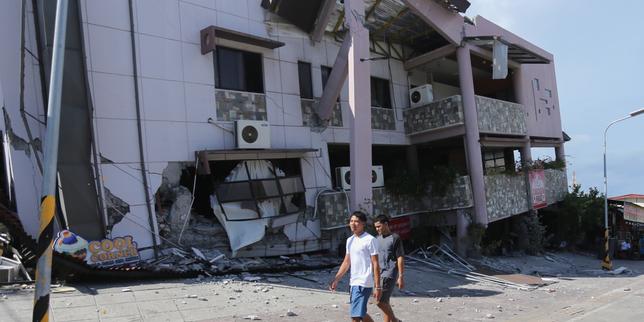
- On May 7, two stray drones entered Latvia from Russia. One slammed into an oil storage facility in Rēzekne, detonating and damaging four fuel tanks.
- In Estonia, another drone struck the chimney of the Auvere power station, just two kilometers from the Russian border.
- By mid-May, Lithuania had to temporarily halt train and air traffic during an active drone alert.
The Kremlin is capitalizing on the chaos. Instead of admitting its electronic jamming causes the drift, Moscow is spinning a dangerous narrative. Kremlin spokesperson Dmitry Peskov and other top officials claim the Baltic states have deliberately opened their airspace to let Ukraine launch attacks against northwestern Russia. It’s a classic information operation designed to turn accidental incursions into a pretext for retaliation.
Political Casualties in Riga and Shelter Scrambles in Vilnius
The Baltic states are handling this stress test in very different ways, and the internal friction is starting to show.
In Latvia, the drone crisis became a political executioner. Following the May 7 oil depot explosion in Rēzekne, public anger boiled over. Citizens demanded to know why a large, explosive drone could fly 40 kilometers into NATO airspace without being intercepted sooner. The resulting political infighting over national defense readiness completely fractured the ruling coalition. It forced the resignation of the Latvian Prime Minister and Defense Minister, requiring a frantic government scramble to rebuild a coalition by late May.
Lithuania opted for maximum public alertness, but the execution exposed raw vulnerabilities. During a mid-May incursion, the government triggered a full-scale civil defense alert. Lawmakers in the Vilnius parliament were hurried into underground bunkers, schools were shut down, and citizens were told to stay away from windows.
The move backfired. Local media and security analysts pointed out that the capital lacks anywhere near enough public shelter space for ordinary citizens. Telling the public to "hide behind a wall" while politicians descend into hardened bunkers doesn't build resilience; it breeds resentment.
Estonia has taken the most measured approach, relying on cold military execution. When a drone entered its airspace, NATO jets simply tracked and shot it down over a remote lake without grinding public life to a halt. Security experts in Tallinn argue that overreacting and freezing transportation networks satisfies Russia's goals by causing economic self-harm.
The Real Weakness in NATO Air Defense
The fundamental problem isn't a lack of political will. It's a mismatch of technology and law.
NATO’s Baltic Air Policing mission relies on multi-million-dollar fighter jets like French Rafales or Eurofighter Typhoons. Scrambling a Mach-2 fighter jet to hunt down a slow-moving, low-flying plastic drone costing $20,000 is an incredibly inefficient way to fight. It's like trying to swat a mosquito with a sledgehammer.
Furthermore, peacetime rules of engagement are choking the military response. Shooting down an unidentified object over a densely populated area during peacetime carries immense risk. If a missile misses, or if the debris falls on a residential building, the defense forces face a catastrophe.
The Baltics lack a comprehensive, automated low-altitude defense shield. Meelis Oidsalu, an Estonian security expert, notes that these nations need an immediate technological leap. They need automated, AI-driven drone interception systems that can disable or destroy low-flying threats safely without relying entirely on scrambling fighter jets.
What Happens Next
The current trajectory is unsustainable. To stop stray drones from causing a catastrophic miscalculation between NATO and Russia, the Baltic states must take immediate, concrete steps.
Deploy Directed Energy and Kinetic Counter-Drone Systems
Relying on French or Romanian jets to intercept drones is a temporary patch. The Baltics need localized, ground-based anti-drone walls. This means investing heavily in electronic spoofing systems of their own, mobile anti-aircraft guns like the German Gepard, and laser systems capable of melting drone components at low costs.
Overhaul Civil Defense Communication
Governments cannot afford to issue panic-inducing alerts without providing clear infrastructure support. If you tell a population to seek shelter, you must provide the shelters. Latvia and Lithuania need to rapidly audit, fund, and map public shelters while establishing clearer protocols for schools and transit systems.
Establish Cold War Style Hardlines
Because the risk of an accidental strike hitting a major chemical plant or a school is growing, communication channels are vital. Even during peak hostility, a direct military-to-military de-escalation mechanism—potentially utilizing channels through border entities like Belarus—is necessary to prevent a stray piece of Ukrainian or Russian hardware from triggering a catastrophic Article 5 invocation.
The drone incursions aren't a future threat. They're happening now, exposing the messy, complicated reality of modern hybrid warfare right on NATO's doorstep.