We've spent centuries looking up at the stars for intelligent alien life, completely ignoring the massive, highly social brains swimming right beneath our ships.
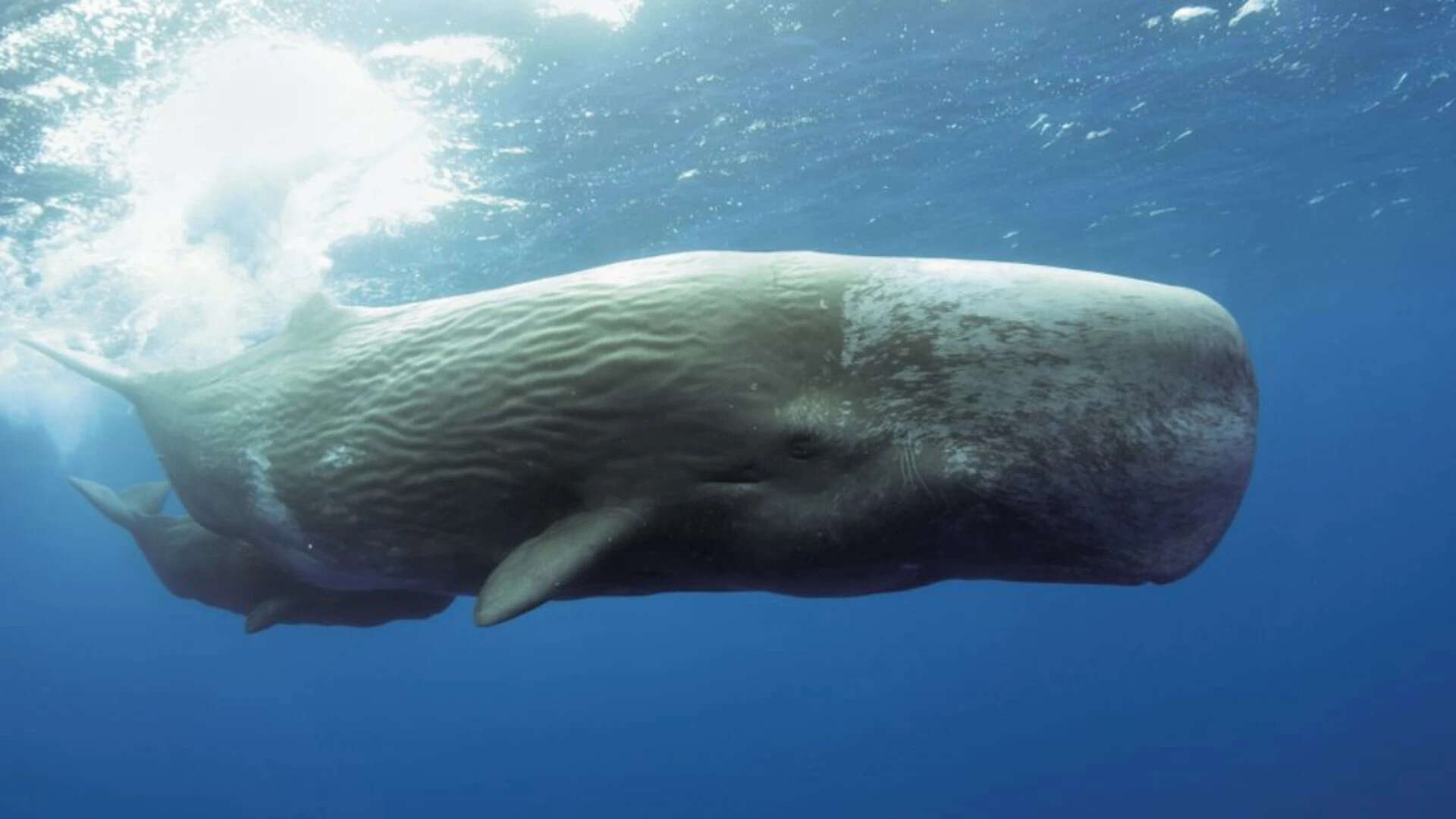
Sperm whales have the largest brains on earth—six times the size of ours. For decades, marine biologists assumed their primary mode of communication was a simple, repetitive series of clicks used like basic acoustic name tags. We thought we had them figured out. Building on this theme, you can also read: Why The Space Force New Supply Chain Expansion Changes Everything For Commercial Launch.
We were wrong.
Recent breakthroughs powered by advanced machine learning have completely shattered those assumptions. By analyzing thousands of recordings, researchers discovered that sperm whales use a highly sophisticated combinatorial coding system. It functions so much like human speech patterns that scientists are calling it a sperm whale phonetic alphabet. Experts at CNET have provided expertise on this matter.
Even more wild? They aren't all speaking the same language. New data shows that isolated whale communities have fractured into regional accents, revealing that sperm whales develop distinct regional dialects over time.
Inside the Phonetic Alphabet of the Deep
The breakthrough started when Project CETI (Cetacean Translation Initiative) threw a massive data analysis model at thousands of recordings from a clan of roughly 400 sperm whales in the Eastern Caribbean. Specifically, they processed over 9,000 distinct codas—the rapid, Morse-code-like bursts of clicks whales use when diving and socializing.
Historically, we thought a coda was just a fixed pattern. If a whale clicked four times, it meant one thing. But when computer scientists at MIT fed this audio into machine learning algorithms, the AI noticed sub-second adjustments that human ears completely missed.
Whales don't just repeat clicks; they actively manipulate four distinct vocal traits:
- Rhythm: The precise spacing between the individual clicks.
- Tempo: The overall speed of the entire click sequence.
- Rubato: Deliberate variations in timing and speed within a single sequence, pulling and pushing the tempo dynamically.
- Ornamentation: Dropping an extra, brief "bonus" click right onto the end of a standard sequence.
By mixing and matching these four pillars, the AI mapped out 156 distinct codas.
Pratyusha Sharma, a computer scientist at MIT and lead author of the foundational Project CETI study, points out that this matches the exact structural architecture of human language. You take a small, finite set of abstract symbols or sounds, and by following a set of structural rules, you combine them to build an infinite number of unique messages.
The Great Mediterranean Accent Split
While Caribbean whales are showing us how complex the basic building blocks of their language can be, a separate study published in Proceedings of the Royal Society B: Biological Sciences proved that geography shapes whale language just like it shapes ours.
Scientists analyzed 5,291 codas recorded over nearly two decades across the Mediterranean Sea. The Mediterranean subpopulation is highly isolated and endangered, numbering anywhere from 250 to 2,500 mature individuals. They all descended from a single ancestral group that swam through the Strait of Gibraltar roughly 20,000 years ago.
Because they share a single lineage, biologists assumed they all shared a single, identical cultural vocal signature: the 3+1 coda (three fast clicks, a distinct pause, and a final punctuation click).
The data proved otherwise. Geography has completely fractured this isolated population into separate acoustic communities.
Whales living in the western Mediterranean near Spain's Balearic Islands stick strictly to that classic, evenly spaced 3+1 pattern. But if you travel east toward the Hellenic Trench off the coast of Crete, the local whale clans use a significantly sped-up version of the exact same sequence.
It is the marine equivalent of the linguistic drift that turns a formal phrase like "How do you do?" into a rapid regional greeting like "Howdy."
Code-Switching Under the Waves
The separation isn't completely rigid, which actually tells us something massive about whale intelligence.
While the western whales almost never use the eastern variation, researchers caught eastern Mediterranean whales actively switching back to the slower, western dialect on four separate occasions across the multi-year dataset.
This means eastern whales are capable of code-switching—altering their accent or dialect depending on the social context or who they happen to run into. Dr. Luke Rendell, a co-author of the Mediterranean study from the University of St. Andrews, notes that these dialects are used to form tight social structures. Sperm whales cooperate deeply to hunt giant squid and protect calves, and they will only associate with other whales who share their specific dialect.
It's an evolutionary filter. You sound like us, so we trust you.
Communication or Just a Massive Underwater Jam Session
Despite mapping these phonetic patterns, the scientific community is split on what this actually means. Are they trading nouns and verbs, or is it something else?
Many researchers urge caution before we start trying to build an "English-to-Whale" dictionary. We have mapped the structure, but we still don't know the actual meaning.
One compelling theory is that whale codas function less like a literal descriptive language and much more like music. Under this framework, variations in rubato, rhythm, and tempo might communicate deep emotional states, establish dominance, or reinforce family bonds rather than spelling out explicit instructions. Think of it as an ongoing, improvised orchestral piece that coordinates a hunt thousands of feet below the surface.
To bridge this gap, Project CETI's next phase involves cross-referencing these 156 phonetic building blocks with synchronized video and physical data. If the AI can consistently pair a specific rubato or ornamentation pattern with a concrete behavior—like cooperative foraging, distressed parenting, or a specific dive angle—we'll be staring down the barrel of a true functional translation.
What to Do with This Information Right Now
This isn't just cool trivia for marine geeks. The revelation that whales possess complex cultural traditions and distinct regional identities changes how we look at conservation and environmental law.
If you want to track this fast-moving field or support the efforts to decode non-human speech, here are your best immediate next steps:
- Track the Data Directly: Bookmark and read through the open-source research updates published by Project CETI, the primary interdisciplinary organization handling the Caribbean whale AI translation models.
- Rethink Localized Marine Protection: Traditional marine conservation focuses on protecting a species as a single, monolithic block. Because we now know that distinct acoustic clans hold unique cultural knowledge and localized dialects, losing an eastern Mediterranean pod means losing an entire linguistic heritage forever. Push for regional acoustic sanctuaries rather than general marine boundaries.
- Explore the Legal Shift: Look into the work being done by NYU Law’s More Than Human Life (MOTH) program, which is currently collaborating with marine biologists to use this new evidence of whale language to advocate for expanded legal protections and rights for non-human entities.
The ocean isn't a silent void. It's an ancient, complex web of regional dialects, shifting accents, and dynamic acoustic cultures that we are only just beginning to hear.
To get a better sense of how these patterns actually sound and see the data visualization tools scientists use to map them, check out this breakdown of the Discovery of the Sperm Whale Phonetic Alphabet. It offers a fascinating look at the incredible scale of the acoustic data processed by the research teams.