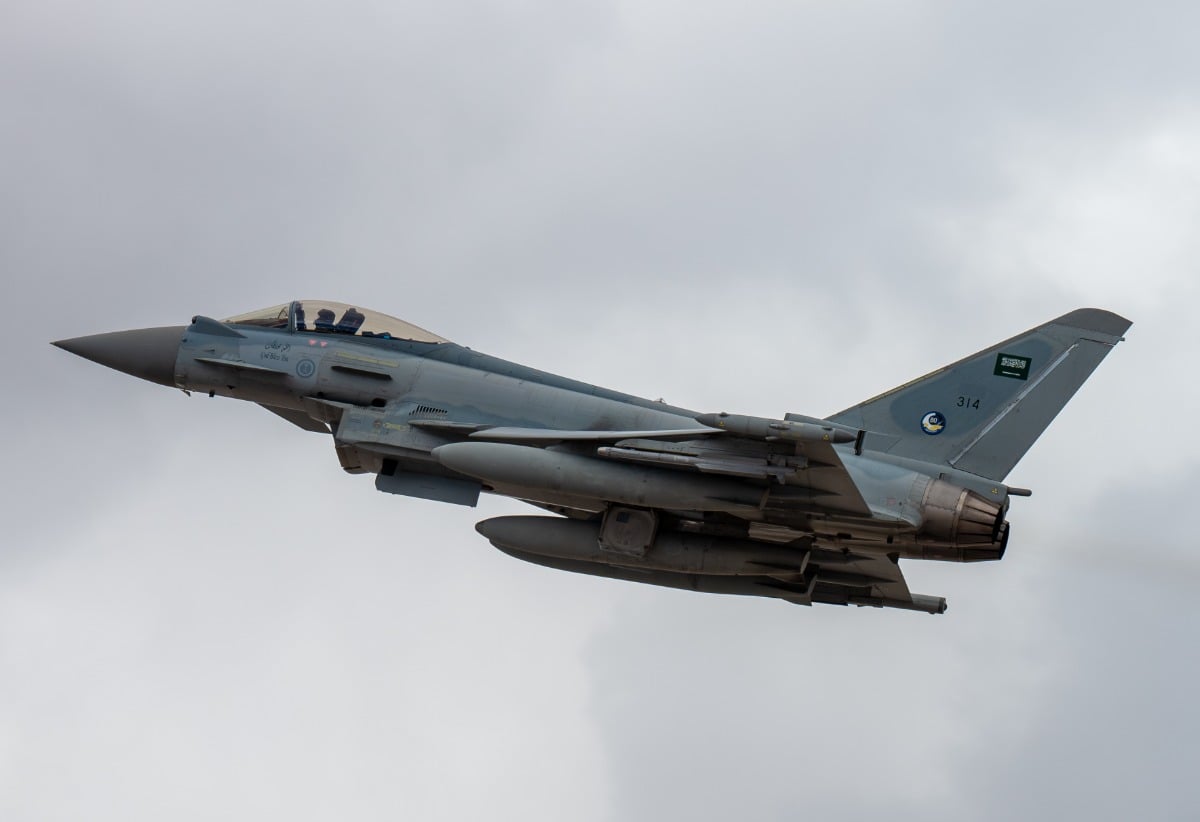
Saudi Arabia just reached a major military milestone that didn't get nearly enough attention outside defense circles. For the first time ever, a Eurofighter Typhoon underwent a full heavy overhaul completely outside European borders. The work wasn't done in the UK, Germany, Italy, or Spain. It happened right at King Fahd Air Base in Taif.
If you follow military aviation, you know this isn't just about turning wrenches or painting fuselages. Heavy overhauls mean stripping an advanced, multi-role fighter down to its bare bones, inspecting every millimeter of the airframe, and rebuilding it to combat-ready status. Historically, Gulf nations had to fly these high-tech jets back to European manufacturing hubs whenever deep maintenance was required. You might also find this related article useful: Why Helen Zille Might Actually Win Johannesburg.
Not anymore.
By pulling off a primary heavy overhaul locally, the Royal Saudi Air Force (RSAF) proved it's no longer just a customer buying expensive hardware. It's becoming self-sufficient. This shift alters the logistics of Middle Eastern air power and signals a massive step forward for the kingdom's domestic defense goals. As discussed in latest reports by TIME, the results are notable.
The Reality of Local Aerospace Support
For decades, critics pointed out a glaring vulnerability in Gulf defense strategies. Countries in the region could buy the most advanced fighter jets in the world, but they relied on Western contractors and overseas facilities to keep them flying. If a conflict dragged on and supply lines got squeezed, operational readiness could tank fast.
The successful heavy overhaul at Taif tackles this vulnerability head-on. The Eurofighter Typhoon is a complex machine, packed with sensitive avionics, intricate delta-wing aerodynamics, and high-performance EJ200 engines. Managing its upkeep requires a highly trained workforce and specialized infrastructure.
The RSAF did not achieve this overnight. It took years of infrastructure investments, deep technical partnerships, and a deliberate push to train local Saudi engineers. Local technicians carried out the entire process, demonstrating that the kingdom can manage the lifecycle of its frontline fighter fleet during tense geopolitical times.
Breaking the European Monopoly on Typhoon Upkeep
The Eurofighter consortium operates on a strict geographic work-share model. The founding nations—the UK, Germany, Italy, and Spain—have carefully guarded the technical data and heavy maintenance rights for this aircraft. When Saudi Arabia originally ordered its 72 Typhoons, the long-term plan always hinted at localizing support, but realizing that goal faced skepticism.
This development shatters the old assumption that non-European operators can't handle deep depot-level maintenance. King Fahd Air Base now stands as an authorized hub capable of executing complex structural and systemic overhauls.
What does this mean logistically?
- Zero ferry flight risks: Sending jets across continents for maintenance burns engine hours, demands aerial refueling support, and introduces transit risks.
- Faster turnaround times: Local depots mean aircraft return to active squadrons much faster than shipping them thousands of miles away.
- Operational flexibility: RSAF commanders can schedule deep maintenance around local operational needs rather than waiting for slots in European facilities.
Turning Vision 2030 Into Concrete Results
You can't look at this milestone without tying it to Saudi Arabia’s broader economic blueprint, Vision 2030. One of the primary goals of that initiative is to localize more than 50% of the country’s military spending. Historically, the vast majority of those billions streamed right out of the country to Western defense giants.
By establishing a domestic overhaul capability, the kingdom keeps a significant chunk of that maintenance budget within its own borders. It builds a high-tech industrial base and creates specialized jobs for young Saudi nationals. It's a real-world example of industrial strategy delivering a tangible product, not just a glossy PowerPoint presentation.
The hands-on expertise gained by the engineering crews at Taif will likely carry over to other platforms. The RSAF operates a diverse fleet, including large numbers of F-15s and older Tornados. The processes, quality control standards, and safety protocols refined during this Typhoon overhaul establish a baseline for the entire domestic military aerospace sector.
The Strategic Ripple Effect in the Gulf
This achievement shifts regional power dynamics. Self-reliance in logistics makes a military far more resilient. When a nation can fix, modify, and sustain its own combat aircraft during an extended crisis without relying on a foreign capital's permission or shipping schedules, its strategic deterrence changes completely.
Neighboring Gulf states operating or eyeing Western fighters will watch this closely. Saudi Arabia has effectively created a blueprint for how a regional air force can take control of its own operational destiny. It proves that with sustained investment and a stubborn focus on technology transfer, local technicians can master even the most complex European defense technology.
If you are an aerospace engineer, defense analyst, or logistics coordinator looking to understand how these maintenance workflows scale, your next step is to analyze the supply chain metrics. Track how local parts sourcing and turn-around times at King Fahd Air Base compare to traditional European depots over the next twelve months to see the true fiscal impact of this localization strategy.