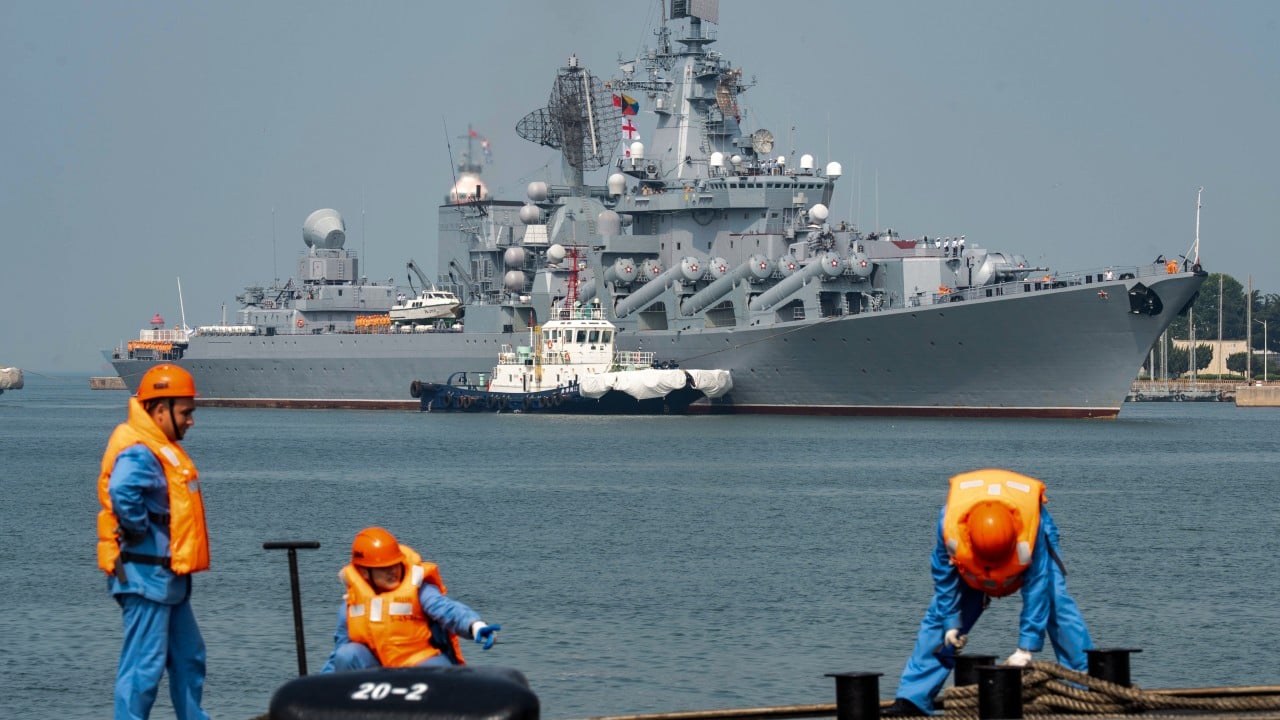
The arrival of the Russian Slava-class guided-missile cruiser Varyag in Qingdao isn't just another routine port call. When that massive Soviet-era "carrier-killer" docked in China's eastern military port on July 5, 2026, it signaled a deeper shift in global maritime alignment. Flanked by the U-boat equivalent Ufa—a advanced diesel-electric attack submarine—and the corvette Rezky, the Russian Pacific Fleet didn't come to China just to swap flags and drink tea. They are here for the massive Joint Sea-2026 naval exercises, and the timing couldn't be worse for the West.
If you think this is just standard military signaling, you're missing the bigger picture. Western analysts often downplay these drills as empty political theater. They claim Moscow and Beijing don't have a formal treaty, so they aren't real allies. That's a dangerous miscalculation. The integration between the People's Liberation Army Navy (PLAN) and the Russian Navy is accelerating. It's happening right in the backyard of US allies like Japan and South Korea.
Let's look at exactly what just arrived in Qingdao and why the specific warships involved tell us everything we need to know about where this partnership is heading.
The Hardware Packing a Punch in Qingdao
The Kremlin didn't send second-rate patrol boats to Shandong province. The Varyag is the flagship of Russia's Pacific Fleet. It's a heavily armed cruiser designed specifically to hunt and destroy American aircraft carriers using massive supersonic anti-ship missiles. Pairing that brute force with the Ufa—a stealthy Improved Kilo-class submarine known for its ability to slip through sonar nets undetected—shows Russia is bringing high-end tactical capabilities to China's doorstep.
China is matching that energy. The PLAN Northern Theatre Command deployed two Type 052D guided-missile destroyers, a guided-missile frigate, a general supply ship, and an advanced submarine rescue vessel. This isn't a hands-off display. The week-long exercise includes ship-based attack helicopters and dedicated Marine Corps detachments from both nations.
According to details from regional defense logs, the Joint Sea-2026 drill will roll out across three distinct, highly complex phases:
- Force Mobilization: Coordinating logistics and deploying heavy hardware under simulated high-threat conditions.
- Port Planning: Deep-level tactical integration, mapping out live-fire scenarios and sharing communication encryption protocols.
- Sea Operations: Live joint reconnaissance, integrated air defense, missile defense simulations, and coordinated anti-surface sea strikes.
Once the main drills wrap up around July 13, the real provocation begins. A combined fleet of these Chinese and Russian warships will sail out together into the broader Pacific Ocean for extended joint maritime patrols.
Beyond the Photo Ops
What most people get wrong about China-Russia military cooperation is the assumption that their hardware doesn't mix well. Historically, that was true. They used different communication systems, operated under totally distinct command structures, and fundamentally distrusted each other's long-term intentions.
Those days are gone. Moscow's deep isolation from Western markets has forced its hand, making it the junior partner in an economic and military marriage of convenience with Beijing. China, looking ahead at a potential flashpoint over Taiwan or the South China Sea, wants all the operational combat experience Russia possesses.
Look at what they are practicing this week: integrated air and missile defense. You don't practice shooting down incoming missiles with another country unless you trust them with your radar data. By linking their air defense networks during these exercises, the PLAN and the Russian Navy are building a shared operating picture. If a conflict breaks out in the Pacific, these two fleets won't just be operating in the same waters—they'll be fighting as a networked unit.
The Pacific Footprint
The location of these drills is just as critical as the ships involved. Operating out of Qingdao gives the joint fleet immediate access to the Yellow Sea and the East China Sea. It forces Japan to scramble surveillance aircraft and keeps Washington on high alert ahead of high-level diplomatic summits.
For Beijing, bringing Russian carrier-killers into these specific waters serves as a blunt warning to the US and its regional allies. It says: if you intervene in Asia, you aren't just dealing with China's rapidly expanding navy. You're dealing with Russian subsurface stealth and heavy anti-ship cruise missiles at the exact same time.
What Happens Next
Don't expect this momentum to slow down after the ships leave Qingdao next week. If you want to track where this security axis is heading, keep your eyes on three specific indicators over the next few months:
- The Pacific Patrol Routes: Watch how close the post-exercise joint patrol sails to the coast of Alaska or the Japanese mainland. Past patrols have mirrored strategic chokepoints to test Western response times.
- Submarine Technology Sharing: Keep tabs on whether Russia begins transferring its ultra-quiet nuclear submarine silencing technology to Beijing in exchange for Chinese marine microelectronics. That would instantly erode the US Navy's primary tech advantage.
- Command Center Integration: Watch for updates on whether the two militaries establish permanent joint command liaison offices in Vladivostok or Qingdao, moving past temporary exercise structures toward a permanent wartime framework.