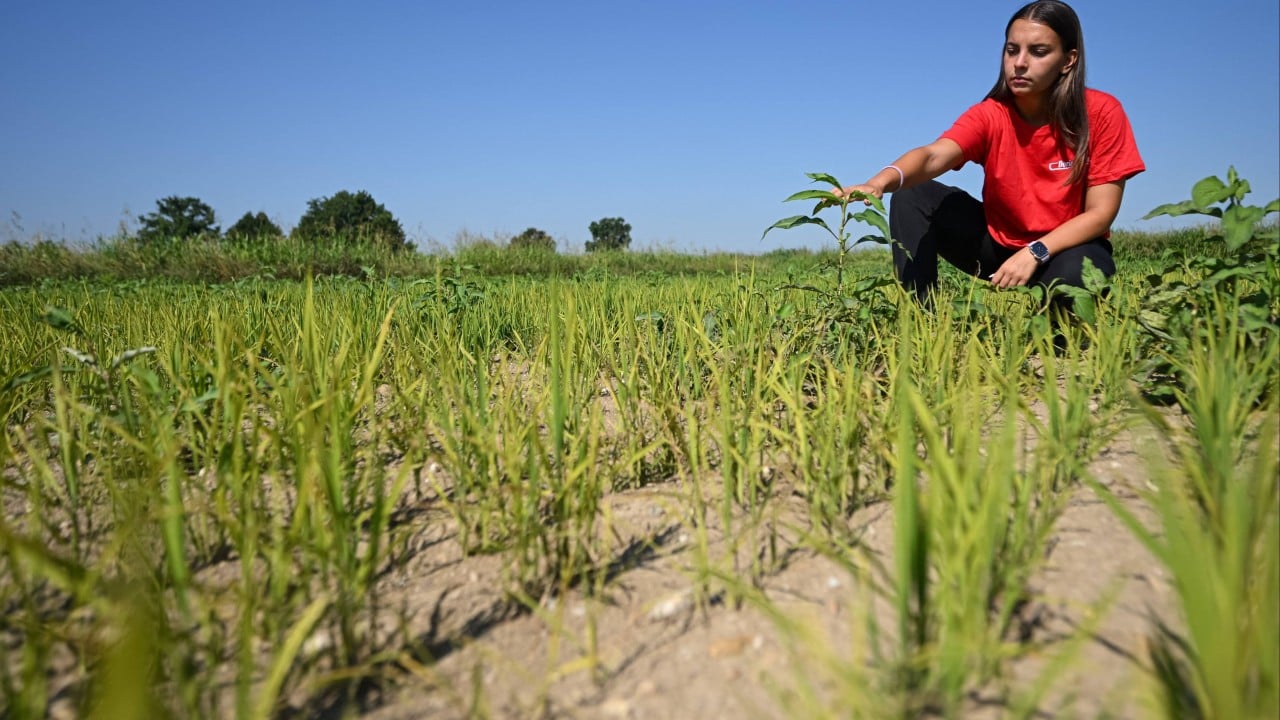
You probably don't think of Italy as a major rice producer. Most people imagine rolling vineyards, olive groves, or fields of wheat destined for pasta. But northern Italy's Po River Valley is actually the undisputed rice basket of Europe, supplying over half the continent's rice.
Right now, that basket is bone dry.
A historic, unrelenting heatwave has slammed into southern Europe. Summer arrived way too early, and temperatures are shattering records. For the farmers in Pavia, Lombardy, and Piedmont who grow prized risotto varieties like Carnaroli and Arborio, it's an absolute catastrophe. Rivers running from the Alps to the Adriatic Sea have shrunk to a murky trickle, forcing local authorities to ration water.
If you think this is just a local issue for Italian farmers, you're mistaken. It's a direct threat to global food security and a stark warning about the future of agricultural traditions.
The Drying of Europe's Rice Basket
For centuries, northern Italy relied on a predictable cycle. Winter snow accumulated in the Alps. Spring warmth melted that snow, filling the Po River and its vast network of historic irrigation canals. Farmers then flooded their paddies, creating a mirror-like landscape perfectly suited for rice cultivation.
That system has completely broken down.
A severe lack of winter snow followed by record-setting summer heat has triggered a hydrological crisis. The Po River—Italy's longest waterway—is facing its worst stress in generations. Water levels have plunged so low that seawater from the Adriatic is pushing miles upstream into the river delta. This saltwater intrusion poisons the freshwater supply and ruins nearby agricultural soil.
Take a walk through the paddies in Pavia province, and you won't see lush green fields. You'll see cracked, parched earth. Weeds are aggressively taking over dry fields because there isn't enough water to flood them. Once a field bakes under a 40-degree Celsius sun without irrigation, the crop is essentially done for. Local agricultural associations warn that yield losses could easily clear 30% across the region.
Why Risotto Rice is Highly Vulnerable
You can't just substitute standard long-grain white rice for a proper Italian risotto. Varieties like Carnaroli—often called the "king of risotto"—are prized because their grains absorb flavors beautifully while maintaining a firm, starchy core during cooking.
But Carnaroli is an incredibly delicate, temperamental plant.
When exposed to extreme heat and water scarcity during critical growth phases, the rice grains don't mature properly. Instead, they split and crack during the husking and whitening process. A cracked grain releases starch too quickly and turns to mush when cooked, making it completely unmarketable as premium risotto rice.
During recent dry spells, some farmers reported that less than 40% of their harvested Carnaroli was high enough quality to sell. When supply drops that drastically, prices spike globally. Your favorite local Italian restaurant will either have to pay double for authentic grain or change the menu entirely.
The Core Defect in Italy's Water Infrastructure
Climate change and soaring temperatures are easy targets for blame, but they don't tell the whole story. The current crisis exposes a massive, systemic failure in how Italy manages its water.
Italy boasts an intricate web of canals, some built as far back as the Middle Ages. But the modern infrastructure transporting this water is crumbling. Data from Italy's national statistics bureau, Istat, reveals that the country's aqueducts and transit pipes lose roughly 42% of their water due to structural leaks and ruptures before it ever reaches a tap or a field.
On top of that, the nation only captures around 10% of its annual rainwater. The rest simply flows out to sea. It's a bizarre paradox: a country facing severe agricultural droughts is letting billions of gallons of fresh water leak into the ground or flush away due to ancient, unmaintained infrastructure.
The Flawed Fix of Dry Sowing
Desperate to save money and labor, many northern Italian farmers recently shifted to a technique called "dry sowing." Instead of planting seeds in flooded paddies—the traditional method used for millennia—they plant seeds in dry soil and irrigate later.
Initially, this sounds like a smart way to conserve water. It isn't.
Local agricultural experts note that dry sowing counterintuitively makes the drought worse. When fields are flooded early in the season, the water doesn't just sit there. It permeates the ground, recharges the local water table, and gradually filters back into the Po River network. By keeping the fields dry during the spring, the entire regional ecosystem loses its moisture reserve, leaving the soil completely defenseless when an early heatwave strikes.
Where Do We Go From Here?
The era of predictable agriculture is officially over. If Italian rice farming is going to survive, the industry requires immediate, radical changes.
If you're involved in the agricultural supply chain, an importer, or even a chef, relying on a single, fragile region for specialized ingredients is no longer viable. Diversifying suppliers and building relationships with organic farms that utilize advanced underground water storage is a critical first step.
For the agricultural sector at large, the priority must shift toward modernizing infrastructure and adopting climate-resilient crop varieties. Researchers at the national rice authority, Ente Nazionale Risi, are urgently working to breed new rice strains that tolerate higher temperatures and require significantly less water.
Ultimately, governments and regional authorities must stop treating droughts like unexpected surprises. Funding needs to pivot immediately toward plugging the leaks in the national aqueduct system and building regional rainwater collection basins. Without these hard engineering fixes, Europe's finest culinary traditions will continue to wither in the fields.