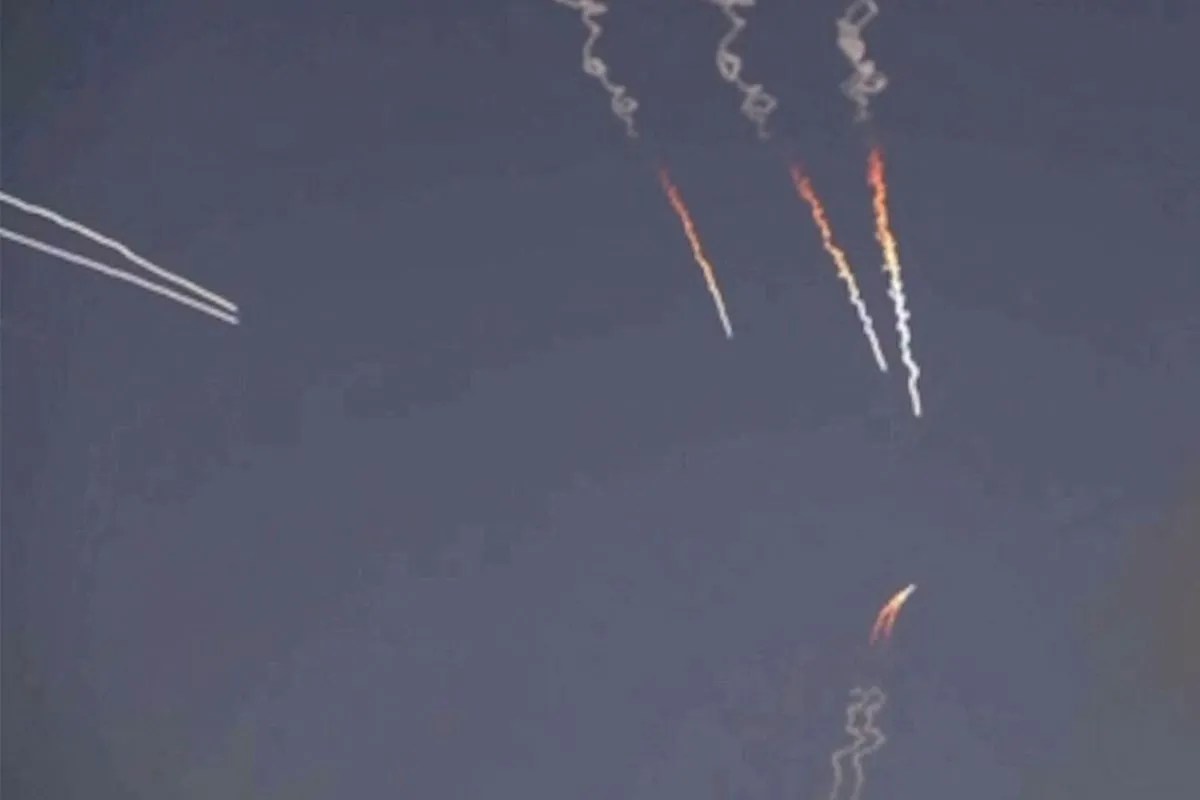
Tensions between Washington and Tehran just hit a dangerous breaking point. When projectiles struck the under-construction Darkhovin nuclear site in Iran's southwestern Khuzestan province at roughly 3:39 AM local time on Sunday, July 19, 2026, it marked a massive escalation in a conflict that's rapidly spiraling out of control.
Iranian state media was quick to broadcast claims from the Atomic Energy Organisation of Iran (AEOI) that American forces carried out the attack. Right around the same time, local authorities reported another missile strike hitting the outskirts of Abadan, a critical oil refining hub in Khuzestan. Valiullah Hayati, the deputy security officer for the governorate, confirmed that while the Abadan strike caused significant panic across the local population, it didn't leave any immediate casualties.
If you've been following the ongoing Iran-US conflict, you know this isn't just another routine exchange of border post shelling or proxy skirmishes. Hitting nuclear infrastructure—even a site early in its development—crosses a line that diplomats spent decades trying to protect.
What Actually Happened at Darkhovin and Abadan
Let's get straight to the facts on the ground. The Iranian government claims American forces launched a targeted barrage of projectiles aimed directly at the Darkhovin construction site. Tehran framed the facility as a major symbol of national pride and technological self-reliance, making the psychological impact of the strike just as heavy as the physical damage.
At the exact same time, a separate strike landed just outside Abadan's city limits. For context, Abadan sits right near the border with Iraq and houses one of the Middle East's oldest and largest oil refineries. Missing the refinery itself suggests either targeted warning shots or precise strikes against specific military or radar assets stationed around the city's perimeter.
Iran's Islamic Revolutionary Guard Corps (IRGC) retaliated almost immediately, claiming to have intercepted and shot down a US MQ-9 Reaper drone over Ahvaz, the capital of Khuzestan province.
The International Atomic Energy Agency (IAEA) stepped in shortly after the reports hit global headlines. IAEA Director General Rafael Mariano Grossi announced that the agency is actively investigating the incident. The UN nuclear watchdog pointed out that the Darkhovin site remains in its earliest construction phases and contained zero nuclear material during its last official inspection. Because of that, the strike posed no immediate radiological risk to local populations or neighboring countries. Still, Grossi stressed the urgent need for military restraint anywhere near nuclear-related infrastructure.
The Collapse of the Pakistan Brokered Agreement
To understand why this attack happened now, you have to look back at what took place just a few weeks ago. Back in mid-June 2026, Washington and Tehran signed a 14-point Memorandum of Understanding (MoU) brokered by Pakistan. The agreement was meant to halt active military hostilities that had been raging since February.
That fragile truce didn't even last a month.
Disagreements over naval access and commercial shipping rights in the Strait of Hormuz sparked renewed friction. Washington accused Tehran of threatening international oil tankers, while Tehran accused the US military of expanding its regional footprint in direct violation of the June deal.
When asked by reporters about Iran's formal decision to abandon the interim peace deal, US President Donald Trump didn't hold back his stance.
"I couldn't care less," Trump remarked in a brief phone interview with NewsNation. He made it plain that Washington's top priority remains preventing Tehran from acquiring nuclear capabilities, regardless of signed agreements.
💡 You might also like: where the light gets in
That single comment signaled to everyone involved that diplomatic handshakes were officially off the table. Following his directive, US Central Command (CENTCOM) launched a continuous multi-night campaign targeting Iranian coastal defenses, military infrastructure, and air defense systems across Khuzestan and surrounding maritime zones.
Why Darkhovin Matters in the Broader Geopolitical Picture
You might wonder why a site still under construction matters so much. To get the full picture, you need to understand Darkhovin's history and its strategic position in Iran's long-term energy plans.
The Darkhovin plant isn't a brand-new idea. Iran originally signed contracts with French companies to build a light-water reactor at the site back in the 1970s before the 1979 revolution halted work completely. Decades later, Tehran revived the project as a domestic 360-megawatt pressurized water reactor project, designed to showcase its capability to build reactors without relying on foreign technology.
Striking Darkhovin sends three explicit political and military signals:
- Denial of Infrastructure: It signals that Washington considers any nuclear facility—whether operational, active, or merely a concrete shell—a legitimate target if tensions breach a certain threshold.
- Economic Pressure on Khuzestan: Khuzestan province is Iran's economic heartland, containing the bulk of its oil reserves and crucial transport corridors along the Persian Gulf. Pressure here hits Tehran's economy directly where it hurts most.
- Escalation Management: By striking a site without live nuclear fuel, the US managed to inflict significant physical and political damage without triggering a massive radioactive fallout event that would draw universal international condemnation.
Iran's Retaliation and Regional Fallout
Tehran hasn't taken these strikes sitting down. The regional ripple effects were felt almost instantly across the Middle East.
Following the strikes on Khuzestan, Iran launched a wave of kamikaze drone and missile strikes targeting American bases and military assets in neighboring Gulf countries. Iranian state sources claimed strikes against US ammunition depots at Camp Udairi in Kuwait, as well as Patriot missile radar installations at Ali Al Salem Air Base.
Air raid sirens sounded as far away as Jordan, where American diplomatic posts issued urgent warnings to US citizens to evacuate near key transportation hubs like Aqaba's airport and seaport due to credible threats.
Meanwhile, Iranian Foreign Minister Abbas Araghchi made it clear on state television that while the Supreme National Security Council evaluates defense strategy, final authority over continuing the war or declaring a ceasefire rests entirely with Supreme Leader Mojtaba Khamenei.
In a statement posted on social media, Khamenei harshly criticized the US administration, calling the American president's signature "utterly worthless and devoid of credibility" following the collapse of the June MoU.
How This News Compares to Initial Competitor Coverage
When news broke about the Darkhovin and Abadan attacks, early competitor coverage focused strictly on translating short bulletin statements from Iranian state broadcaster IRIB and ANI wire reports. Most outlets simply printed the claims verbatim without explaining the strategic context.
Here is what most initial reports completely missed:
- The Tactical Choice of Location: Abadan and Darkhovin sit in Khuzestan, a region where logistics, oil refining, and air defense overlap heavily. A strike here isn't random; it disrupts Iran's primary economic artery.
- The Distinction Between Darkhovin and Bushehr: Unlike the active Bushehr Nuclear Power Plant, Darkhovin lacks active nuclear fuel rods. That key detail explains why the IAEA confirmed zero radiological danger despite severe structural damage to the site.
- The Strait of Hormuz Standoff: The direct connection between the collapse of the June 2026 MoU and shipping disputes in the Strait of Hormuz was omitted in most quick news write-ups, leaving readers confused about why fighting restarted so suddenly.
What Happens Next: Strategic Realities to Watch
The situation on the ground remains extremely fluid. If you're tracking this conflict for geopolitical analysis, market impact, or security reasons, keep a close eye on these concrete variables over the coming weeks:
- Strait of Hormuz Shipping Routes: Watch for spikes in maritime insurance rates and naval escort operations. Tehran's primary leverage point remains its ability to interrupt commercial oil transit through the choke point.
- IAEA Emergency Inspections: Pay attention to upcoming formal briefings from Rafael Grossi in Vienna. If Iran limits inspector access to nuclear sites in response to the US strikes, international oversight could collapse entirely.
- Energy Market Volatility: Abadan's proximity to the strikes means global crude prices will react sharply to any further activity in Khuzestan province. Fuel daily price adjustments are already being implemented in neighboring consumer nations.
- Diplomatic Backchannels: Watch for proxy diplomatic statements out of Islamabad or Muscat. While public rhetoric from both Washington and Tehran is fiery right now, emergency backchannel communications usually heat up behind closed doors when nuclear facilities enter the crosshairs.
Track these four metrics closely as new intelligence comes out, because the line between localized strikes and a full-scale regional conflict has never been thinner.