Russia just took its maritime provocations to a dangerous new level, targeting the UK's premier aircraft carrier in cold northern waters. During a high-stakes NATO deployment, a Russian Bear-F maritime patrol aircraft made a reckless, low-altitude pass over HMS Prince of Wales.
That wasn't all. The spy plane dropped dozens of sonar trackers directly into the path of the 65,000-tonne warship.
The UK Ministry of Defence slammed the move as unsafe and unprofessional. Royal Air Force F-35 fighter jets scrambled from the carrier deck to intercept the intruders. It's a classic Cold War-style face-off, but it happened just days ago in the freezing waters of the Norwegian Sea. This isn't just routine posturing. It's a calculated effort to map the acoustic signature of Britain's frontline strike group while testing NATO response times under real-world conditions.
If you want to understand why Vladimir Putin's military is taking such massive risks, you have to look at the broader chess match playing out across the Arctic Circle.
Inside the High North Confrontation
The encounter unfolded on July 2 during Operation Firecrest. HMS Prince of Wales had departed from Glen Mallan in Scotland to spearhead a major NATO air defence mission near the Arctic Circle. The goal was simple. The alliance needed to project strength and secure the vital sea lines linking the Atlantic to the High North.
Russia clearly wanted to disrupt that message.
Two Tu-142 aircraft—known by their NATO reporting name Bear-F—sprinted toward the British Carrier Strike Group. These massive, prop-driven maritime patrol bombers are designed specifically for hunting submarines and tracking surface fleets. Instead of maintaining a safe distance, the Russian crews flew incredibly low, buzzing the British flagship in a move meant to intimidate.
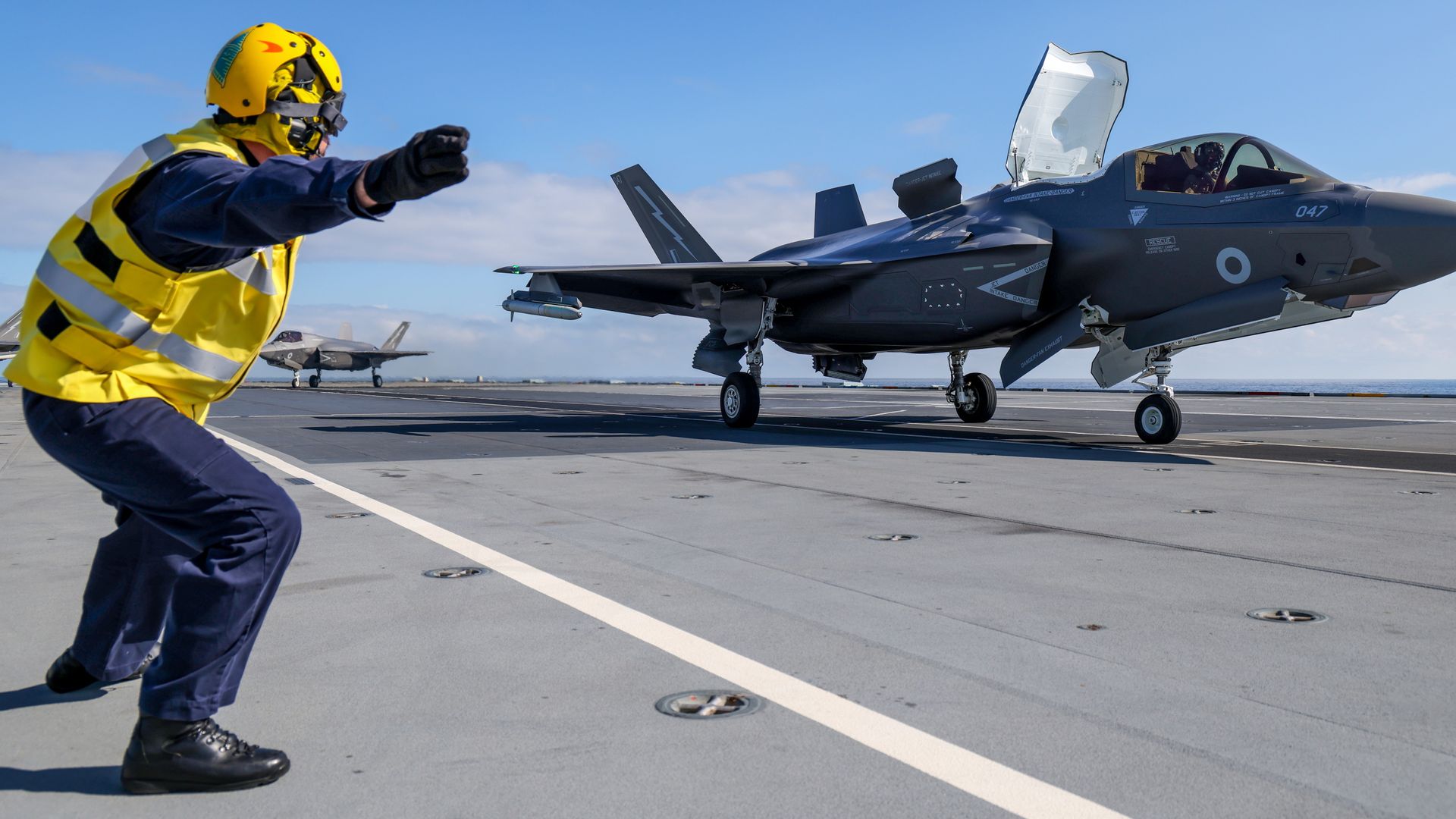
Royal Navy commanders didn't hesitate. They launched F-35 Lightning stealth fighters straight off the carrier flight deck. The British pilots quickly intercepted the Bear-F planes, shadowing them until they cleared the area.
While the aerial intercept went off smoothly, what happened in the water below created a far more enduring security challenge.
What Russia Achieves by Dropping Sonobuoys in a Carrier Path
A lot of media reports simply stated that Russia dropped trackers, without explaining what that means. The Russian aircraft deployed active and passive sonobuoys. These are specialized listening tubes packed with hydrophones and transmitters. When tossed from a plane, they deploy into the water to record underwater sound waves.
By scattering these devices directly ahead of HMS Prince of Wales, the Russian military was attempting to steal the ship's acoustic signature.
Every major warship has a completely unique acoustic fingerprint. The sound of the propeller blades spinning, the hum of the internal power generation systems, and the vibration of the hull all combine to create a distinct underwater noise profile. If Russia successfully records this signature, their attack submarines can use the data to identify, track, and target HMS Prince of Wales from miles away during a conflict.
It's pure intelligence gathering wrapped in aggressive harassment. Dropping these devices directly in front of a moving carrier strike group forces the naval commanders to make tough choices. Do you maintain your course and let them record your machinery at peak operating efficiency, or do you alter your route and disrupt your entire mission profile?
Mechanical Headaches and the Morale Problem
While the Royal Navy successfully managed the airspace, the aftermath of the encounter exposed a familiar vulnerability. Following the high-stress interaction, a senior naval source confirmed that HMS Prince of Wales suffered a minor technical issue.
While the Ministry of Defence downplayed the glitch, insiders reported it was devastating for morale on board.
The £3 billion warship had to pull into Stavanger, Norway, for unscheduled maintenance. This setback delayed its planned departure for the United States. The timing couldn't be worse. The delay completely ruined the carrier's scheduled participation in high-profile events celebrating the 250th anniversary of the US Declaration of Independence.
This isn't an isolated incident. HMS Prince of Wales has faced a string of mechanical setbacks since its commissioning. Back in 2022, the vessel suffered a major propeller shaft failure just 24 hours after leaving port for a similar American deployment. It spent months in dry dock while engineers scrambled to fix the issues.
When your flagship is constantly sidelined by engineering gremlins, it sends a terrible signal to your adversaries. The Kremlin watches these maintenance delays closely. They know that a carrier stuck in a Norwegian port isn't patrolling the gaps where Russian submarines slip into the Atlantic.
The Subsurface Shadow War Explodes
This aerial incident doesn't exist in a vacuum. It's part of a massive surge in Russian hybrid activity across northern Europe. Just days before this aerial showdown, intelligence reports tied Russia's covert shadow fleet to a wave of mysterious drone incursions over US airbases located within the UK and mainland Europe.
Western intelligence believes these drone flights were designed to probe NATO air defence reactions. They wanted to see exactly how quickly base commanders respond to unidentified threats.
We are also seeing blatant acts of intimidation in the waters around the British Isles. Late last year, the notorious Russian spy ship Yantar used high-powered lasers to disrupt RAF pilots who were tracking its movements north of Scotland. The Yantar has been repeatedly caught lingering directly over critical undersea data cables and energy pipelines in the English Channel and the Irish Sea.
The UK government has responded by deploying a new AI-powered surveillance system named Nordic Warden. This network aggregates maritime data to track suspicious vessels in real-time, flashing immediate alerts to NATO partners when a Russian ship lingers near vital infrastructure.
The Arctic and the North Atlantic are no longer quiet backwaters. They are the primary friction points between NATO and a highly aggressive Russian state.
How Naval Fleets Protect Their Data
When an adversary drops listening devices right next to your hull, you can't just ignore it. Naval crews use several tactical countermeasures to deal with sonobuoy fields.
- Acoustic masking: Warships can activate specialized systems that generate masking noise or counter-frequencies to distort the sound traveling through the water, making it much harder for passive sonobuoys to get a clean read.
- Radical speed changes: Changing the speed of the vessel drastically alters the acoustic output, preventing the tracking devices from establishing a reliable baseline profile.
- Physical avoidance: Escort warships, such as Type 23 or Type 26 frigates, will often scout ahead to locate floating telemetry equipment, allowing the primary carrier to steer clear of the drop zone entirely.
- Active electronic jamming: Fleet operators can jam the radio frequencies that the sonobuoys use to transmit their recorded underwater data back to the spy plane overhead.
What Happens Next for the Royal Navy
The immediate priority for defense leaders is getting HMS Prince of Wales out of dry dock and back into open water. The UK cannot afford to have one of its two aircraft carriers out of action while the regional security environment deteriorates so rapidly.
If you track maritime security or international defense, watch the deployment patterns over the next few weeks. Look for how the UK alters its frigate and destroyer escorts during future northern missions. Expect to see a much tighter defensive bubble around these capital ships.
Defense Secretary Dan Jarvis made it clear that the UK and its allies see exactly what Russia is doing. The Royal Navy will keep pushing back against these provocations, but the margin for error in the cold waters of the High North is getting razor-thin.