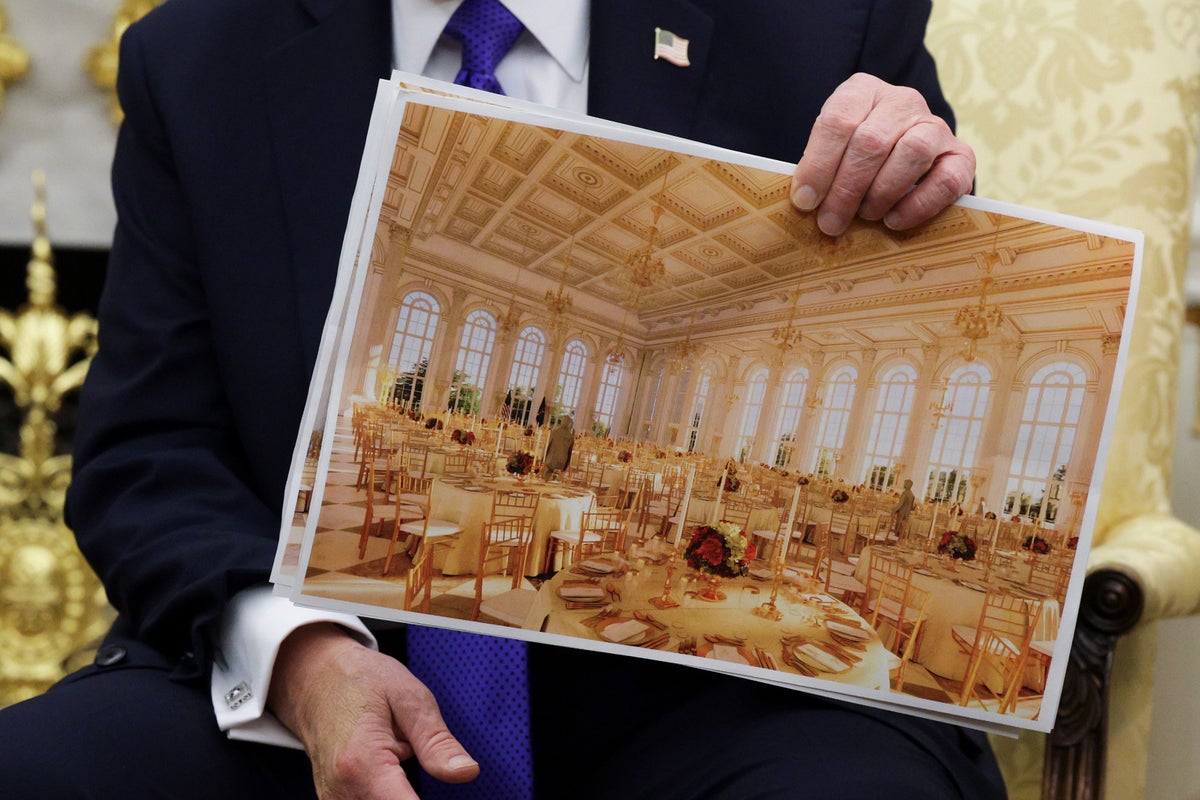
Remember when we were told the massive new White House ballroom would not cost the American public a single dime? Donald Trump stood in front of reporters and claimed corporate donors and private patriots were footing the entire bill. He even joked that the builders offered to do it for free because it was such an honor.
It was a great story. It just wasn't true.
Newly uncovered documents show a vastly different reality. White House officials secretly handed out a massive no-bid contract worth up to $500 million to Clark Construction to build this vanity project. They bypassed normal government channels, left the public in the dark, and relied on a little-known administrative loophole to make it happen.
If you think this is just standard Washington gridlock, think again. This deal sets a dangerous precedent for how public land and public money get used.
The Secret Half Billion Dollar Contract
The scale of this agreement is staggering. The White House quieted any potential competition by handing the contract directly to Clark Construction, the largest general contractor in the Washington area. There was no open bidding process. Other firms never got a chance to look at the blueprints or submit lower estimates.
Government contracting rules exist for a reason. They keep costs down and stop political favorites from getting massive payouts. When you skip that process, costs explode.
That is exactly what happened here. Internal cost estimates from Clark Construction reveal the price tag has ballooned rapidly. In July 2025, the projected cost sat around $200 million. By March 2026, internal documents showed the price had skyrocketed to $600 million.
The administration publicly kept repeating the lower numbers while holding onto documents that showed the true cost was three times higher. Trump even personally intervened to negotiate the price of concrete from a Clark subsidiary, shaving off $2.3 million from a $47 million sub-deal. While that might sound like a savvy business move, it proves how deeply involved the highest levels of office were in micro-managing a deal that skipped legal scrutiny.
The Executive Residence Loophole
How did they get away with bypassing standard procurement laws? They used the Executive Residence as a shield.
Most federal agencies must follow strict guidelines under the Competition in Contracting Act. They have to advertise contracts publicly, accept multiple bids, and explain their choices. The Executive Residence, which manages the daily operations and maintenance of the White House living quarters, operates under different rules.
Officials used a federal statute meant for the basic care, repair, and lighting of the White House. They argued that because the Executive Residence would ultimately use the facility, they could route the entire construction contract through that specific office.
In internal emails from September, White House Office of Administration Director Joshua Fisher explicitly noted that they skipped the bidding process because disclosing the details would compromise national security.
National security. For a party space.
Using secrecy provisions meant for military operations to build a 90,000-square-foot ballroom is a stretch, even by Washington standards. It allowed them to slip a half-billion-dollar project past congressional watchdogs without anyone noticing until the contracts were already signed.
Follow the Taxpayer Money
The crowd-funding narrative has completely fallen apart. Trump insisted his friends were paying for everything. But the internal breakdown of that $600 million projection tells a completely different story.
- Private sources: $293 million (about 48 percent)
- Public funds: $307 million (about 51 percent)
The majority of the money is slated to come from public budgets. Specifically, the funds are being routed through the Secret Service, the White House Military Office, and the Executive Residence.
The administration claims these public funds only cover the necessary security upgrades for the facility. But the line between security infrastructure and luxury amenities is incredibly blurry when you are tearing down the historic East Wing to build a venue that dwarfs the original White House.
Meanwhile, Clark Construction is making a fortune. The records show the company secured a comfortable profit margin. By March 2026, internal documents estimated the firm would walk away with roughly $65 million in combined profit, overhead, and daily management fees. That completely contradicts the public claim that the company was working for free out of pure patriotism.
The Pattern of No Bid Deals
This ballroom isn't an isolated incident. It fits into a broader, highly troubling pattern of the administration handing lucrative, non-competitive deals to preferred partners.
Look at what happened right across the street at Lafayette Park. The National Park Service handed Clark Construction a no-bid contract to repair two water fountains. In 2022, independent estimates put that routine maintenance job at $3.3 million. By the time Clark got the contract in January 2026, the price tag had jumped to $11.7 million. Then the administration adjusted it again, bumping the final payout to $17.4 million.
To justify that 427 percent increase, officials double-counted inflation and tacked on a massive 50 percent surcharge for a compressed schedule. They claimed the job was an urgent necessity, utilizing a special emergency clause usually reserved for natural disasters or active wars.
Lawmakers like Representative Ritchie Torres and Senator Richard Blumenthal have launched formal inquiries into these deals. The concern is obvious. Is the government using overinflated, non-competitive contracts on public parks to quietly reward the same contractors working on the president's private vanity projects?
When watchdog groups like Public Citizen sued to get a copy of the funding agreements, they found clauses that shield the identities of many corporate donors. Wealthy individuals and corporations with massive business interests before the federal government can anonymously fund a sitting president's pet project. That sidesteps basic conflict-of-interest protections.
Actionable Next Steps for Government Transparency
We cannot just watch this happen and shrug it off. If you care about how your tax dollars are spent, there are concrete steps you can take to push back against this lack of oversight.
First, contact your representatives and demand they support the formal inquiries led by the Senate Permanent Subcommittee on Investigations. Congress needs to freeze any further reallocation of Secret Service or military funds toward the ballroom construction until a full, independent audit is completed.
Second, support legislative efforts to close the Executive Residence loophole. The law allowing the president to maintain the White House grounds was never intended to fund massive, multi-million-dollar commercial-scale expansions without competitive bidding. Urge your lawmakers to introduce amendments requiring all construction projects over $10 million routed through the Executive Residence to face standard competitive bidding laws.
Transparency shouldn't be optional, no matter who sits in the Oval Office. When half-billion-dollar contracts are signed in secret, the public always ends up paying the price.