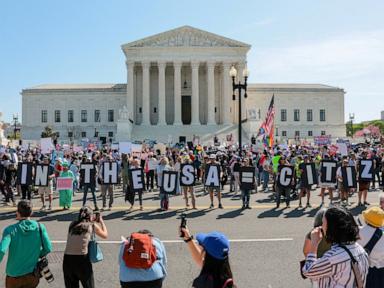
Donald Trump thought he could dismantle a 150-year-old constitutional pillar with the stroke of a pen. On Tuesday, June 30, 2026, the Supreme Court told him exactly why he couldn't.
In a massive 6-3 decision in Trump v. Barbara, the high court struck down an executive order from the first day of Trump's second term. The order aimed to deny automatic U.S. citizenship to children born on American soil if their parents were undocumented or on temporary visas. It was a radical gamble to reshape American identity.
It failed completely.
The ruling is being blasted across news alerts as a standard political defeat for the administration. But if you look closely at the actual opinions, this case wasn't just another immigration squabble. It exposes a deep, structural fracture within conservative legal thought and preserves a historical promise born out of the ashes of the Civil War.
The Illusion of Executive Omnipotence
Let's look at what the Trump administration actually tried to pull off. The executive order instructed federal agencies to stop handing out citizenship documents to babies born to families without permanent legal status. The policy was supposed to click into gear for children born on or after February 19, 2025.
The White House legal team tried to play textualist acrobatics with the 14th Amendment. The text states:
"All persons born or naturalized in the United States, and subject to the jurisdiction thereof, are citizens of the United States and of the State wherein they reside."
The government's entire case rested on that tiny phrase: "subject to the jurisdiction thereof."
Solicitor General John Sauer argued that this didn't just mean physical presence on U.S. soil. He claimed it required a deeper, political "allegiance" to the country. According to his logic, children of tourists, foreign students, or undocumented workers couldn't truly be subject to U.S. jurisdiction because their parents owed allegiance to a foreign power. He insisted the 19th-century amendment was strictly meant for formerly enslaved people, not the children of modern visa holders.
It was a clever argument on paper. It just lacked any real historical or legal backing.
Why the Roberts Majority Scalped the White House Legal Argument
Chief Justice John Roberts wrote the majority opinion. He didn't mince words. Roberts dismantled the administration’s historical revisionism, calling it a "dramatically revisionist view" with "scant evidence" to support it.
Joining Roberts were the court’s three liberals—Sonia Sotomayor, Elena Kagan, and Ketanji Brown Jackson—alongside Trump-appointed conservative Amy Coney Barrett.
Roberts anchored his logic in a massive 1898 precedent, United States v. Wong Kim Ark. In that case, the court ruled that a child born in San Francisco to Chinese immigrant parents was an American citizen. The 1898 court made it clear: if you are born here and you have to obey our laws, you are under our jurisdiction.
"Citizenship, then and now, was the right to have rights — to freely participate in our political community," Roberts wrote. "The Framers of the Fourteenth Amendment extended that promise to 'every free-born person in this land.' We keep that promise today."
Think about the sheer chaos if the court had gone the other way. Columbia Law School’s Immigrants’ Rights Clinic pointed out a brutal reality during the litigation: if birthright citizenship died, every single new parent would suffer. You wouldn't just walk out of a hospital with a birth certificate anymore. You’d have to bring your own passports, visas, or green cards into the delivery room just to prove your newborn deserved a Social Security number.
The Splinter in the Conservative Core
The headline says 6-3, but the intellectual reality is much messier. The conservative supermajority completely fractured under the weight of this case.
Take Brett Kavanaugh. He voted with the majority to block the executive order, but he refused to sign onto Roberts' constitutional reasoning. Kavanaugh essentially took a detour, arguing that while the President cannot end birthright citizenship by executive fiat, Congress might actually have the statutory power to limit it for children of foreign citizens who are here temporarily or unlawfully. It's a massive, flashing neon sign inviting future restrictionist legislation.
On the other side of the hallway, the dissenters went full scorched-earth.
Justice Clarence Thomas, joined by Neil Gorsuch, penned a sprawling dissent arguing that the 14th Amendment has been systematically misinterpreted for over a century. Thomas wrote that the amendment was custom-built for freed Black Americans who had "no other homeland" or foreign allegiances. He claimed extending it to the children of temporary visitors or undocumented immigrants "devalues" the very concept of American citizenship. Justice Samuel Alito chimed in separately, calling the majority's ruling a "serious mistake" that preserves a "powerful incentive" for people to enter the country illegally.
The Massive Fallout of a Different Outcome
The Migration Institute estimates that roughly 255,000 children born each year to non-citizen parents would have lost their legal status under Trump's order. Over twenty years, that's five million people trapped in legal limbo.
A group of law professors warned the court in a friend-of-the-court brief that killing birthright citizenship would effectively create a permanent, multi-generational underclass. Many of these kids would end up entirely stateless, unable to get U.S. papers and unable to secure citizenship from their parents' home countries.
Instead of solving an immigration crisis, the executive order would have institutionalized a caste system.
Trump didn't take the loss quietly. He took to Truth Social to slam the decision, calling it "too bad for our Country" and immediately pivoting to pressure Capitol Hill. House Speaker Mike Johnson looked visibly stunned when reporters broke the news of the ruling to him mid-interview, eventually stammering that the House might need to look into a full constitutional amendment—an incredibly steep uphill battle in a divided Washington.
The Practical Landscape Moving Forward
If you are trying to navigate what this means for the real world right now, here are the direct takeaways:
- The Status Quo is Locked In: Birthright citizenship remains the absolute law of the land. If a child is born on U.S. soil, their birth certificate remains definitive proof of American citizenship, regardless of their parents' immigration status.
- The Legislative Threat is the New Battleground: Because of Kavanaugh's swing-vote opinion, restrictionist groups are going to stop focusing on executive actions and start pouring money into drafting federal legislation to test the waters of Congress.
- Check Your Documentation: For families currently holding temporary work, student, or tourist visas, there is no longer a dark cloud hanging over pending births.
The administration tried to bypass the traditional constitutional amendment process to rewrite the social fabric of the country. By holding the line, the Supreme Court reminded the executive branch of a basic rule of American governance: you don't get to change the rules of the game just because you don't like the text.