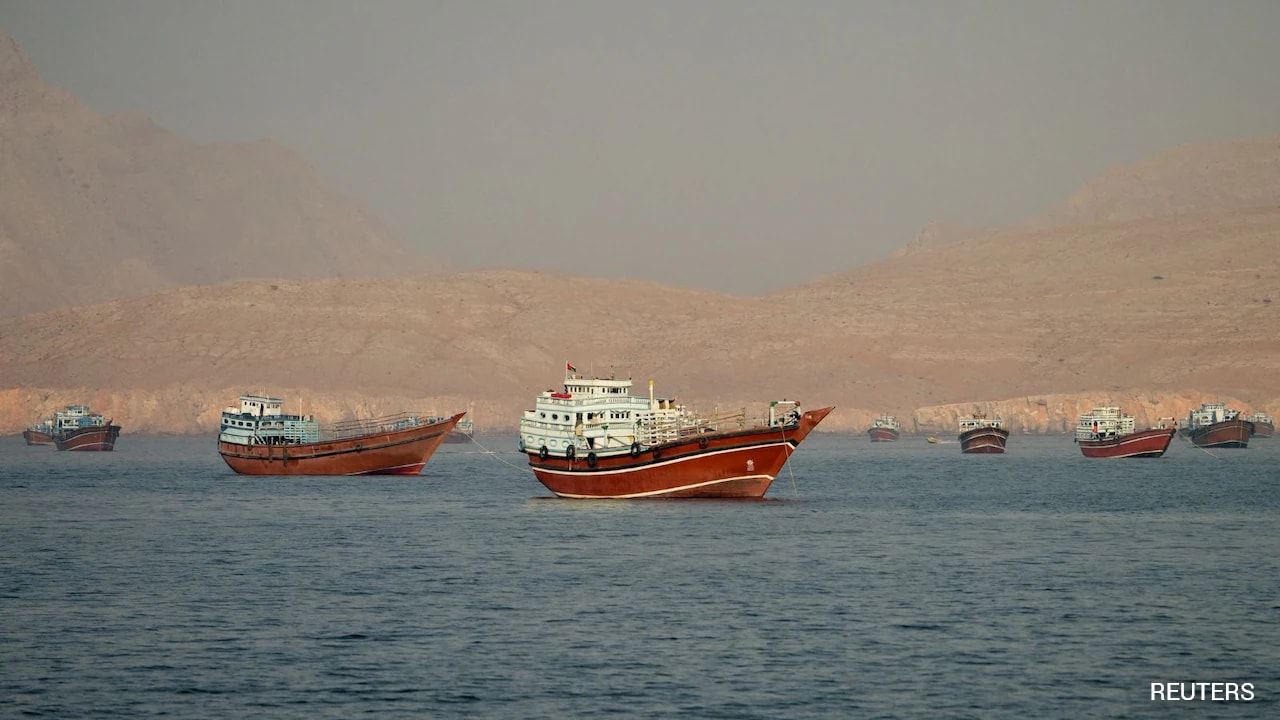
The headlines look like a massive victory. Following the sudden announcement of a peace deal to end the 107-day Iran war, the United States Naval blockade is lifting, and the Strait of Hormuz is officially reopening for maritime traffic. Global markets reacted instantly. Brent crude dropped over 4% below $84 a barrel, and stock indices from Tokyo to Frankfurt broke records.
If you listen to the talking heads on financial television, the global economy just dodged a bullet. They expect the reopening of this narrow choke point between Oman and Iran—which handles a fifth of the world's petroleum—to immediately flush out the inflation that has haunted global markets since February. Meanwhile, you can read similar developments here: Why the Russian Shadow Fleet Just Lost Its English Channel Loophole.
But thinking a simple headline will instantly fix the deep economic damage of the last four months is a dangerous mistake.
The reality on the water is messy. A geopolitical signature doesn't magically repair blown-up energy infrastructure, nor does it instantly erase the massive financial losses absorbed by major industries. For energy-importing giants like India, the relief is welcome, but the economic hangover will last long into the year. Here is why the reopening of the Strait of Hormuz is a slow-burn recovery, not a quick fix. To see the full picture, check out the recent report by Al Jazeera.
The Physical Oil Deficit Can't Be Erased Overnight
It's easy to look at a map, see an open shipping lane, and assume the oil will just start flowing at pre-war volumes. It won't.
During the peak of the conflict, the International Energy Agency noted that the closure of the strait caused the largest supply disruption in global oil market history. Close to 10 to 12 million barrels per day of production were completely knocked offline. Vitol CEO Russell Hardy noted during the conflict that nearly one billion barrels of cumulative oil production would be lost to the war.
You don't just flip a switch to turn that back on. Production facilities, refining complexes, and storage infrastructure across the Persian Gulf were physically damaged or completely shut down. Bringing a massive oil field or a complex refinery back online after an emergency shutdown requires weeks of safety audits, pressure testing, and engineering checks. Senior analysts at rating agencies like ICRA point out that because so much production was ripped out of the global supply chain, returning actual output to pre-war baselines will drag out over months.
The Dangerous Gap Between a Headline and Real Cargo
A presidential social media post declaring that commercial ships should "start your engines" doesn't satisfy a maritime insurance underwriter.
During the blockade, the cost of moving a vessel through the region skyrocketed. Some commercial vessels were forced to pay an average of $2 million just in premium surcharges to transit the waterway. While the naval blockade is technically dismantled, the actual threat environment hasn't dropped to zero overnight.
Shipping companies and global insurers are highly risk-averse. They aren't going to send hundred-million-dollar supertankers into the Persian Gulf until they see a sustained period of peace. War risk premiums will decline slowly, not collapse in a single day. Until those insurance rates normalize, the actual cost of freight remains stubbornly high, meaning the landed cost of crude won't drop as fast as the paper futures market suggests.
Why Your Local Fuel Pump Won't See Big Price Cuts
For the average consumer, the main question is simple: When will petrol, diesel, and cooking gas get cheap again?
If you live in a major importing country like India—which gets roughly half its crude, 70% of its LPG, and 90% of its LNG from the West Asian region—the answer is frustrating. You won't see dramatic retail price drops anytime soon.
Consider the financial reality of state-owned oil marketing companies. During the war, global crude surged past $119 a barrel. Instead of passing that entire, devastating spike directly to consumers, many domestic fuel retailers absorbed massive losses to prevent widespread public panic. Industry data shows that some state-owned fuel retailers booked losses in a single quarter that equaled their entire profit from the previous year, losing hundreds of crores daily.
Now that oil is falling back toward $80, these energy companies aren't going to slash retail prices immediately. They are going to use the wider profit margins to repair their damaged balance sheets and recover their past losses. Chief economists at major rating firms indicate that petrol and diesel prices will only see minor, highly calibrated cuts of perhaps a few rupees per liter, and even then, only if Brent stays sustainably below $80 for a long time.
The Liquefied Natural Gas Nightmare is Worse Than the Oil Crisis
While everyone watches the price of a crude oil barrel, the real economic bottleneck is liquefied natural gas (LNG).
The war completely choked off natural gas flows from Qatar, which supplies the lion's share of global LNG. This hit Europe at the worst imaginable time, coinciding with low gas storage levels following a brutal winter. Industrial manufacturers across Europe—especially chemical and steel plants—had to slap 30% surcharges on their products just to stay alive under surging electricity costs.
The disruption of Qatari gas forced buyers to hunt for alternative cargoes from distant markets like the United States, Latin America, and Africa. Long-term energy contracts were broken, supply chains were rerouted, and complex logistics networks were shattered. Reopening the Strait of Hormuz clears the physical path for Qatari LNG vessels, but rebuilding the delicate network of international gas distribution and lowering industrial electricity tariffs will take a significant amount of time.
How to Protect Your Business During the Slow Recovery
If you operate a business that relies heavily on logistics, manufacturing, or energy inputs, you can't afford to run your strategy based on market euphoria. The geopolitical risk premium is shrinking, but operational volatility is still high. Take these concrete steps right now to navigate the transition.
- Keep your supply chain diversified: Don't rush all your procurement back to Persian Gulf suppliers just because the route is open. The alternative supply lines you developed in Africa, North America, or Russia during the crisis should remain active as a permanent hedge.
- Lock in energy hedges cautiously: With paper oil prices tumbling 4% in a single session, it's tempting to lock in long-term fuel contracts immediately. Don't chase the initial drop. Let the market settle and see if production actually returns before finalizing long-term energy budgets.
- Budget for persistent logistics surcharges: Expect freight and maritime insurance quotes to remain elevated for the next 60 to 90 days. Keep an extra buffer in your transport budget until underwriters formally reduce the region's risk rating.
- Focus on inventory buffers over just-in-time delivery: The peace deal is signed, but the region remains a geopolitical tinderbox. Maintain slightly higher raw material inventories than you did before the war began to insulate your production lines from future shipping hiccups.